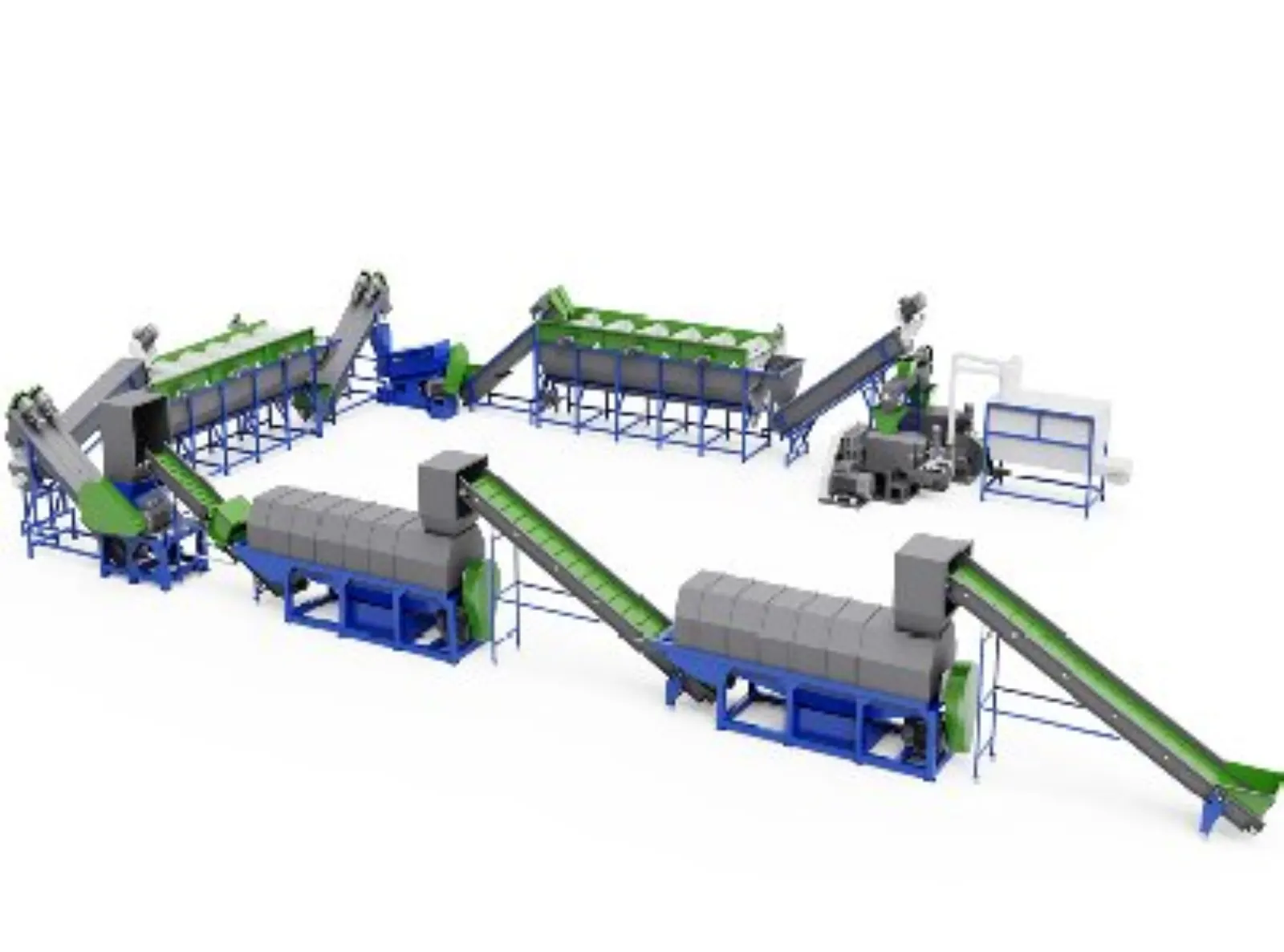
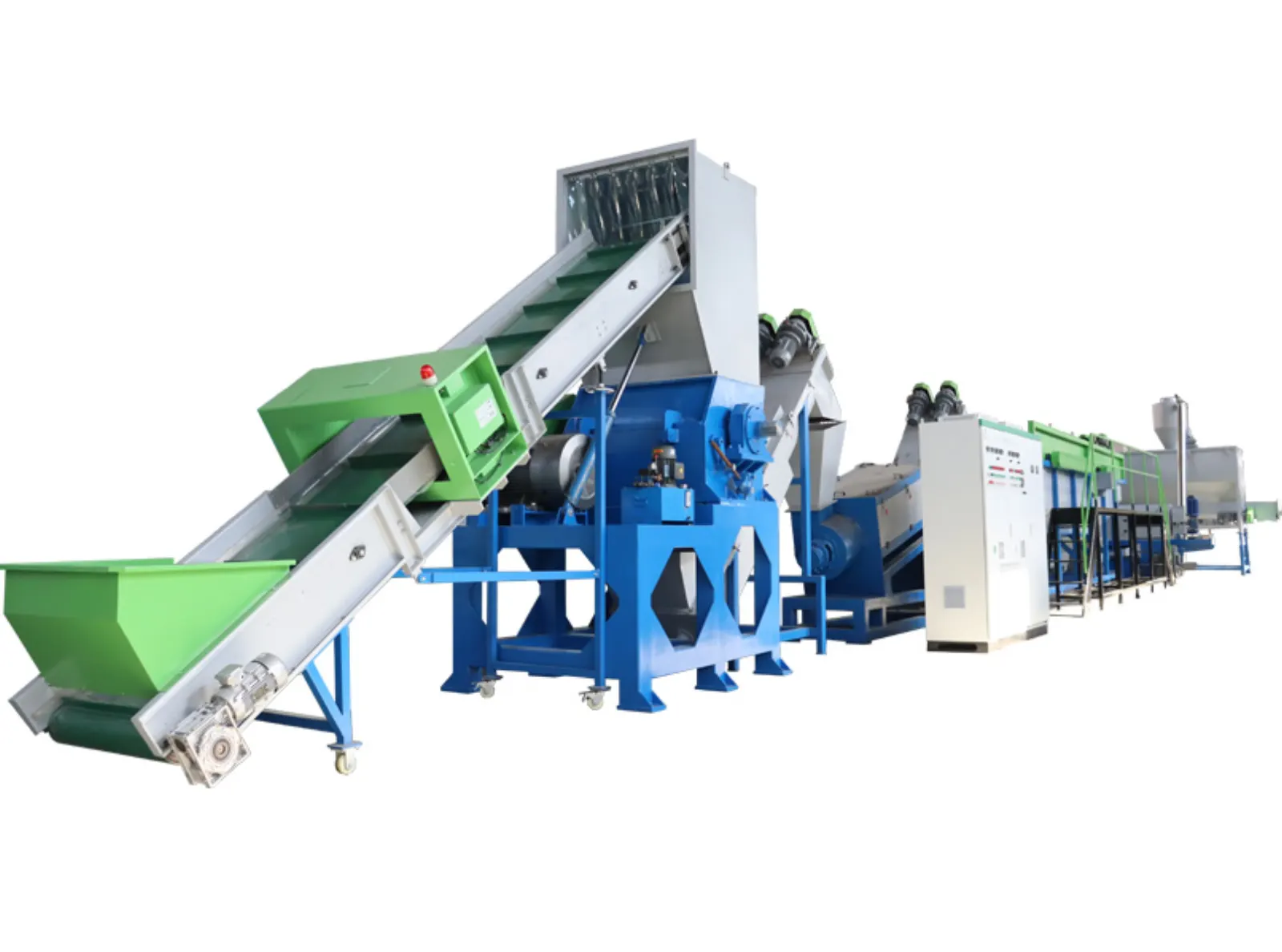
In plastic film recycling and washing production lines, wastewater treatment equipment is not an optional accessory but a critical engineering system that directly determines whether the entire line can operate continuously, economically, and in compliance with environmental regulations.
The core purpose of wastewater treatment is to purify the heavily contaminated effluent generated during washing, enable high-rate water recycling, stabilize long-term production, and ensure environmental protection and regulatory compliance.
Characteristics of the Wastewater (Why Treatment Is Essential)
Plastic film washing wastewater is fundamentally different from ordinary industrial wastewater. It is complex, unstable, and highly polluted, mainly due to the nature of post-consumer films such as agricultural films, packaging films, and landfill films.
Typical characteristics include:
High Suspended Solids (SS)
Large amounts of plastic fragments, mud, sand, paper fibers, labels, and organic residues are present. SS concentrations commonly reach 1000–2000 mg/L, and even higher when processing landfill films.
High Organic Content (COD)
The water contains inks, adhesives, surfactants, plasticizers, oils, and organic dirt. COD levels typically range from 1500–3000 mg/L, far exceeding discharge standards.
Oil and Surfactant Emulsions
Cleaning agents and grease form stable emulsions, leading to persistent foaming and difficulty in conventional separation.
Significant Water Quality Fluctuations
Water composition changes drastically depending on raw material source, contamination level, and washing intensity. This creates shock loads for any untreated system.
Without a professional wastewater treatment system, these factors will quickly lead to pipeline blockage, pump wear, tank fouling, odor generation, and unstable washing performance.
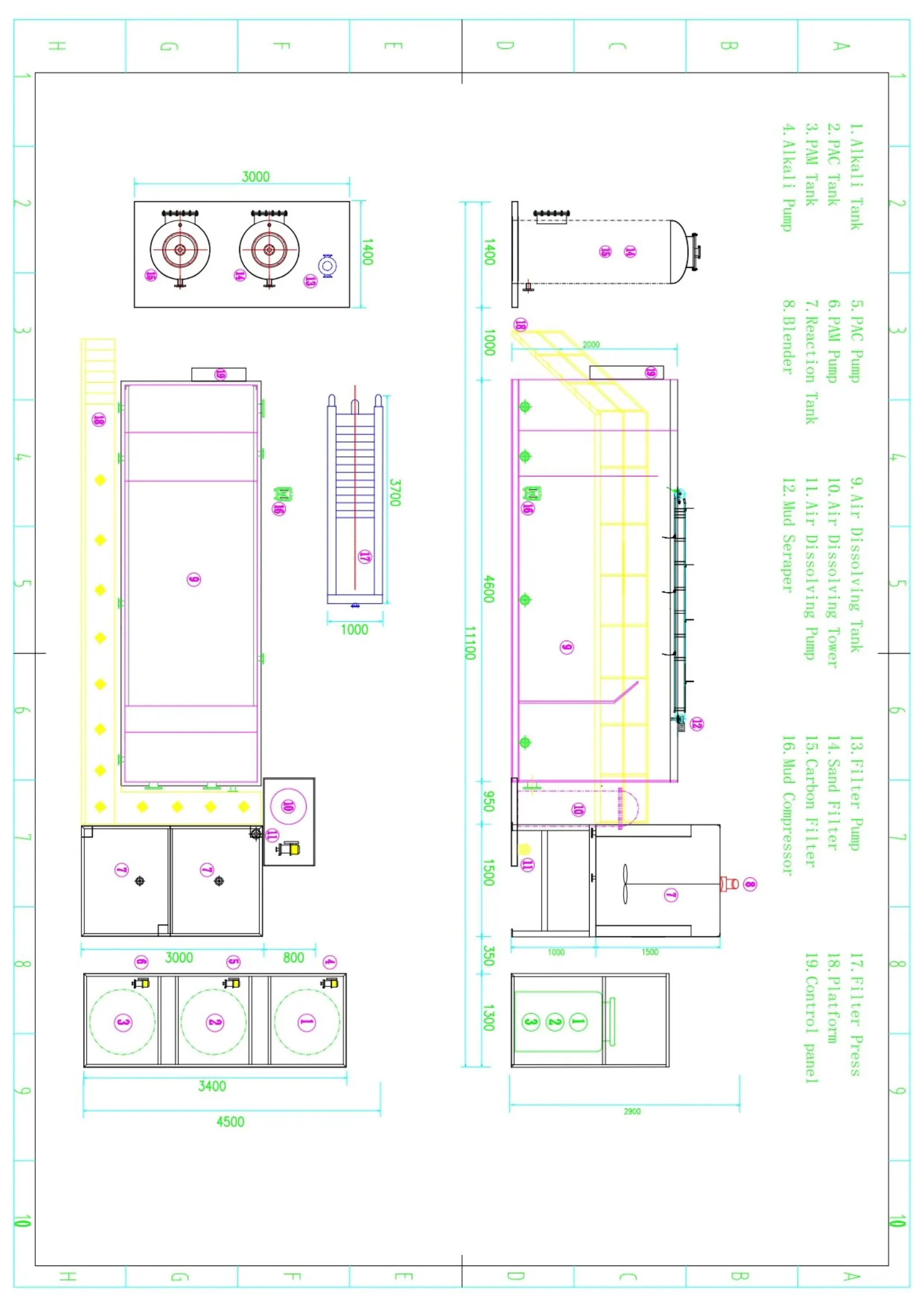
Core Functions — Four Key Values of the System
1. Solid–Liquid Separation and Impurity Removal (Pre-treatment Stage)
This stage protects the entire downstream system and is crucial for long-term stability.
Bar Screens / Micro-filters
Remove film scraps, labels, and fibers to prevent clogging of pumps and pipelines.
Grit Removal / Cyclonic Separation
Effectively removes sand and heavy particles, significantly reducing equipment abrasion.
Equalization Tank
Balances flow rate and concentration, stabilizes pH, and eliminates shock loading to biochemical systems.
Coagulation + Dissolved Air Flotation (DAF) — Core Process
Through the addition of PAC/PAM, fine particles and emulsified oil are flocculated. Micro-bubbles attach to flocs and float them to the surface for removal.
- Typical removal performance:
- SS removal: ≈95%
- Grease removal: ≈90%
- COD reduction: ≈40%
This stage transforms heavily polluted wastewater into a form that is treatable by biological processes.
2. Organic Degradation and COD Reduction (Biochemical Treatment)
After physical and chemical separation, dissolved organic pollutants remain and must be degraded biologically.
Hydrolysis Acidification (Anaerobic Stage)
Breaks down large molecular organics such as plasticizers and adhesives into smaller, biodegradable molecules.
Biological Contact Oxidation or MBR (Aerobic Stage)
Microorganisms decompose dissolved organics efficiently, reducing COD to ≤100 mg/L with 60%–80% removal efficiency.
Advanced Treatment
Sand filtration and activated carbon adsorption remove trace organics, color, and odor. Disinfection ensures water quality stability for reuse.
This stage is the key to achieving discharge or reuse standards.
3. Wastewater Recycling and Reuse — Water Saving and Cost Reduction
Water consumption in film washing lines is extremely high. Without recycling, operational costs become unsustainable.
After treatment:
SS < 20 mg/L
COD < 50 mg/L
The treated water can be directly reused in washing, shredding, and rinsing processes.
Water reuse rate can reach 80%–95%, dramatically reducing:
Freshwater consumption
Wastewater discharge fees
Dependency on local water supply
In many regions, this is the primary economic justification for installing wastewater treatment equipment.
4. Environmental Compliance and Solid Waste Management
Treated effluent meets environmental discharge regulations.
Sludge is dewatered to reduce volume before off-site disposal.
Prevents secondary pollution and ensures legal compliance.
For modern recycling plants, this is not only an environmental responsibility but a mandatory requirement for operating permits.
Typical Process Flow
Film Washing Wastewater → Bar Screen → Equalization Tank → Coagulation & DAF → Hydrolysis & Acidification → Biological Contact Oxidation → Sedimentation → Sand Filtration / Activated Carbon → Disinfection → Recycled Water Tank or Compliant Discharge
This flow is widely adopted in professional film recycling facilities due to its stability, efficiency, and adaptability to fluctuating wastewater quality.
Why Wastewater Treatment Determines the Success of a Film Washing Line
In real industrial operations, many washing lines fail to achieve expected cleanliness or stable output not because of the washing equipment itself, but because of untreated or poorly treated circulating water.
Dirty recycled water leads to:
Re-contamination of films
Foaming in friction washers
Pipe blockages
Pump and bearing damage
Frequent shutdowns for cleaning
A properly engineered wastewater system ensures that the washing line can run continuously, stably, and economically.
Summary
Wastewater treatment equipment is an indispensable engineering component of any plastic film washing line:
- Upstream: removes impurities and protects equipment
- Midstream: reduces organic pollution through biochemical processes
- Downstream: enables high-rate water recycling and cost savings
- Overall: guarantees environmental compliance and operational stability
Ultimately, this system directly determines the environmental performance, production stability, and economic efficiency of the entire recycling line.
As a specialized manufacturer of plastic recycling equipment, we not only supply customized recycling machinery but also design bespoke wastewater recycling and reuse systems tailored to the specific impurity characteristics, production capacity, and regulatory requirements of each client. Our engineering approach ensures that the wastewater system and the washing line operate as one integrated, optimized solution for long-term, sustainable production.
This article is carried over from the Retech technical archive and keeps its original URL.
ABOUT THIS UPDATE
Published by Retech Marketing & Communications Team
The Retech Marketing & Communications Team publishes official company news, exhibition information, factory updates, project milestones and product announcements.
For technical questions about plastic recycling systems, please contact our engineering team.