In the plastics recycling and compounding industry, the terms plastic film granulation line and plastic pelletizing line are sometimes used interchangeably. However, from a technical and engineering standpoint, they refer to two different system concepts. While both ultimately produce plastic pellets, their design logic, material handling methods, and application scenarios vary significantly.
Understanding the structural and functional differences between these two systems helps recyclers and manufacturers select equipment that matches their raw materials, production targets, and long-term investment strategy.
Basic Definition and System Orientation
A plastic film granulation line is specifically developed for processing soft, thin, and lightweight plastic materials such as LDPE film, LLDPE film, HDPE film, agricultural film, packaging film, and woven bag scraps. These materials are flexible, low in bulk density, and often contaminated with moisture, dirt, or organic residues.
A plastic pelletizing line, on the other hand, is a broader processing system designed to convert molten plastic into uniform pellets. It can handle rigid plastics, factory regrind, injection molding scraps, extrusion waste, or even virgin resin. In many cases, pelletizing lines are also used for compounding and material modification.
In simple terms, film granulation lines are more recycling-oriented, while pelletizing lines are more production-oriented.
Differences in Raw Material Characteristics
One of the most important distinctions lies in the type and condition of raw materials.
Plastic film waste is typically:
Thin and flexible
Low in bulk density
Difficult to feed directly into an extruder
Often contaminated or wet
Because of these properties, film materials require pre-treatment before extrusion.
In contrast, materials processed in a plastic pelletizing line are usually:
Rigid or semi-rigid
Uniform in size after shredding
Relatively clean (especially post-industrial waste)
Easier to feed consistently
This fundamental difference directly affects system design and equipment configuration.
Pre-Treatment and Feeding System Design
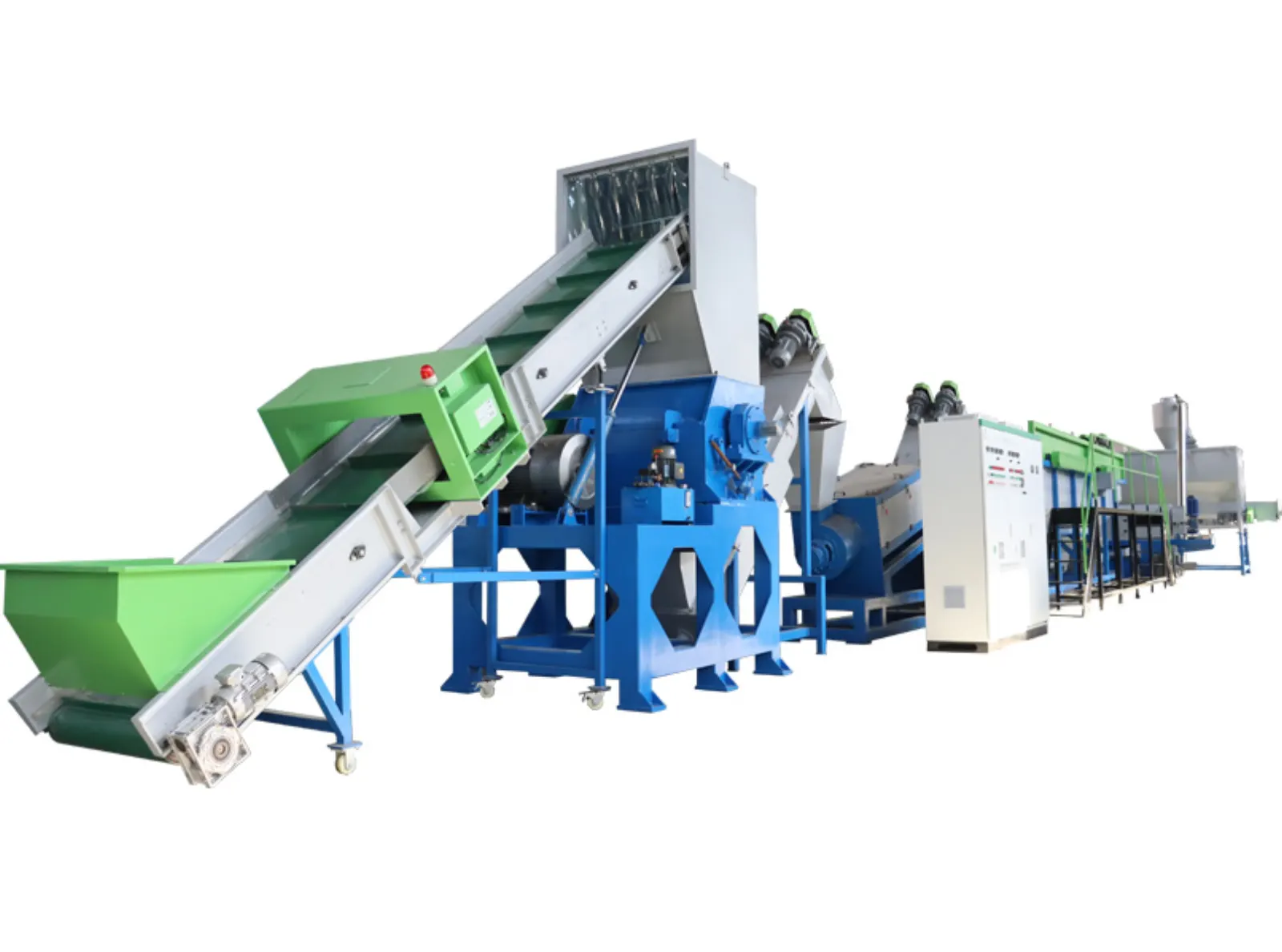
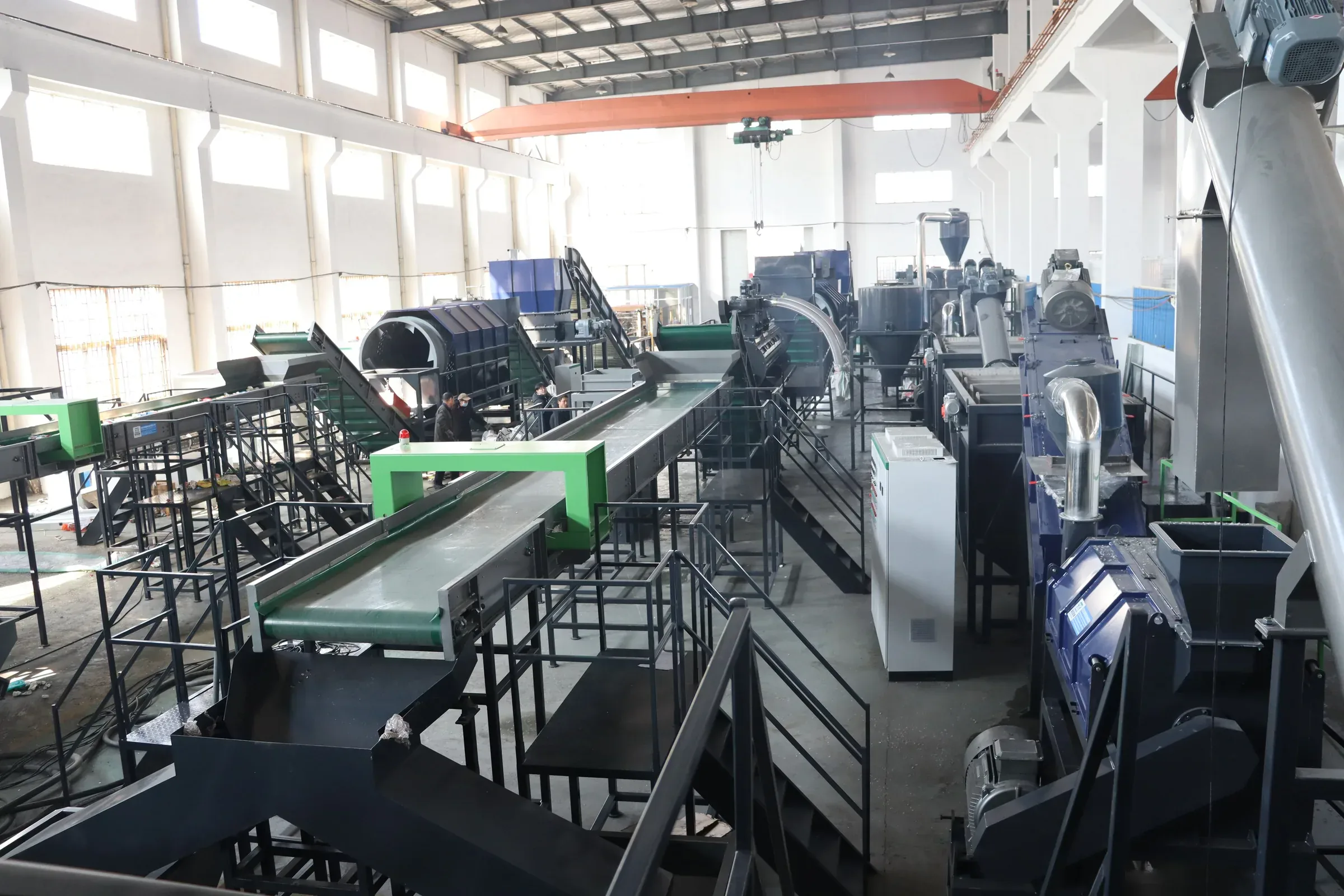
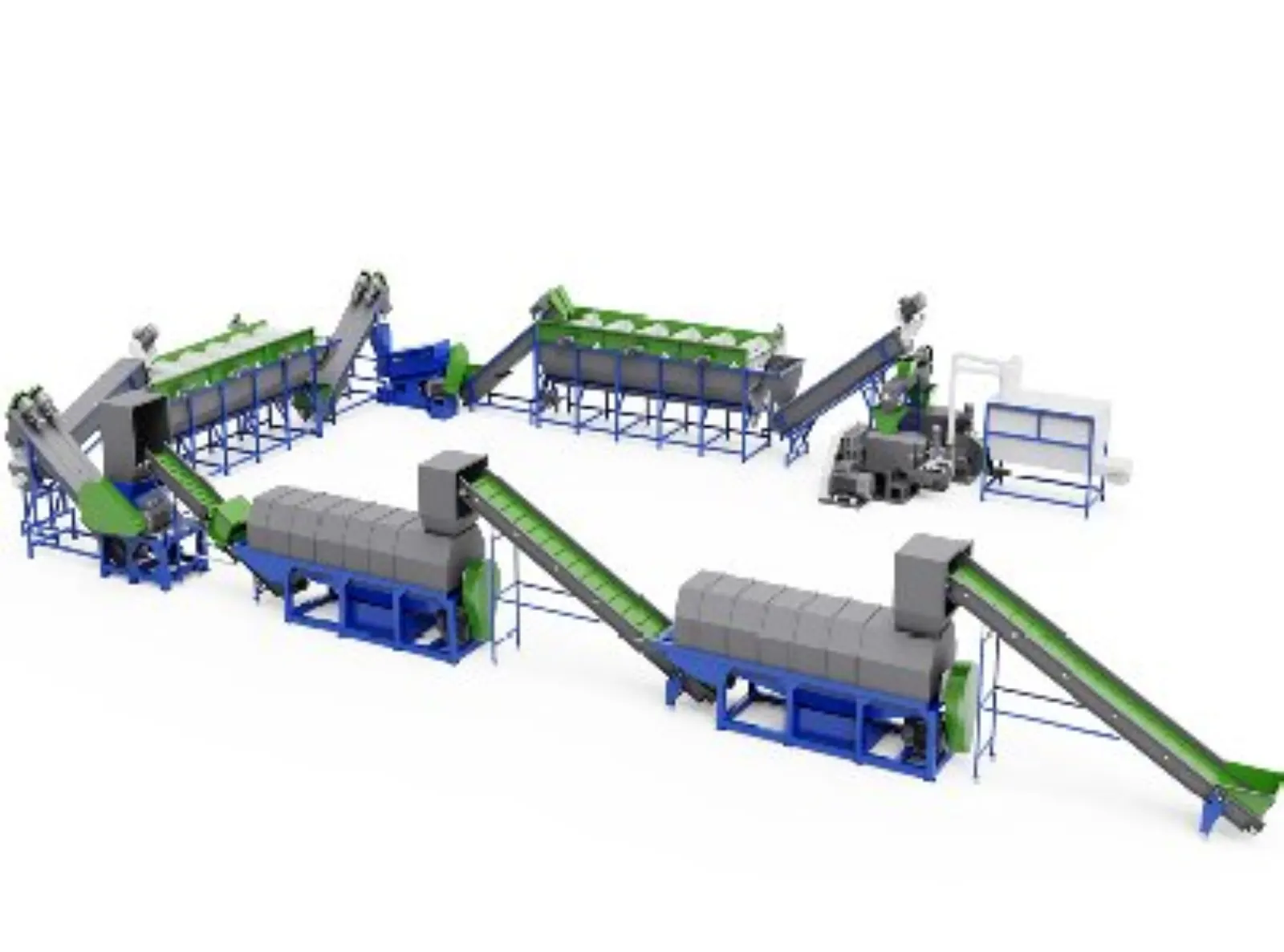
Plastic film granulation lines generally integrate a complete pre-treatment section. A typical configuration may include crushing, washing, friction cleaning, dewatering, and drying. In many cases, a densifier or agglomerator is added to increase material bulk density and improve feeding stability.
Because film scraps are lightweight and prone to bridging inside the hopper, film granulation systems often use force feeders or compacting feeders to ensure continuous and stable material input.
Plastic pelletizing lines, especially those handling clean regrind or virgin resin, may not require washing or drying systems. Feeding is often achieved through gravity feeders or precise loss-in-weight feeders. When used for compounding, side feeders may also be included for adding fillers, masterbatch, or additives.
As a result, film granulation lines tend to be more integrated and complex on the front-end, while pelletizing lines focus more on controlled extrusion performance.
Extrusion Configuration and Processing Focus
In most plastic film granulation lines, single-screw extruders are used. These extruders are optimized for:
Stable plasticization of PE-based materials
Efficient degassing to remove moisture
Moderate and steady output
Because recycled film often contains volatile components, vacuum degassing systems are commonly installed to improve melt quality.
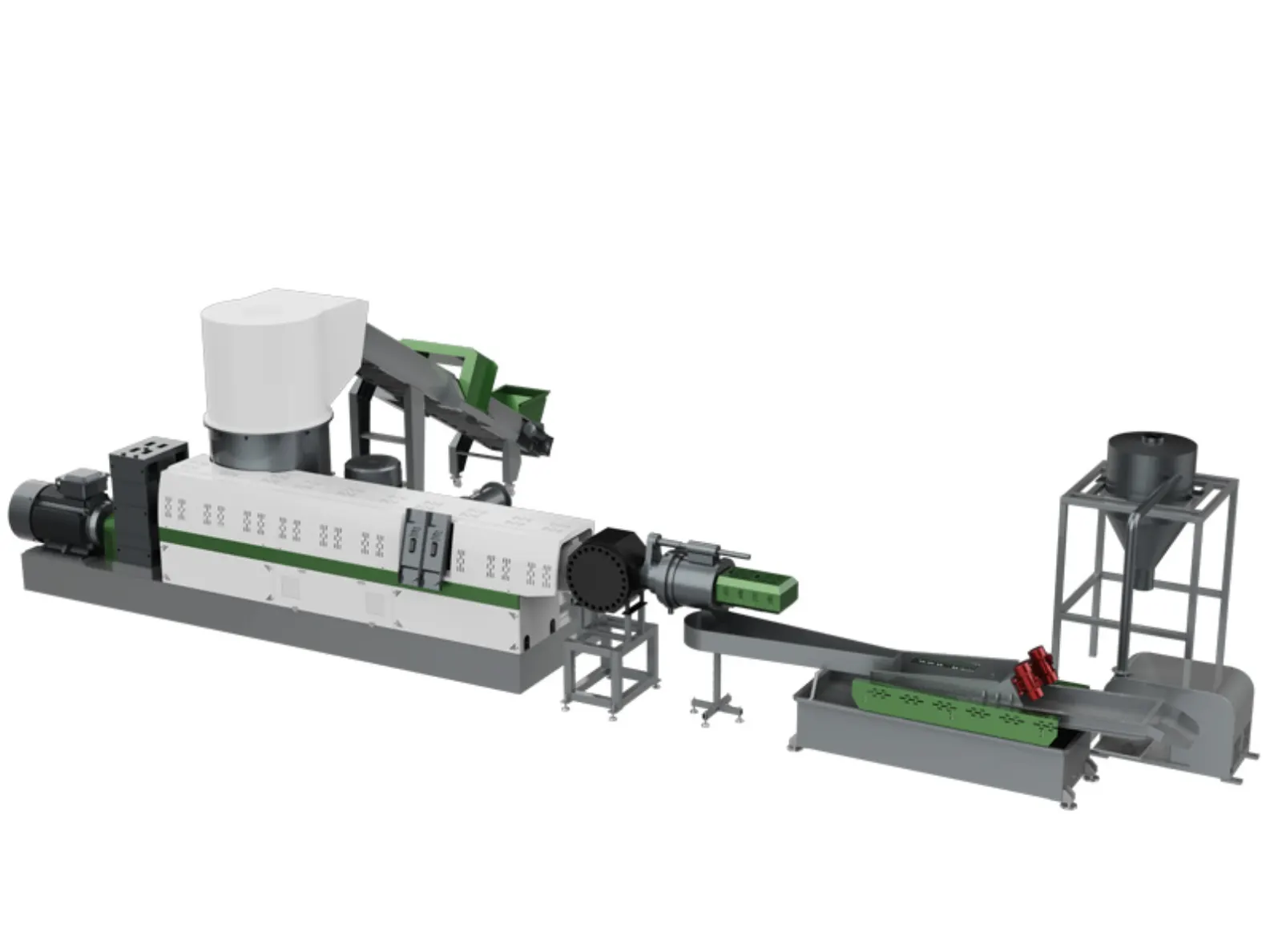
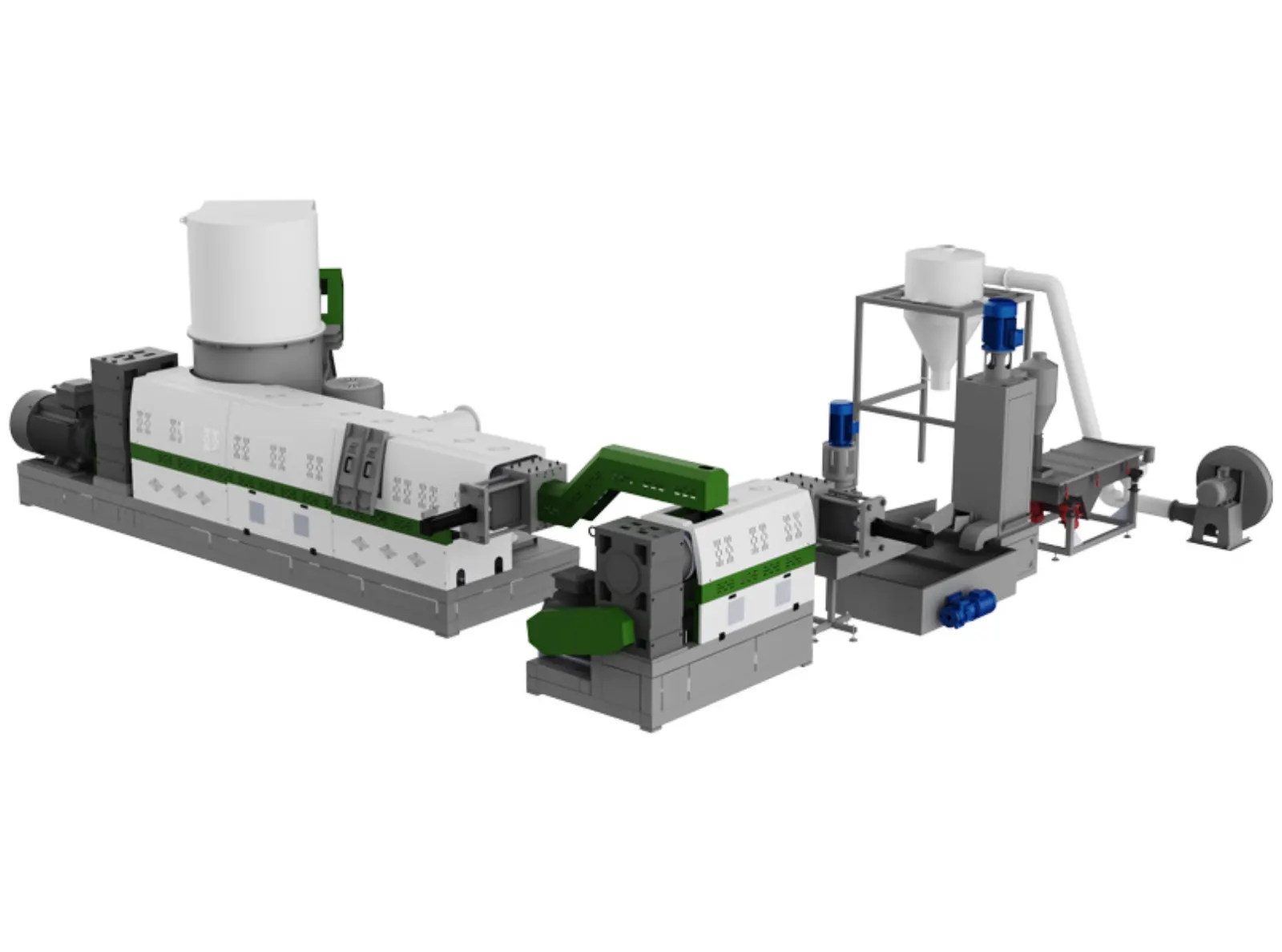
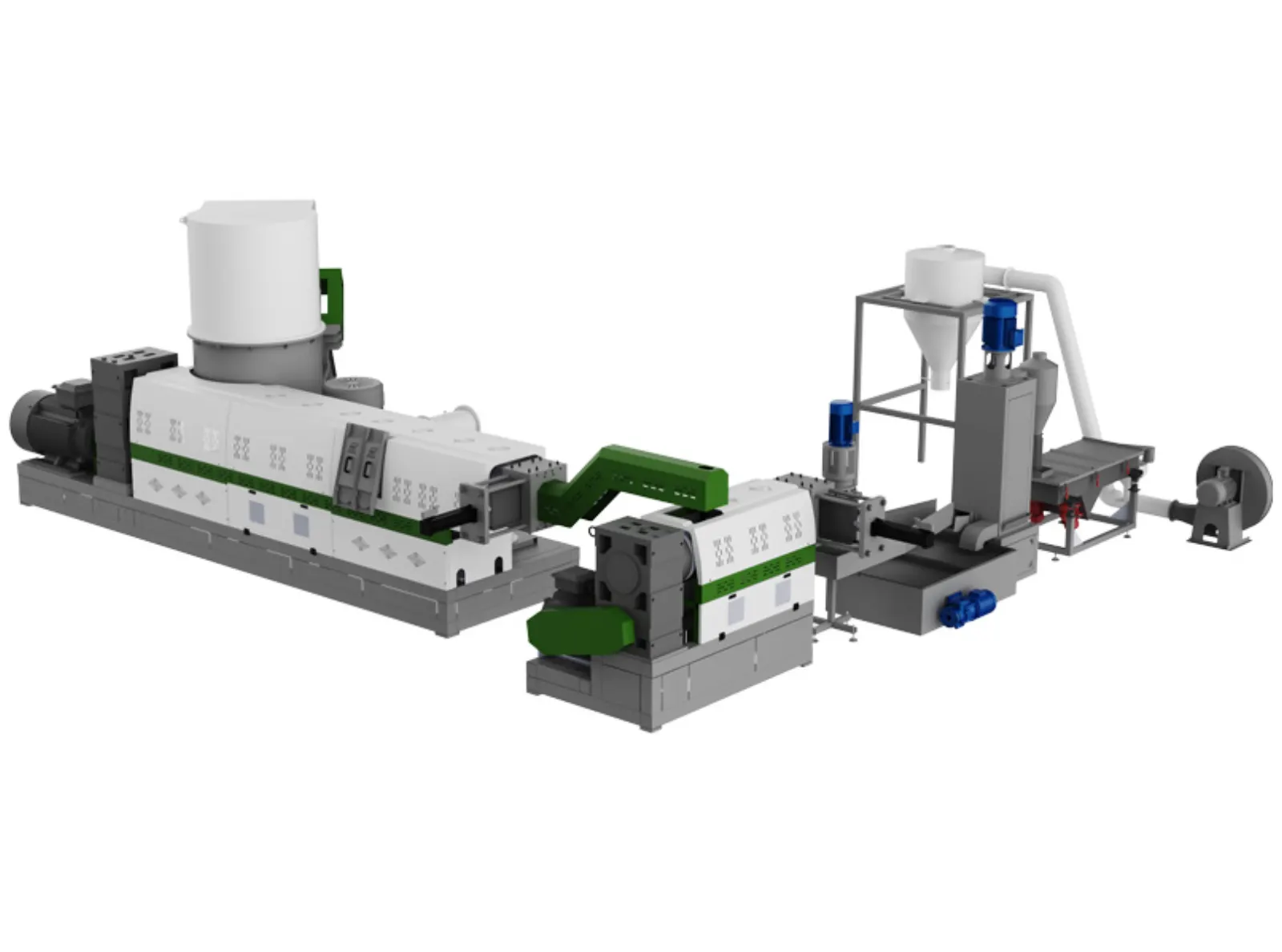
Plastic pelletizing lines, however, can use either single-screw or twin-screw extruders. Twin-screw extruders are especially common in compounding applications, where strong mixing capability and precise temperature control are required. They allow for filler incorporation, color dispersion, and formulation adjustment.
Therefore, pelletizing lines generally offer broader processing flexibility, while film granulation lines emphasize stable recycling performance.
Pelletizing Methods and Final Product Characteristics
Both systems ultimately produce pellets, but the pelletizing methods may differ.
Film granulation lines commonly use strand pelletizing or water-ring die-face cutting. These methods are suitable for polyethylene film materials and provide stable pellet formation at medium output levels.
Pelletizing lines may use strand pelletizing, water-ring cutting, or underwater pelletizing systems. Underwater pelletizing is particularly suitable for high-output industrial production and ensures highly uniform pellet shape and size.
The selection of pelletizing method depends on output capacity, material viscosity, and downstream processing requirements.
Application Scope and Industrial Use
Plastic film granulation lines are primarily used in:
Post-consumer film recycling
Agricultural film recovery
Packaging waste reprocessing
PE film recycling plants
They are widely applied in environmental recycling projects and plastic waste management systems.
Plastic pelletizing lines are commonly found in:
Plastic compounding factories
Masterbatch production plants
Engineering plastics modification facilities
Injection molding scrap recycling operations
In essence, film granulation lines are tailored recycling solutions, while pelletizing lines serve as versatile pellet production platforms.
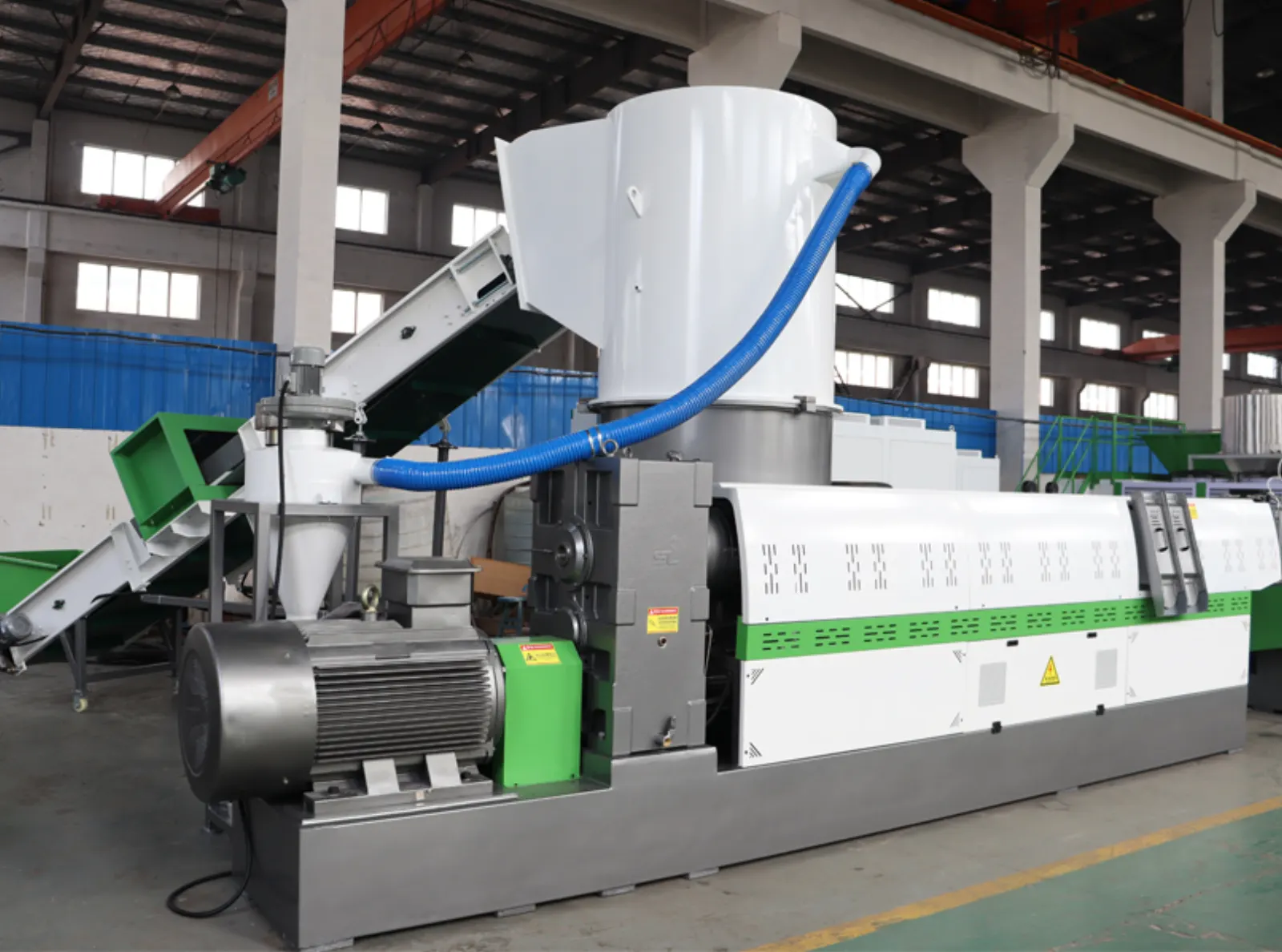
Investment and Operational Considerations
From an investment perspective, plastic film granulation lines often require additional washing tanks, drying units, and densifiers, which increases system footprint and water consumption. However, these components are essential when processing contaminated film waste.
Plastic pelletizing lines without washing sections are generally more compact. If equipped with twin-screw extruders for high-end compounding, however, the equipment cost can be significantly higher.
Operational costs also differ. Film systems consume more energy in washing and drying stages, while pelletizing lines concentrate energy consumption in extrusion and cutting.
Choosing the right configuration depends on raw material condition, desired output quality, and long-term production goals.
Conclusion
Although both plastic film granulation lines and plastic pelletizing lines are designed to produce plastic pellets, their system structure, material adaptability, and industrial positioning are clearly different.
A plastic film granulation line is a specialized recycling solution built to handle soft, low-density, and often contaminated film materials. It integrates pre-treatment, densification, extrusion, and pelletizing into one coordinated process.
A plastic pelletizing line is a more universal system focused on controlled melt processing and uniform pellet production. It can process rigid plastics, clean regrind, or compounded materials, offering greater flexibility in formulation and application.
For recyclers and manufacturers, understanding these differences is not just a technical matter—it directly affects production efficiency, equipment investment, and long-term profitability.
ABOUT THIS UPDATE
Published by Retech Marketing & Communications Team
The Retech Marketing & Communications Team publishes official company news, exhibition information, factory updates, project milestones and product announcements.
For technical questions about plastic recycling systems, please contact our engineering team.