
Choosing the right capacity is one of the most important decisions when investing in a plastic recycling line. A line that is too small may not produce enough material to meet customer demand, while an oversized system can leave expensive equipment underutilized and increase investment and operating costs.
The challenge is that recycling line capacity is not determined by a single number. The actual output depends on the type and condition of the plastic waste, contamination level, moisture content, operating hours, recovery rate, equipment configuration, and the quality requirements of the final recycled material.
For this reason, choosing a recycling line should not simply mean selecting the largest capacity within the available budget. The better approach is to determine how much material can be supplied consistently, how much finished product is actually required, and what capacity the complete recycling process can realistically maintain.
Understanding Plastic Recycling Line Capacity
Plastic recycling line capacity usually refers to the amount of plastic waste that a system can process per hour. Manufacturers commonly express capacity in kilograms per hour (kg/h) or tons per hour (t/h).
For example, a recycling line rated at 1,000 kg/h is generally designed to process approximately 1 ton of feedstock per hour under specified operating conditions. However, this does not necessarily mean that the plant will produce 1,000 kg of clean flakes or recycled pellets every hour.
This distinction between input capacity and finished output is important when comparing equipment.
A washing line may process 1,000 kg of dirty plastic waste per hour, but the incoming material can contain soil, sand, paper, labels, moisture, metals, and other non-plastic contaminants. After sorting, washing, separation, drying, and other processes, the weight of usable plastic will be lower.
If 1,000 kg of feedstock produces 850 kg of usable recycled material, the recovery rate is 85%.
Therefore, when discussing capacity with a recycling line manufacturer, buyers should clarify exactly what the quoted capacity represents. It may refer to feedstock input, washed flakes, dried flakes, extruder throughput, or final pellet production. These figures are not interchangeable.
How to Calculate the Right Recycling Line Capacity
The starting point for capacity selection is the amount of plastic waste that can be processed consistently.
A simple calculation can be made using the required daily processing volume and effective operating hours:
Required hourly capacity = Daily processing requirement ÷ Effective operating hours
For example, if a recycling plant needs to process 12 tons of plastic waste per day and expects to achieve 10 effective production hours per day:
12 ÷ 10 = 1.2 tons per hour
This gives a basic target of 1.2 t/h.
However, selecting a machine rated at exactly 1.2 t/h may leave very little room for fluctuations in feedstock, cleaning, maintenance, material feeding, screen changes, or other interruptions. A reasonable capacity margin is often useful so that the equipment does not have to operate continuously at its maximum rated throughput.
At the same time, the margin should not be excessive. If the available feedstock is only enough to support 1.2 t/h, installing a system designed for several tons per hour may result in low equipment utilization and a longer return on investment.
Consider Effective Operating Hours
Scheduled operating hours and actual production hours are not always the same.
A plant may operate for 12 hours per day, but several hours can be lost to startup, shutdown, cleaning, maintenance, material changes, filter replacement, blockages, or other routine activities.
Therefore, capacity calculations should use effective operating hours, not simply the total time workers are present in the factory.
This produces a more realistic production estimate and helps prevent the line from being undersized.
Calculate Finished Output, Not Just Input
Recovery rate should also be included in the calculation.
The basic formula is:
Recovery rate = Finished usable material ÷ Feedstock input × 100%
For example, if a plant processes 10 tons of waste plastic and produces 8.5 tons of usable recycled material, the recovery rate is 85%.
This means a line processing 10 tons of waste does not necessarily produce 10 tons of saleable recycled material.
The recovery rate can vary significantly depending on feedstock quality. Clean industrial scrap may have relatively little material loss, while heavily contaminated post-consumer plastic can contain substantial amounts of dirt, moisture, labels, paper, metals, and non-target materials.
This is why both processing capacity and recovery rate should be considered when estimating annual production and project profitability.
What Determines the Actual Output of a Plastic Recycling Line?
The nominal capacity shown on a machine specification sheet is only part of the picture. Actual throughput can vary significantly depending on the material being processed and the configuration of the recycling line.
Plastic Type and Material Characteristics
Different plastics behave differently during recycling.
PE film, for example, has a low bulk density and can be difficult to feed consistently. Thin film can also wrap around rotating components if the equipment is not properly designed for this application. A PE film washing line therefore requires a different configuration from a line processing rigid HDPE containers.
PP woven bags and raffia can contain sand, fibers, labels, and other contaminants, while rigid PP and HDPE waste may have higher bulk density but can contain caps, labels, liquids, or foreign materials.
PET bottles present another set of requirements. A typical PET recycling process may involve sorting, label removal, crushing, washing, separation, drying, and other stages. If the final product needs to meet a high-quality specification, additional processing may be necessary.
Consequently, a recycling line that achieves a particular throughput with one material cannot automatically be expected to achieve the same throughput with another.
Contamination and Moisture
Feedstock quality has a direct influence on both throughput and equipment configuration.
Relatively clean industrial scrap may require less intensive washing and separation. In contrast, post-consumer waste can contain large quantities of soil, organic matter, paper, labels, metals, and other plastics.
Higher contamination generally means more processing is required before the material can reach the desired quality. This can increase water consumption, energy use, equipment wear, and material losses.
Moisture is another important factor, especially for extrusion and pelletizing. Plastic with excessive moisture may require more effective dewatering and drying before entering the extruder. If moisture is not properly controlled, it can affect extrusion stability and final pellet quality.
For this reason, manufacturers should evaluate the actual feedstock rather than recommend a recycling line based only on the desired output number.
Equipment Configuration
The configuration of the recycling system also affects real-world capacity.
A basic line processing relatively clean material may achieve a high throughput with fewer processing stages. A line designed for heavily contaminated waste may need additional sorting, washing, friction washing, separation, drying, or filtration equipment.
The more demanding the final product specification, the more important it becomes to evaluate the complete process rather than focusing on the capacity of an individual machine.
For larger projects, providing representative samples of the feedstock for testing can be especially useful. Testing allows the equipment supplier to evaluate actual throughput, washing efficiency, material loss, moisture, filtration performance, and final product quality.
Match Capacity Across the Entire Recycling Process
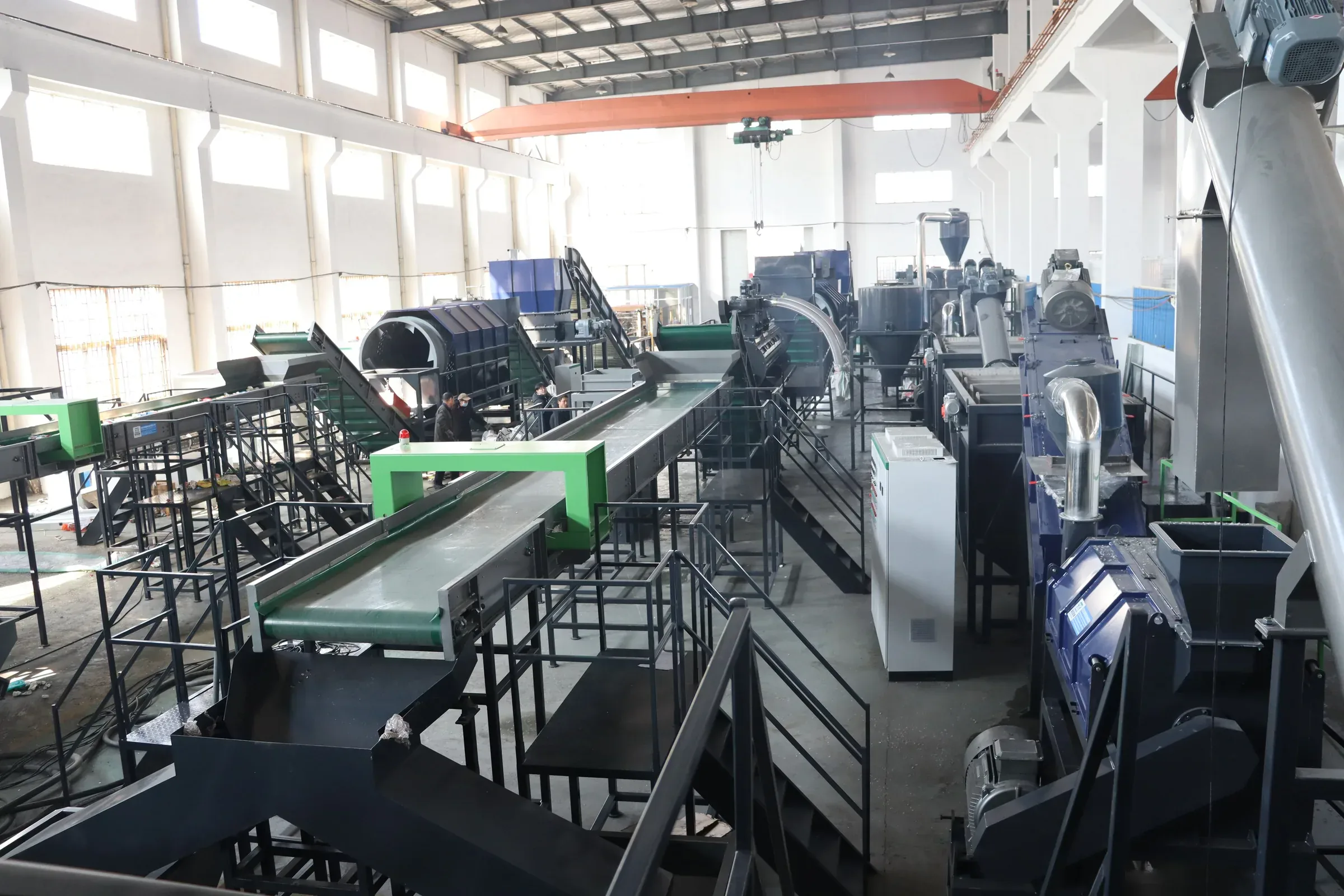
A plastic recycling line is a complete production system rather than a collection of independent machines. Its overall output is usually limited by the bottleneck within the process.
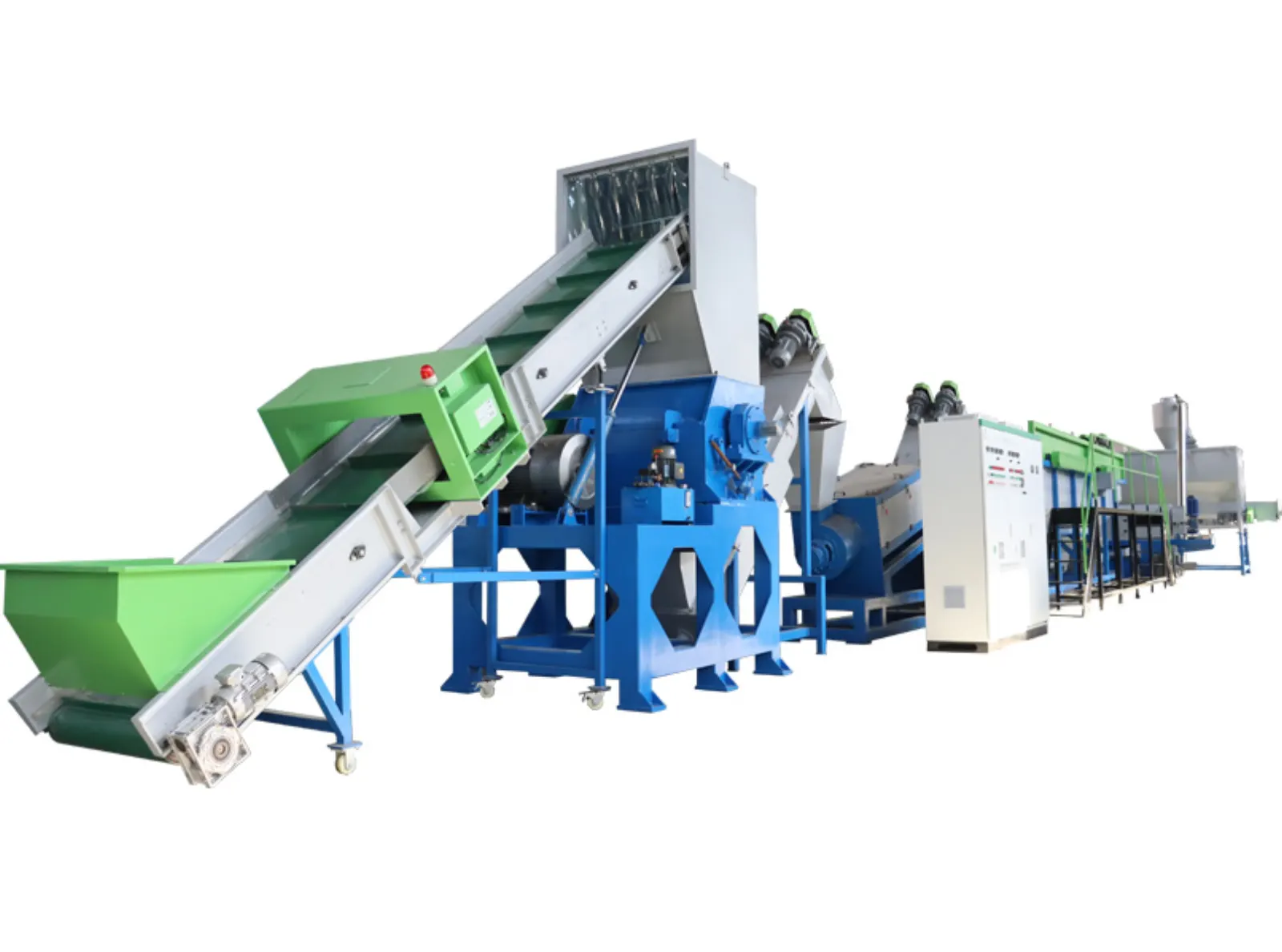
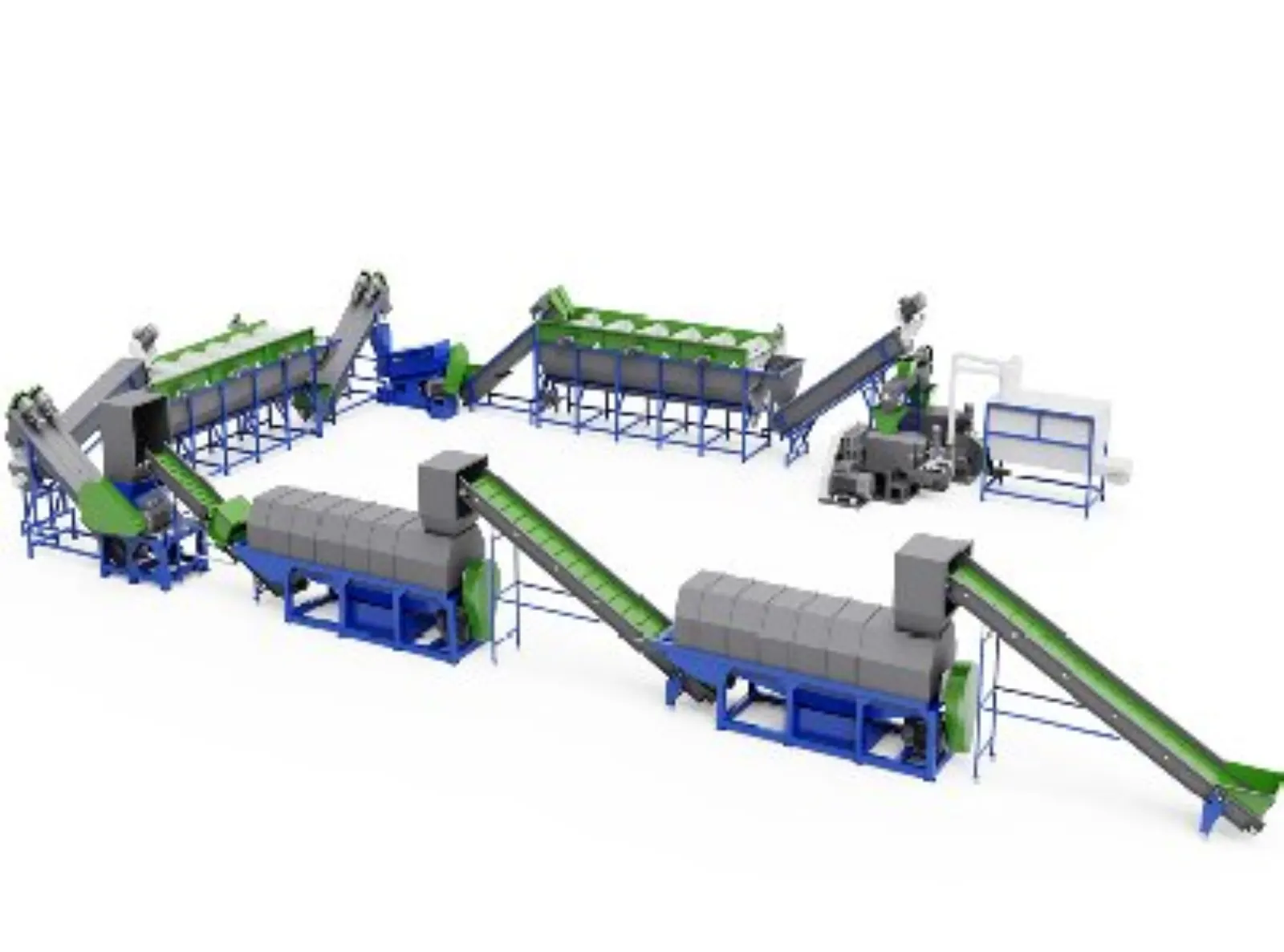
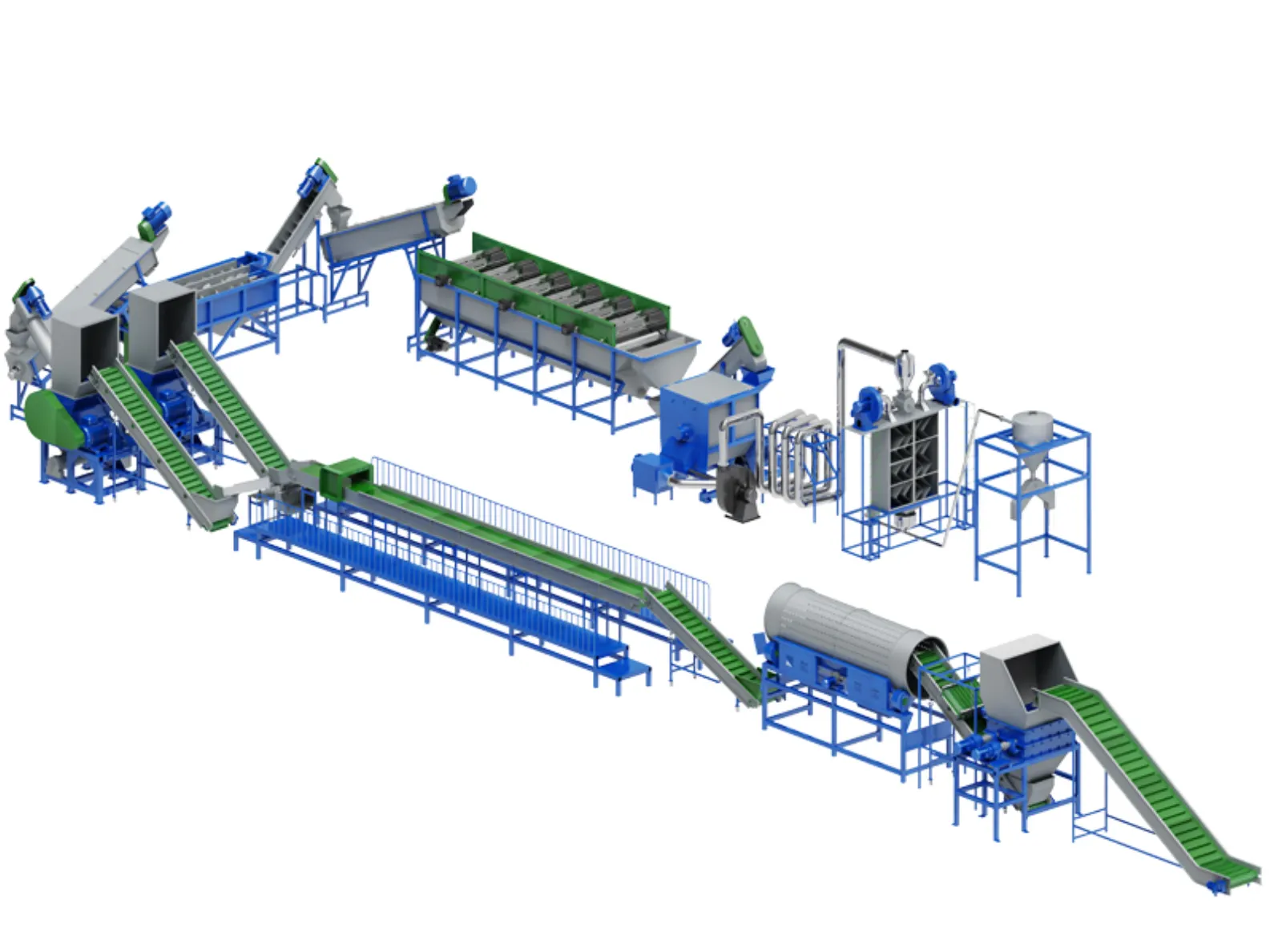
A typical plastic washing and pelletizing line may include:
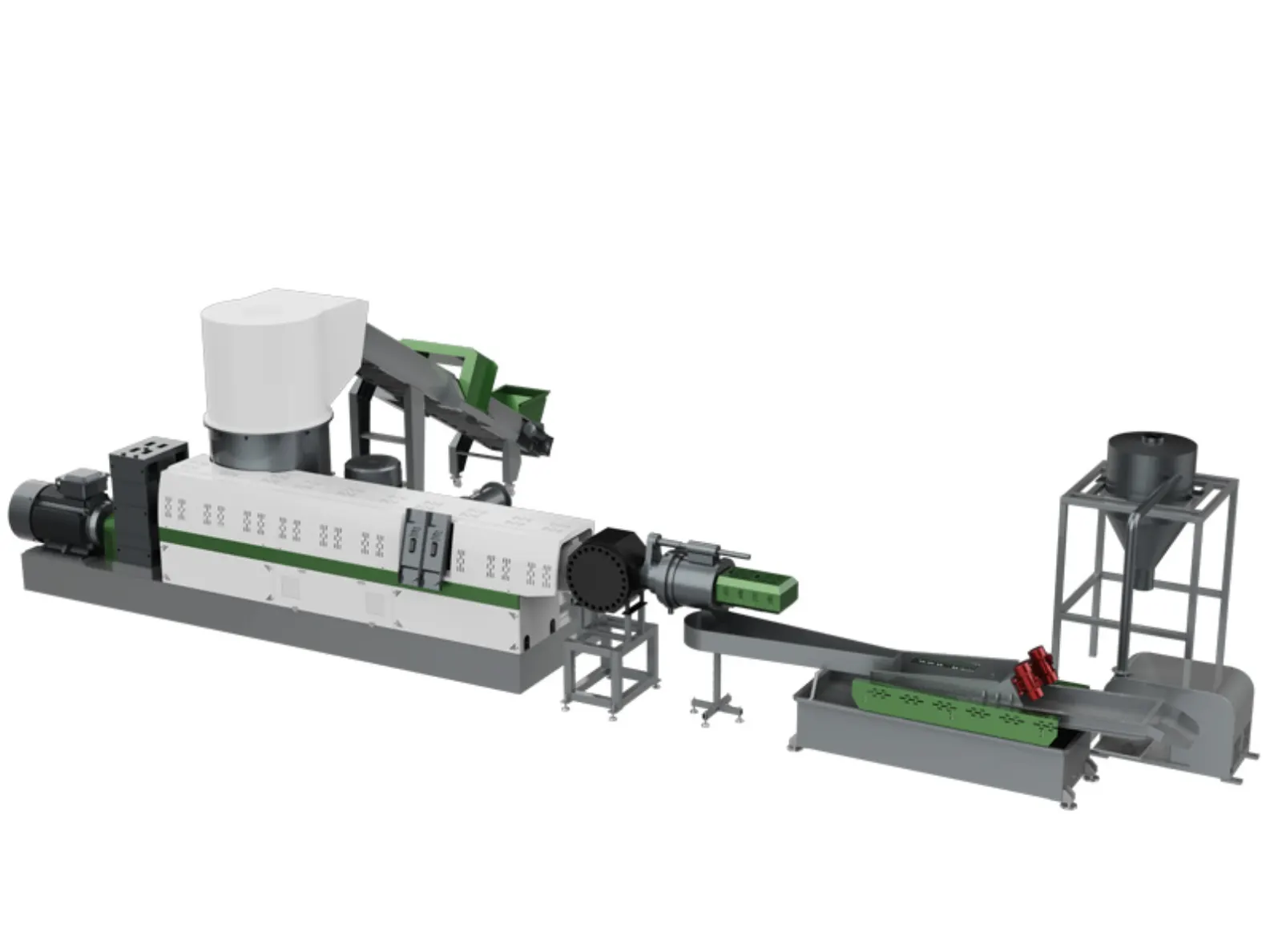
Feeding → Sorting → Crushing → Washing → Separation → Dewatering → Drying → Extrusion → Filtration → Pelletizing → Packaging
Each section needs to be properly matched.
For example, a crusher capable of processing 1,500 kg/h does not make the entire line a 1,500 kg/h system if the washing section can process only 1,000 kg/h.
Similarly, if the washing system produces 1,200 kg/h of clean flakes but the pelletizing system can process only 800 kg/h, the extrusion section becomes the bottleneck.
This is why capacity should be evaluated at the system level.
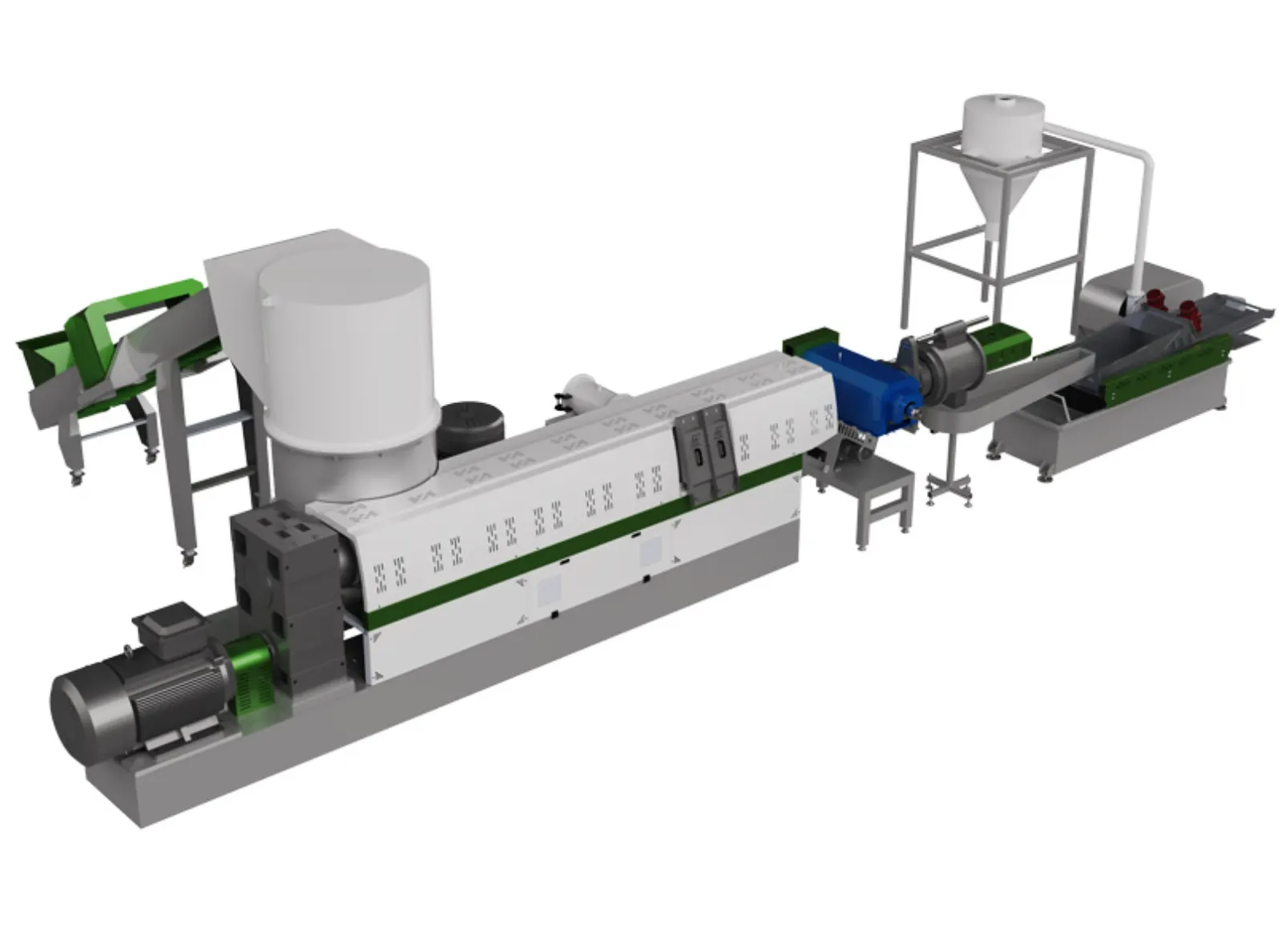
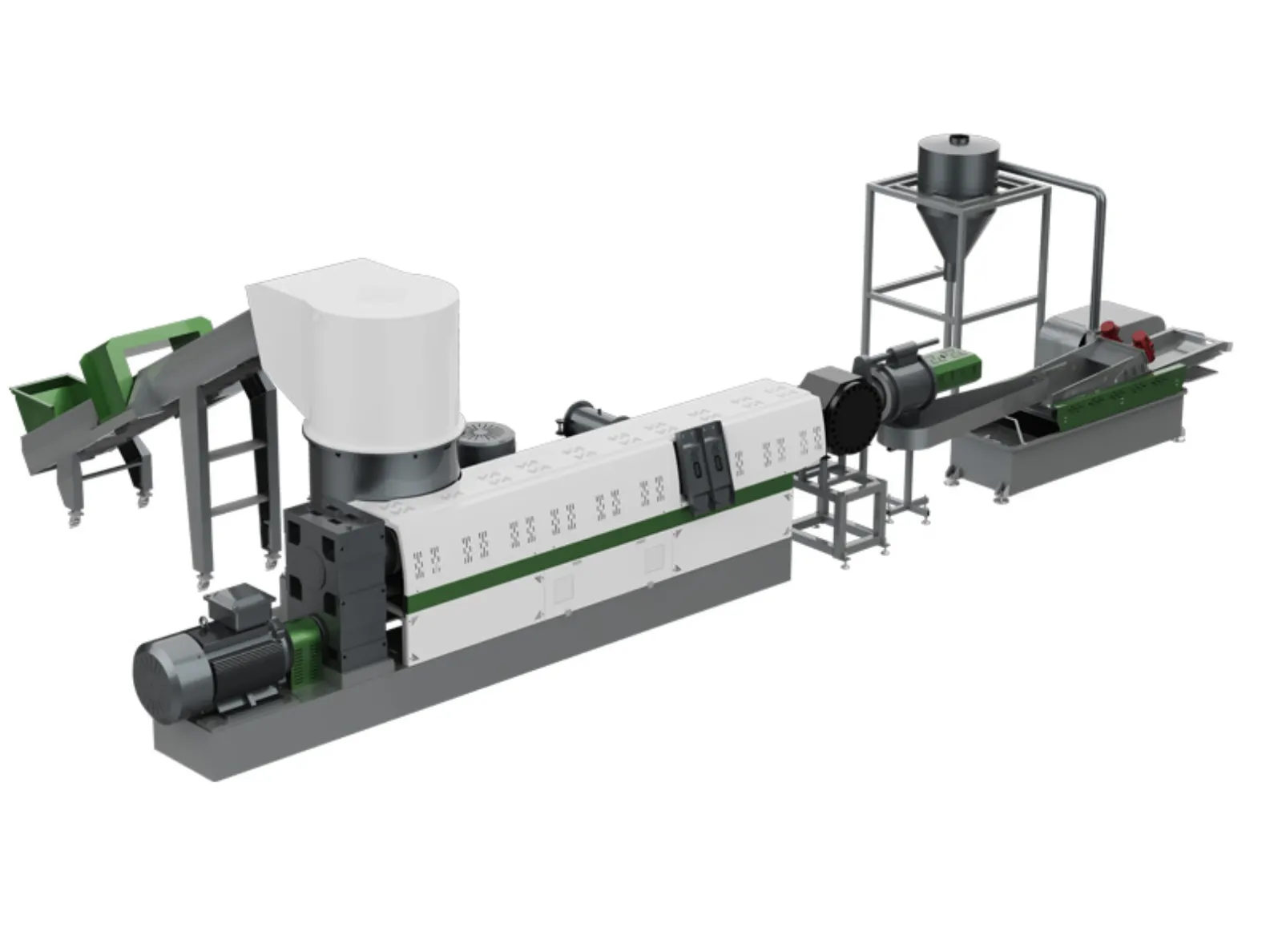
It is also important to distinguish between washing capacity and pelletizing capacity. Some recycling projects sell clean washed flakes as the final product and therefore do not require extrusion. Others need recycled pellets for injection molding, extrusion, blow molding, or other downstream applications.
The required final product will determine how the line should be configured and how the capacity of each section should be matched.
Choose Capacity Based on Feedstock Supply and Future Demand
Available feedstock is one of the most important factors when determining recycling line capacity.
Suppose a company can reliably collect 8 tons of suitable plastic waste per day. Installing a line capable of processing 20 tons per day may appear attractive because of its higher output, but the equipment will spend much of its operating time waiting for material unless additional feedstock can be secured.
This means capacity should be based on stable and realistic feedstock availability, rather than occasional peaks in material supply.
At the same time, future growth should not be ignored. If the company expects its collection network or customer base to grow substantially over the next few years, selecting a line with no capacity margin could lead to another major equipment investment sooner than expected.
A practical solution is often to select a line with reasonable additional capacity or design the plant layout and infrastructure to allow future expansion. In some cases, installing an appropriately sized initial line and adding another line later can be more economical than purchasing a very large system from the beginning.
Consider Operating Costs Along With Capacity
Capacity selection should also take long-term operating costs into account.
A larger recycling line normally requires greater installed power, although energy consumption does not always increase in direct proportion to capacity. Shredders, extruders, dryers, pumps, conveyors, heaters, and other auxiliary equipment all contribute to energy consumption.
For a meaningful comparison, buyers can evaluate energy consumption per ton of finished product:
Energy consumption per ton = Total electricity consumption ÷ Finished recycled output
Labor is another consideration. A larger plant may require additional operators for feeding, sorting, quality control, maintenance, packaging, and general plant management. A higher level of automation can reduce some labor requirements but may increase the initial investment and technical requirements.
Maintenance and spare parts should also be considered. A line that runs continuously at or near its maximum capacity may experience greater wear than a system operating within a more comfortable range.
Therefore, the most economical capacity is not necessarily the one with the lowest purchase price or the highest production rate. It is the one that provides a reasonable balance between investment, utilization, operating cost, production, and product value.
Common Mistakes When Choosing Recycling Line Capacity
One common mistake is choosing capacity based only on the maximum output available from a manufacturer. A large line is not necessarily a better investment if the plant does not have enough feedstock or market demand.
Another mistake is treating rated capacity as guaranteed production. Actual throughput depends on material type, contamination, moisture, feeding conditions, equipment configuration, and operating practices.
Ignoring material losses is another frequent problem. Buyers may calculate their expected production based entirely on the weight of incoming waste without considering the recovery rate.
It is also risky to evaluate individual machines separately. A high-capacity crusher cannot compensate for a lower-capacity washing or extrusion system. The complete process needs to be balanced.
Finally, some projects focus heavily on the initial equipment price while overlooking electricity, labor, water, maintenance, spare parts, and downtime. These costs can have a much greater influence on the long-term economics of the recycling plant.
A Practical Approach to Selecting the Right Output
A reliable capacity selection process can be built around a few key questions.
First, how much suitable plastic waste can be supplied consistently each day or month?
Second, what type of plastic is being processed, and what are its contamination, moisture, size, and density characteristics?
Third, what is the required final product—washed flakes, dried flakes, or recycled pellets?
Fourth, how many effective production hours will the plant operate each day?
Fifth, what recovery rate can reasonably be expected from the feedstock?
Once these questions are answered, the required hourly input capacity can be calculated. A suitable operating margin can then be added, while ensuring that the major sections of the recycling line are properly matched.
For example, if a project needs to process 15 tons of PP waste per day over 10 effective operating hours, the basic requirement is 1.5 t/h. The final equipment specification should then be determined after evaluating the actual PP waste, contamination level, washing requirements, expected recovery rate, and future production plans.
This approach is much more reliable than simply selecting a machine based on a target such as "1.5 tons per hour."
What to Provide When Asking for a Recycling Line Quote
When requesting a quotation from a plastic recycling line manufacturer, providing detailed information can significantly improve the accuracy of the proposed solution.
Useful information includes:
- Type of plastic waste
- Source of the material
- Daily or monthly feedstock availability
- Target production
- Operating hours per day
- Contamination level
- Moisture content
- Material size
- Bulk density, if available
- Required final product
- Desired product quality
- Available factory space
- Local electricity conditions
- Water availability
- Expected future production
Photos and videos of the raw material can help suppliers understand the feedstock, while representative samples are even more valuable for larger projects.
A professional equipment manufacturer should be able to evaluate these factors and explain how the proposed capacity is determined rather than simply providing a machine model and a nominal output figure.
Final Thoughts
Choosing the right plastic recycling line capacity requires more than matching a machine's rated output with a desired production number.
The most important factors are feedstock availability, plastic type, contamination, moisture, effective operating hours, recovery rate, final product requirements, and the capacity balance between different stages of the recycling process.
A line that is slightly larger than the immediate production requirement can provide useful flexibility, while excessive capacity can result in unnecessary capital investment and low equipment utilization. The best solution is usually a system that operates efficiently under realistic conditions and still provides enough room for normal production fluctuations and future growth.
Before making a final decision, buyers should discuss their actual feedstock and production requirements with the recycling line manufacturer, and where possible, conduct material testing. This helps ensure that the selected capacity reflects real-world output rather than only theoretical machine performance.
Ultimately, the right plastic recycling line is not the one with the biggest capacity. It is the one that can consistently process the available feedstock, produce the required recycled material quality, and deliver a sustainable operating cost over the long term.
This article is carried over from the Retech technical archive and keeps its original URL.
ABOUT THIS UPDATE
Published by Retech Marketing & Communications Team
The Retech Marketing & Communications Team publishes official company news, exhibition information, factory updates, project milestones and product announcements.
For technical questions about plastic recycling systems, please contact our engineering team.