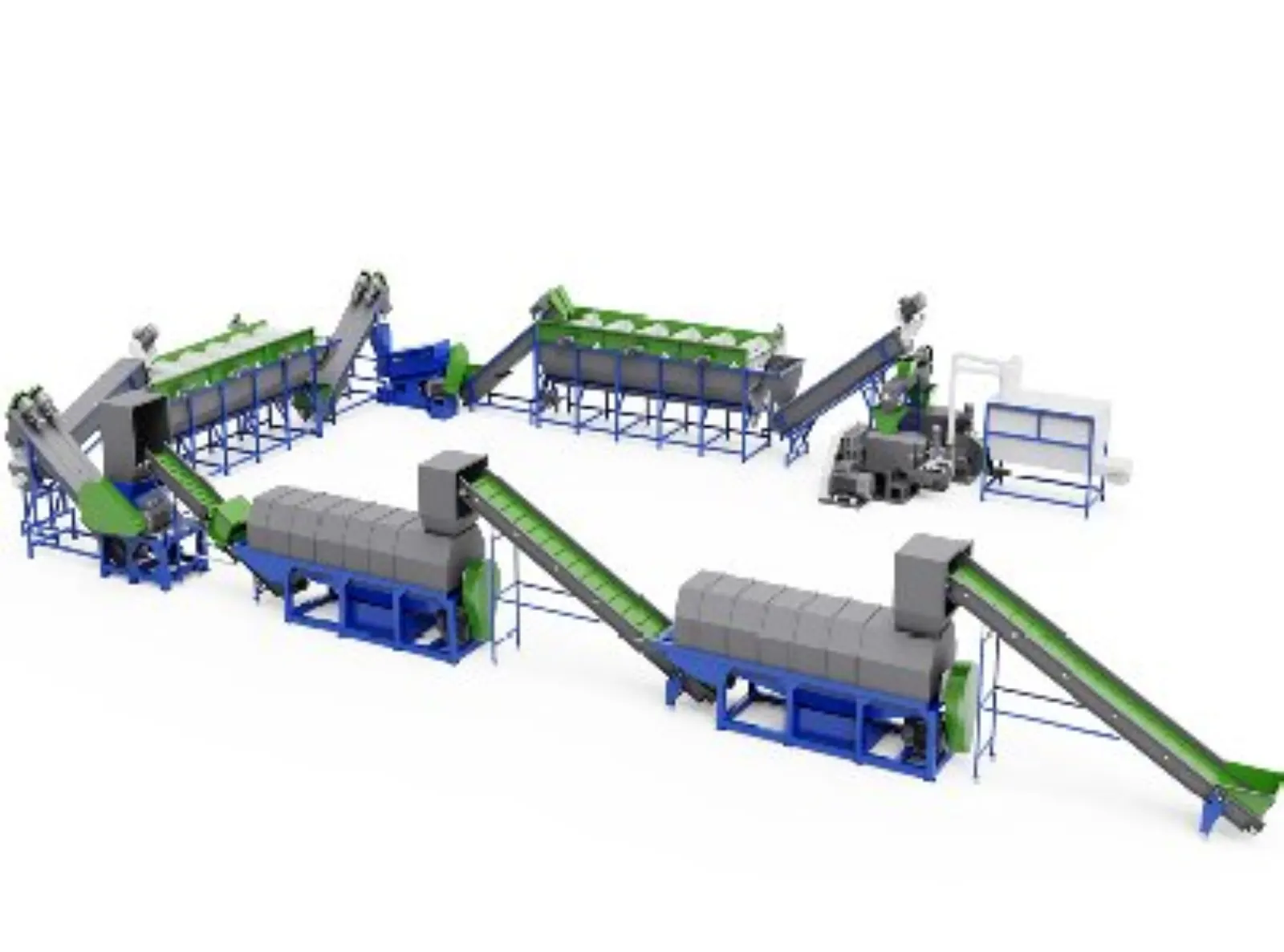
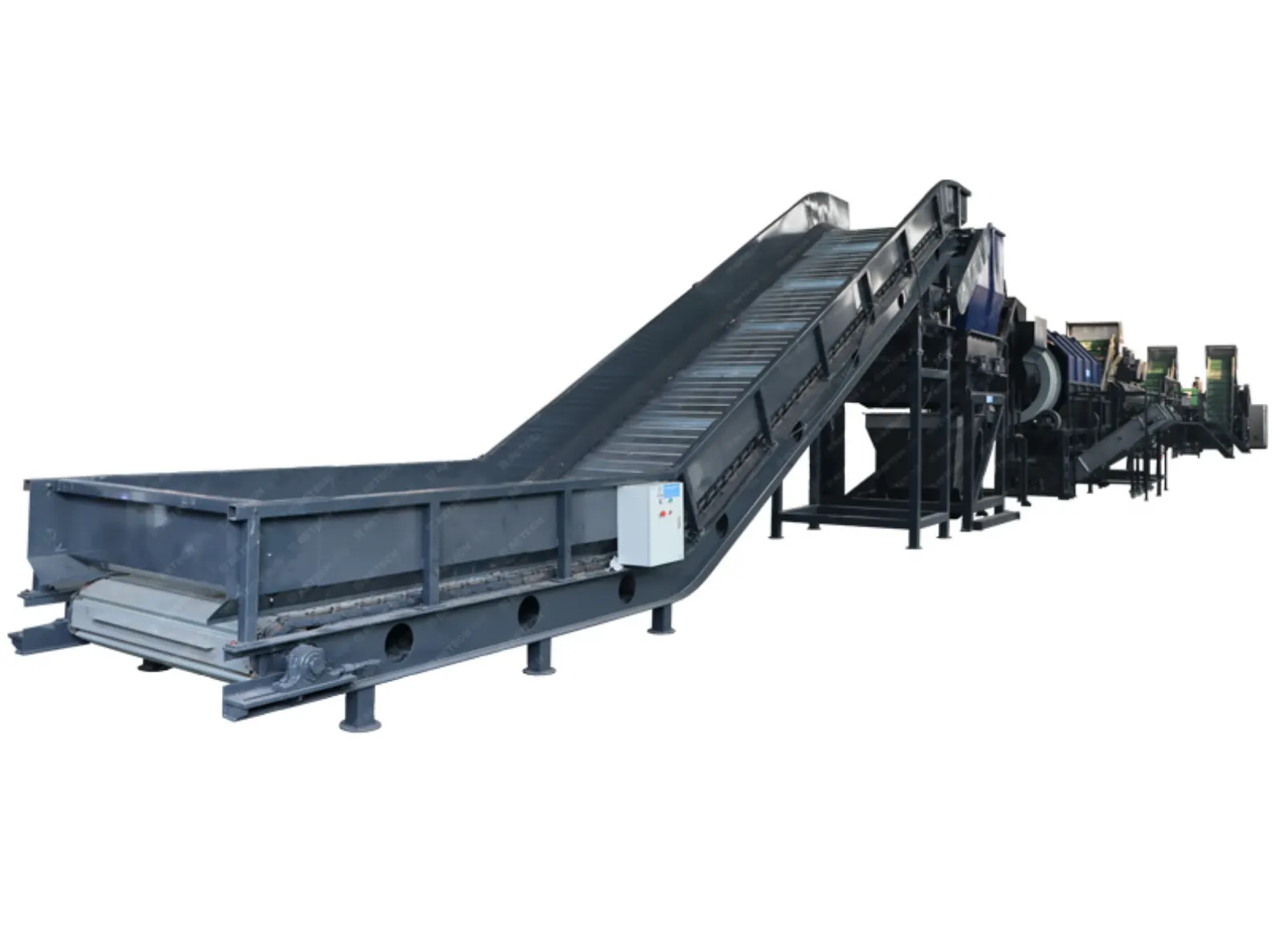
Plastic recycling is often described as a single process, but in practice, different plastic materials require very different recycling strategies. PET bottles, HDPE containers, and PP/PE films may all enter a recycling plant as post-consumer or post-industrial plastic waste, yet their material properties, contamination levels, washing requirements, and processing characteristics are not the same.
This is why choosing a recycling line based only on the general category of “plastic recycling machine” can lead to poor results. A line designed for PET bottles is not automatically suitable for PE film, while a system optimized for rigid HDPE containers may not be the right choice for polypropylene products.
Understanding the differences between PET, HDPE, and PP/PE recycling lines is therefore important when planning a new recycling plant, upgrading existing equipment, or evaluating machinery for a specific waste stream.
Why Different Plastics Need Different Recycling Lines
The main reason is simple: plastic type determines how the material behaves throughout the recycling process.
PET, HDPE, PP, and PE have different melting points, densities, mechanical properties, moisture sensitivity, and contamination characteristics. Their waste forms are also different. A PET recycling plant may primarily handle beverage bottles, while an HDPE line may process detergent bottles, containers, or industrial packaging. A PP/PE film recycling line may be designed for agricultural film, stretch film, packaging film, or woven bags.
These differences affect almost every stage of a recycling system, including:
- Material sorting
- Size reduction
- Separation
- Washing
- Friction cleaning
- Dewatering and drying
- Extrusion
- Pelletizing
- Final material quality
The best recycling line is therefore not necessarily the most sophisticated one. It is the one designed around the characteristics of the incoming waste and the quality of recycled material required at the end.
PET Recycling Line
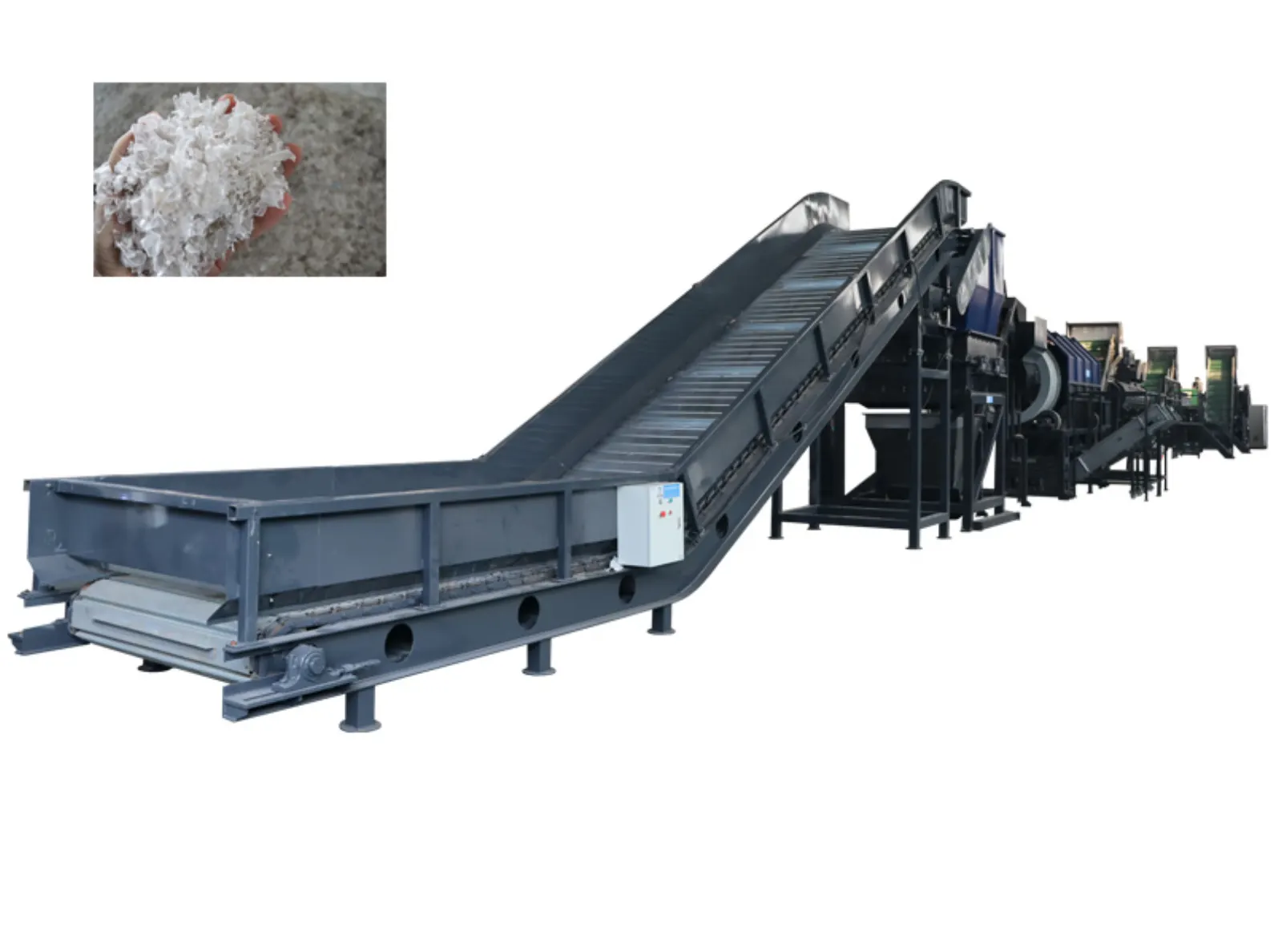
PET, or polyethylene terephthalate, is widely used for beverage bottles, food containers, packaging, and other products. PET bottle recycling is generally based on a relatively structured feedstock, particularly when bottles have already been collected and sorted.
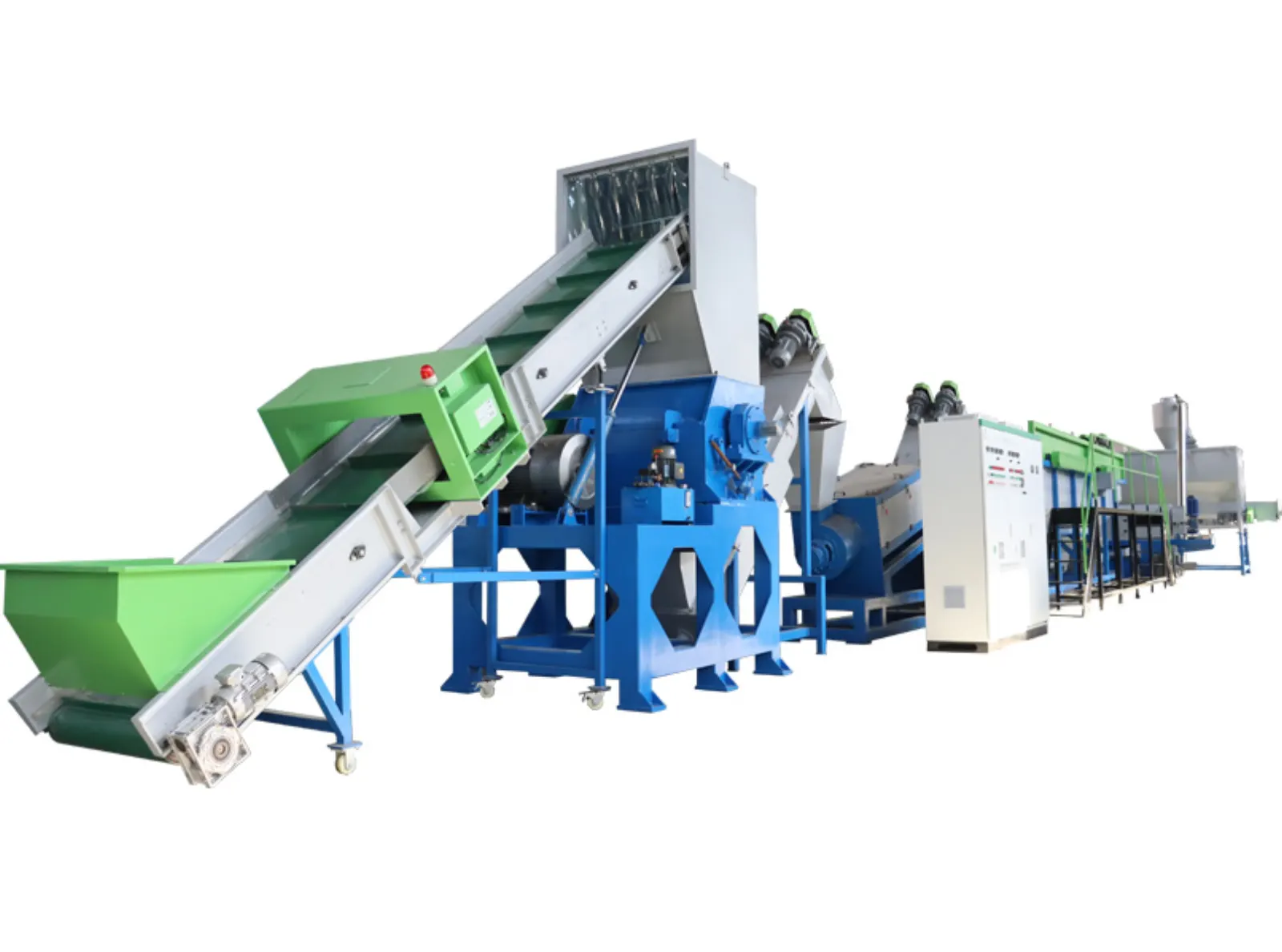
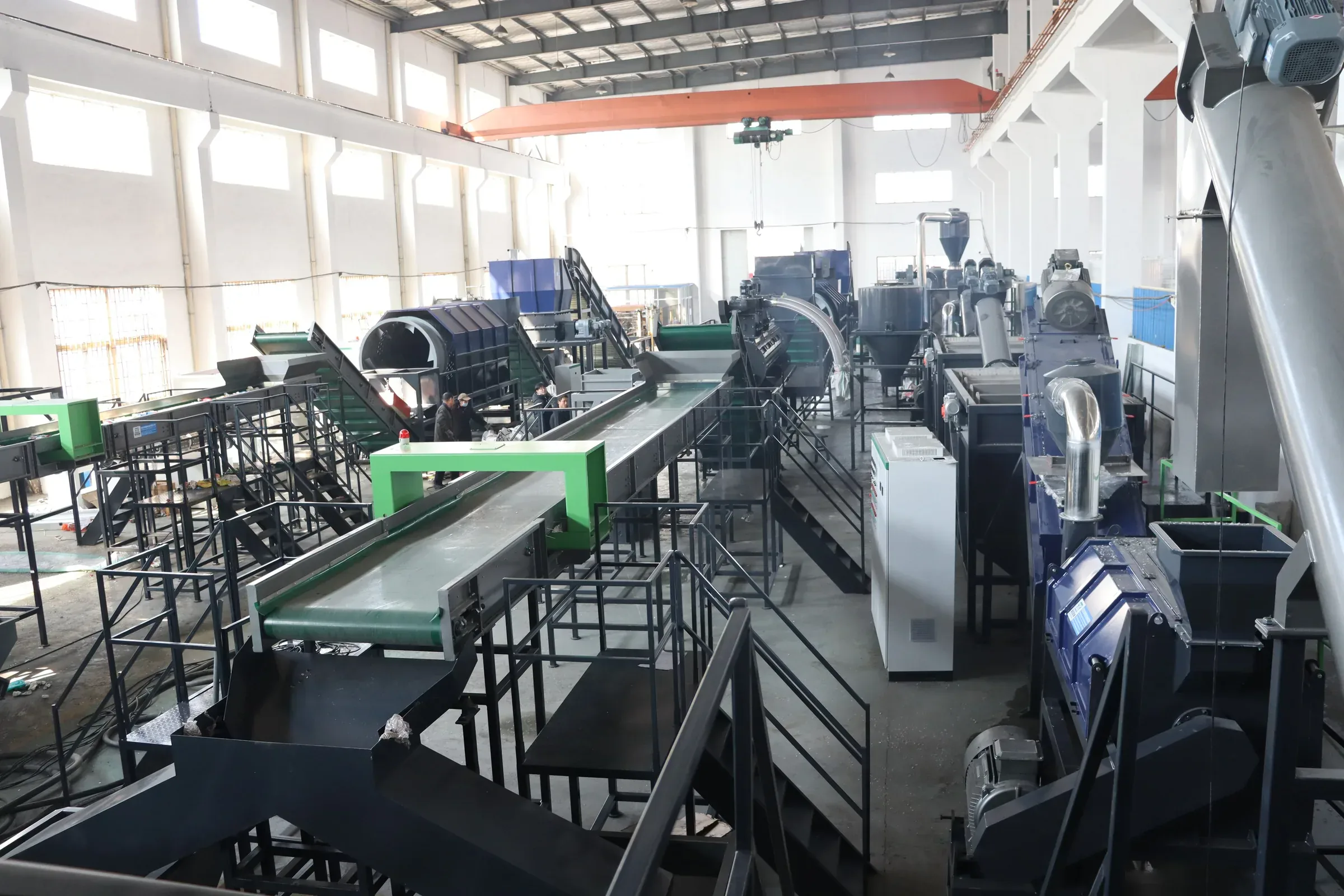
A typical PET bottle recycling line may include bale opening, sorting, label removal, crushing, washing, separation, drying, and packaging. Depending on the required output, the recycled PET flakes can then be processed further into pellets or used in other applications.
Typical PET Recycling Process
A common PET bottle recycling process can include:
Bale opening → sorting → label removal → crushing → pre-washing → hot washing → rinsing → floating separation → dewatering → drying → PET flakes
The exact configuration depends heavily on the condition of the bottles and the required flake quality.
One of the important challenges in PET recycling is removing materials that do not belong in the PET stream. Labels, caps, rings, adhesives, dirt, food residue, and other polymers can all affect the quality of recycled PET.
Bottle caps are often made from PP or HDPE rather than PET. Since these materials have different densities, a properly designed separation system can help separate them from PET flakes during washing.
Why PET Washing Can Be More Demanding
For high-quality PET flakes, washing is not simply about removing visible dirt. The system may also need to remove oil, beverage residue, adhesives, labels, and other contaminants.
Hot washing can be used when stronger cleaning is required. It can help loosen stubborn contaminants and improve the cleanliness of the final flakes. However, hot washing also increases energy and chemical requirements, so it should be selected according to the actual feedstock and output specifications rather than treated as mandatory for every PET plant.
Another consideration is moisture. PET is hygroscopic, meaning it can absorb moisture from the environment. If PET is later processed through extrusion, inadequate drying can affect melt processing and final product quality.
HDPE Recycling Line
HDPE, or high-density polyethylene, is commonly found in detergent bottles, shampoo containers, milk bottles, chemical containers, crates, pipes, and other rigid plastic products.
Compared with PET bottle recycling, HDPE recycling generally has a different separation and cleaning strategy because the feedstock has different material properties and may contain a wider range of rigid plastic products.
A typical HDPE recycling line may include:
Sorting → crushing → washing → friction cleaning → floating separation → dewatering → drying → extrusion → pelletizing
Not every HDPE recycling project requires all of these stages. For relatively clean industrial waste, for example, a simpler system may be sufficient. Post-consumer containers with heavy contamination may require more intensive washing.
Density Separation Is Important
One of the useful characteristics of HDPE recycling is its density relative to water. HDPE generally sinks or behaves differently from lower-density polyolefins depending on the separation setup, while materials such as PP and some other contaminants may have different flotation behavior.
This makes water-based separation an important part of many rigid-plastic recycling systems.
However, density separation should not be viewed as a universal solution. The actual behavior of flakes depends on material composition, contamination, shape, and process conditions. Good sorting before crushing remains important for producing a consistent recycled material.
HDPE Contamination
HDPE containers can contain several types of contamination:
- Dirt and sand
- Organic residues
- Oil and grease
- Paper labels
- Adhesives
- Metal components
- Other plastics
- Chemical residues
The required washing intensity depends on the source of the waste. Clean post-industrial HDPE scrap may need relatively limited washing, while post-consumer containers can require a much more complete washing system.
PP/PE Plastic Recycling Line
PP and PE are both polyolefins, but they are not exactly the same material. PE includes several grades, such as LDPE, LLDPE, and HDPE, while PP is polypropylene.
In recycling applications, the term PP/PE recycling line often refers to systems designed to process flexible or rigid polyolefin waste, depending on the specific feedstock.
One particularly important category is PP/PE film recycling.
Typical feedstocks include:
- Agricultural film
- Stretch film
- Packaging film
- Shopping bags
- Industrial film
- Woven PP bags
- PP packaging waste
- Production scrap
Film recycling presents a different set of challenges compared with PET bottles or rigid HDPE containers.
Why Film Recycling Is More Difficult
Plastic film is lightweight, flexible, and prone to wrapping around rotating components. It can also carry large amounts of soil, sand, organic matter, and moisture.
Agricultural film is a good example. After use, it may contain significant quantities of soil and plant residues. Simply crushing the film and washing it may not provide the desired result. A well-designed system may need pre-treatment, intensive washing, dewatering, and specialized drying.
Film also behaves differently during feeding. A conveyor and feeding system that works well with rigid bottles may struggle with loose film because the material can bridge, wrap, or become difficult to control.
For this reason, PP/PE film recycling lines are often designed with equipment specifically adapted to lightweight flexible materials.
PET vs HDPE vs PP/PE Recycling Lines
Although the three types of recycling systems may share basic equipment, their overall configurations can be quite different.
| Factor | PET | HDPE | PP/PE |
|---|---|---|---|
| Typical waste | PET bottles and containers | Rigid bottles and containers | Film, bags, woven products, rigid PP/PE |
| Main challenge | Polymer separation and high-quality cleaning | Contamination and mixed rigid plastics | Soil, moisture, lightweight material, wrapping |
| Crushing | Bottle crusher/granulator | Heavy-duty crusher | Film-specific shredder/crusher |
| Washing | Cold/hot washing depending on quality | Friction and water washing | Intensive washing often required for dirty film |
| Separation | Important for caps, labels, and other plastics | Important for mixed plastics | Important for contaminants and mixed polymers |
| Dewatering | Mechanical dewatering | Mechanical dewatering | Critical for film |
| Drying | Particularly important for high-quality PET | Depends on application | Especially important because film retains water |
| Pelletizing | Optional depending on end use | Common for pellet production | Common for producing recycled pellets |
The key point is that the same equipment name does not necessarily mean the same machine configuration.
A crusher used in a PET bottle line, for example, may be fundamentally different from a shredder designed for agricultural film. Likewise, a standard washing tank may not be sufficient for heavily contaminated film.
Washing Requirements Are One of the Biggest Differences
Washing is often where the differences between plastic recycling lines become particularly obvious.
PET bottles may require label and adhesive removal, hot washing, and multiple rinsing stages when high-quality flakes are required.
HDPE containers may require strong friction washing to remove dirt, residues, and surface contamination.
PP/PE film may require intensive washing because contaminants can be trapped between layers of film or mixed with soil and organic matter.
For this reason, recycling plant designers should start with the actual contamination profile of the feedstock, rather than simply selecting a standard washing line.
A relatively clean factory scrap stream and a heavily contaminated post-consumer stream should not be expected to use exactly the same washing configuration.
What About Crushing and Size Reduction?
Size reduction is another area where material characteristics matter.
PET bottles are rigid and relatively easy to feed into conventional wet or dry granulators designed for bottles.
HDPE containers are also rigid but may vary significantly in wall thickness and shape. Heavy-duty cutting systems may be required for thicker or larger items.
Films behave differently. Their flexibility means that conventional rigid-plastic crushers may not provide stable feeding or cutting performance. A film shredder or specialized granulator may be more appropriate.
The goal is not simply to make the plastic smaller. The material needs to be reduced to a size and shape that allows efficient washing, separation, drying, and subsequent processing.
Drying and Dewatering Requirements
Removing water efficiently is essential in plastic recycling, but the required equipment depends on the material.
PET flakes can be mechanically dewatered and then dried using thermal or air-based systems, especially when the material will undergo further processing.
HDPE flakes can also be processed through centrifugal dewatering and thermal drying depending on the final application.
For PP/PE film, however, dewatering is particularly important because film can retain water on its surface and inside folds. A conventional dewatering setup may not achieve the desired moisture level.
This is one reason film recycling systems often use a combination of mechanical squeezing, centrifugal dewatering, and thermal drying.
Should You Choose a Washing Line or a Full Pelletizing Line?
This depends on what you intend to sell.
If the target product is clean plastic flakes, the line may end after washing, separation, dewatering, and drying.
If the target product is recycled plastic pellets, an extrusion and pelletizing stage must be added.
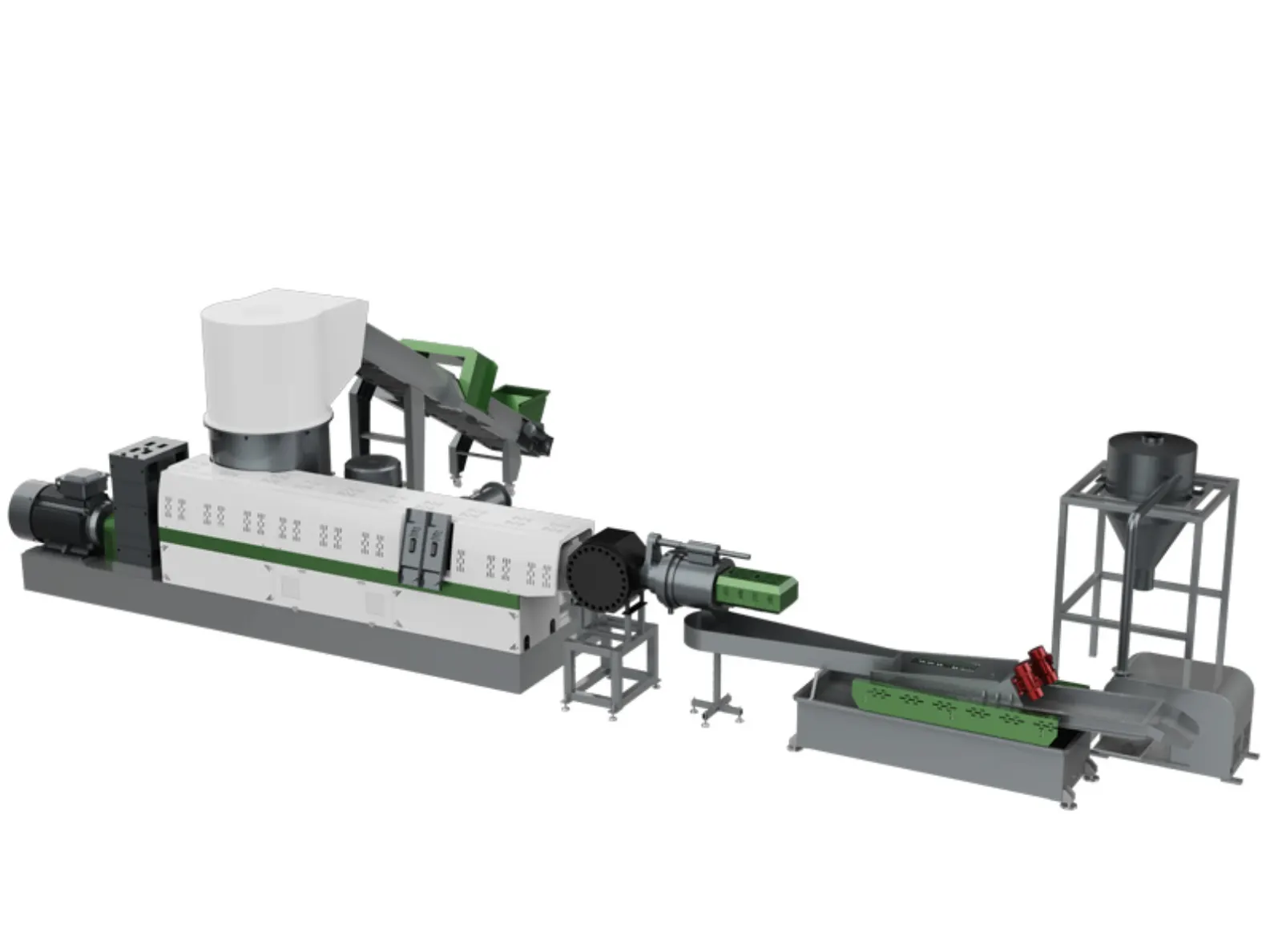
A pelletizing system normally includes:
Feeding → compaction or pre-treatment → extrusion → filtration → degassing → pelletizing → cooling → packaging
The extrusion system must also match the material.
PET requires particular attention to moisture control and processing conditions. Polyolefins such as PE and PP generally have different extrusion requirements. Mixed materials can make the process significantly more complicated and may reduce pellet quality.
Therefore, separating PET from polyolefins before extrusion is critical when producing a consistent recycled resin.
How to Choose the Right Plastic Recycling Line
Choosing between a PET, HDPE, or PP/PE recycling line should begin with the waste itself.
1. Identify the Material
Determine exactly what the feedstock contains.
For example, “plastic bottles” is not enough information. Are they PET beverage bottles, HDPE detergent bottles, or a mixture? Likewise, “plastic film” could mean relatively clean stretch film or heavily contaminated agricultural film.
2. Analyze Contamination
Consider:
- Dirt and sand
- Organic matter
- Oil and grease
- Labels
- Adhesives
- Paper
- Metal
- Other polymers
- Moisture
The higher the contamination level, the more intensive the pre-treatment and washing system may need to be.
3. Define the Required Output
Do you want:
- Washed flakes?
- High-purity flakes?
- Recycled pellets?
- Material for non-critical applications?
- Feedstock for higher-value applications?
The required output quality has a direct impact on equipment configuration and investment.
4. Consider Capacity
A recycling line for a small amount of industrial scrap will have very different requirements from a large commercial plant processing several tons of waste per hour.
Capacity should be considered together with material type. A nominal capacity number alone does not tell you how a machine will perform with your specific waste.
5. Consider Water and Energy Consumption
Washing-intensive recycling systems can consume significant quantities of water and energy. Water recycling systems, heat recovery, efficient dryers, and appropriate washing configurations can help reduce operating costs.
The lowest purchase price is not necessarily the lowest-cost solution over the life of the plant.
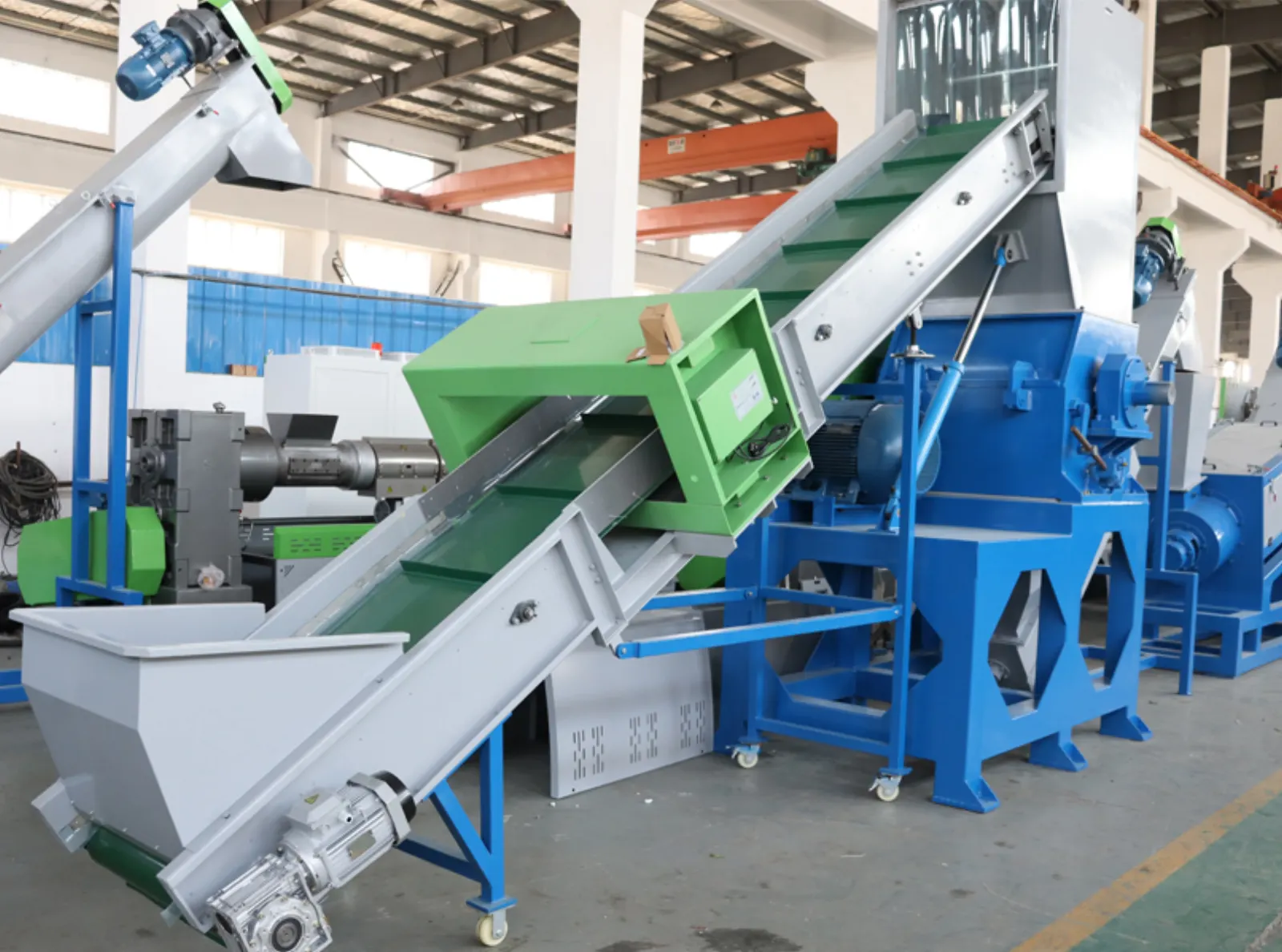
Can One Recycling Line Handle PET, HDPE, and PP/PE?
Technically, some recycling equipment can process more than one type of plastic, but that does not mean a single universal line is the best solution.
The biggest problem is material mixing.
PET, HDPE, PP, and PE have different processing characteristics. If they are mixed together and then extruded without effective separation, the resulting recycled material may have inconsistent properties and limited applications.
A recycling plant can sometimes be designed to handle multiple materials by using different configurations, sorting systems, or dedicated processing sections. But if the goal is high-quality recycled resin, keeping different polymers separated is generally the more practical approach.
In other words, flexibility is useful, but excessive material mixing can work against product quality.
The Most Important Difference Is the Feedstock
When comparing PET, HDPE, and PP/PE recycling lines, it is tempting to focus on individual machines. In reality, the most important difference is usually the feedstock and its condition.
A clean PET bottle stream requires a different solution from dirty agricultural film. A post-industrial HDPE scrap stream may require far less washing than post-consumer detergent containers.
That is why experienced recycling equipment suppliers normally need information about the waste before recommending a complete line.
Useful information includes:
- Plastic type
- Waste source
- Material form
- Contamination level
- Moisture content
- Desired capacity
- Required output quality
- Flake or pellet output
- Available water and power supply
- Available installation space
Providing this information early makes it much easier to design a recycling line that is technically appropriate and economically practical.
Final Thoughts
PET, HDPE, and PP/PE plastic recycling lines may appear similar because they all use familiar processes such as shredding, crushing, washing, separating, drying, and pelletizing. However, the equipment configuration, washing intensity, separation method, drying requirements, and extrusion system can vary considerably.
PET recycling lines are commonly optimized for bottles and high-quality flakes, with particular attention to labels, caps, adhesives, and moisture. HDPE recycling lines are typically designed around rigid containers and require effective removal of dirt, residues, and mixed plastics. PP/PE recycling lines, especially film recycling systems, need to deal with lightweight materials, wrapping, soil, moisture, and difficult feeding conditions.
The right choice should therefore be based not simply on the name of the plastic, but on the specific waste stream, contamination level, processing capacity, and desired recycled product.
For recycling businesses planning a new plant, this approach can prevent unnecessary equipment investment and help create a more stable, efficient recycling process from the beginning.
This article is carried over from the Retech technical archive and keeps its original URL.
ABOUT THIS UPDATE
Published by Retech Marketing & Communications Team
The Retech Marketing & Communications Team publishes official company news, exhibition information, factory updates, project milestones and product announcements.
For technical questions about plastic recycling systems, please contact our engineering team.