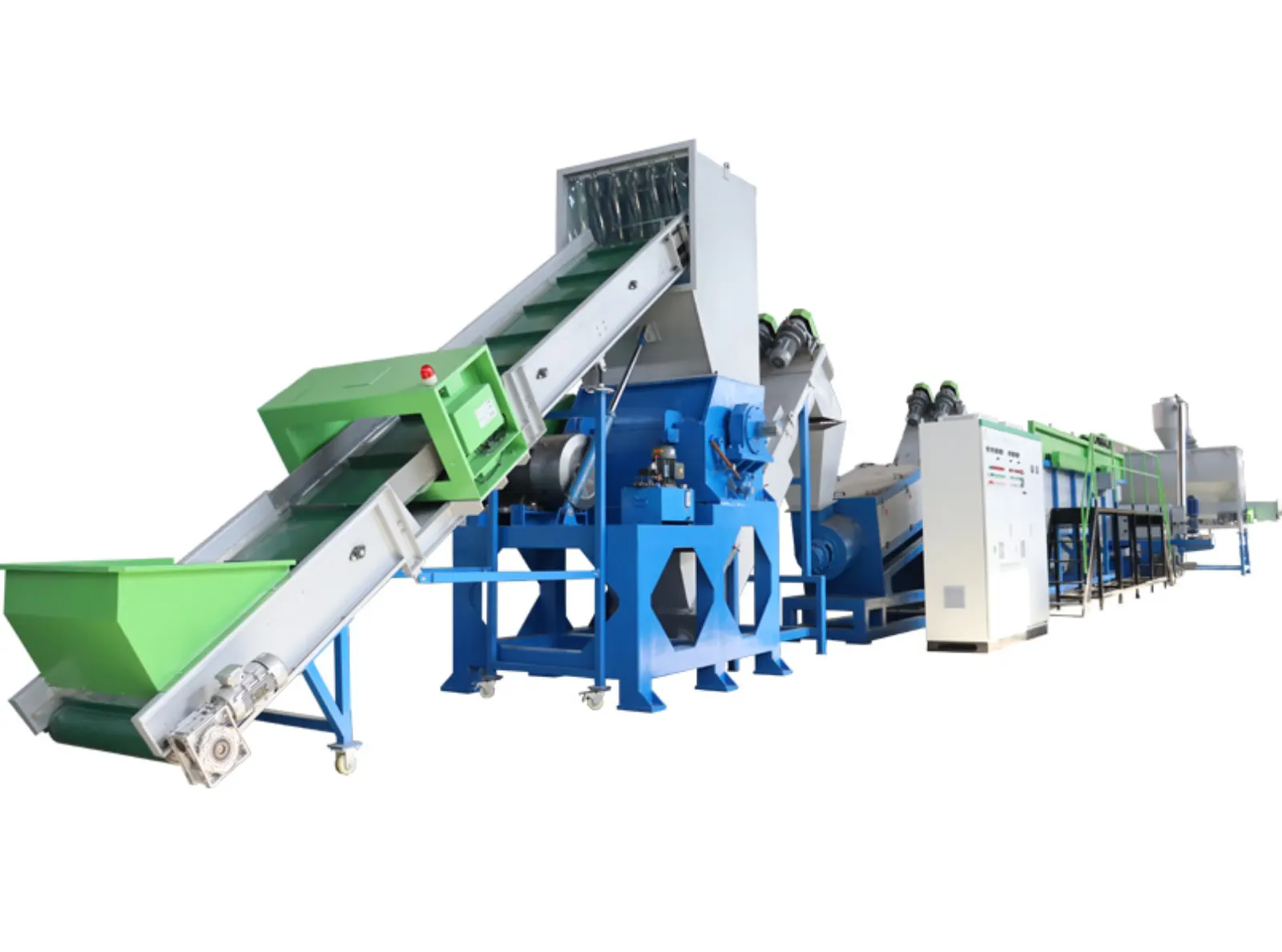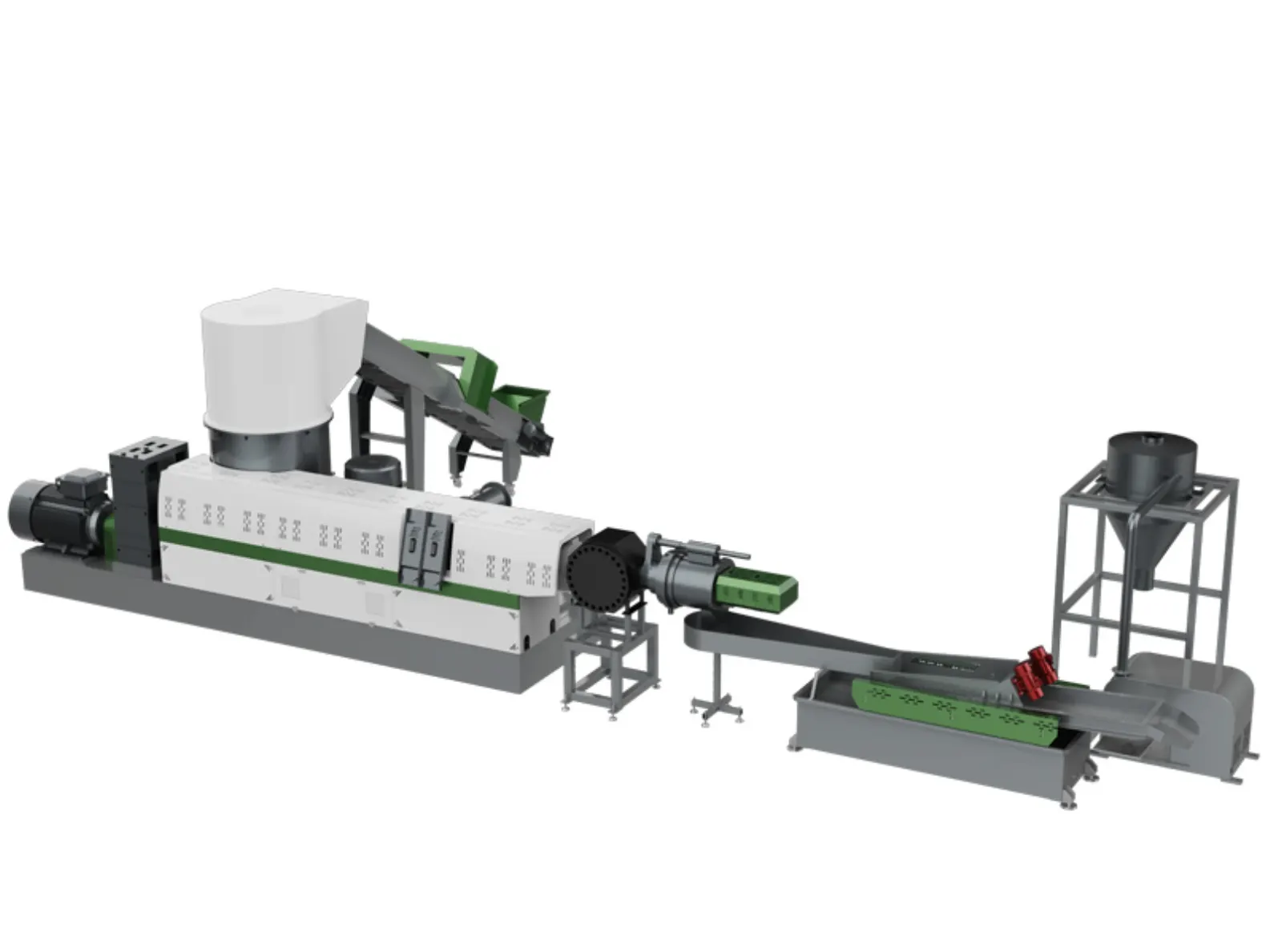
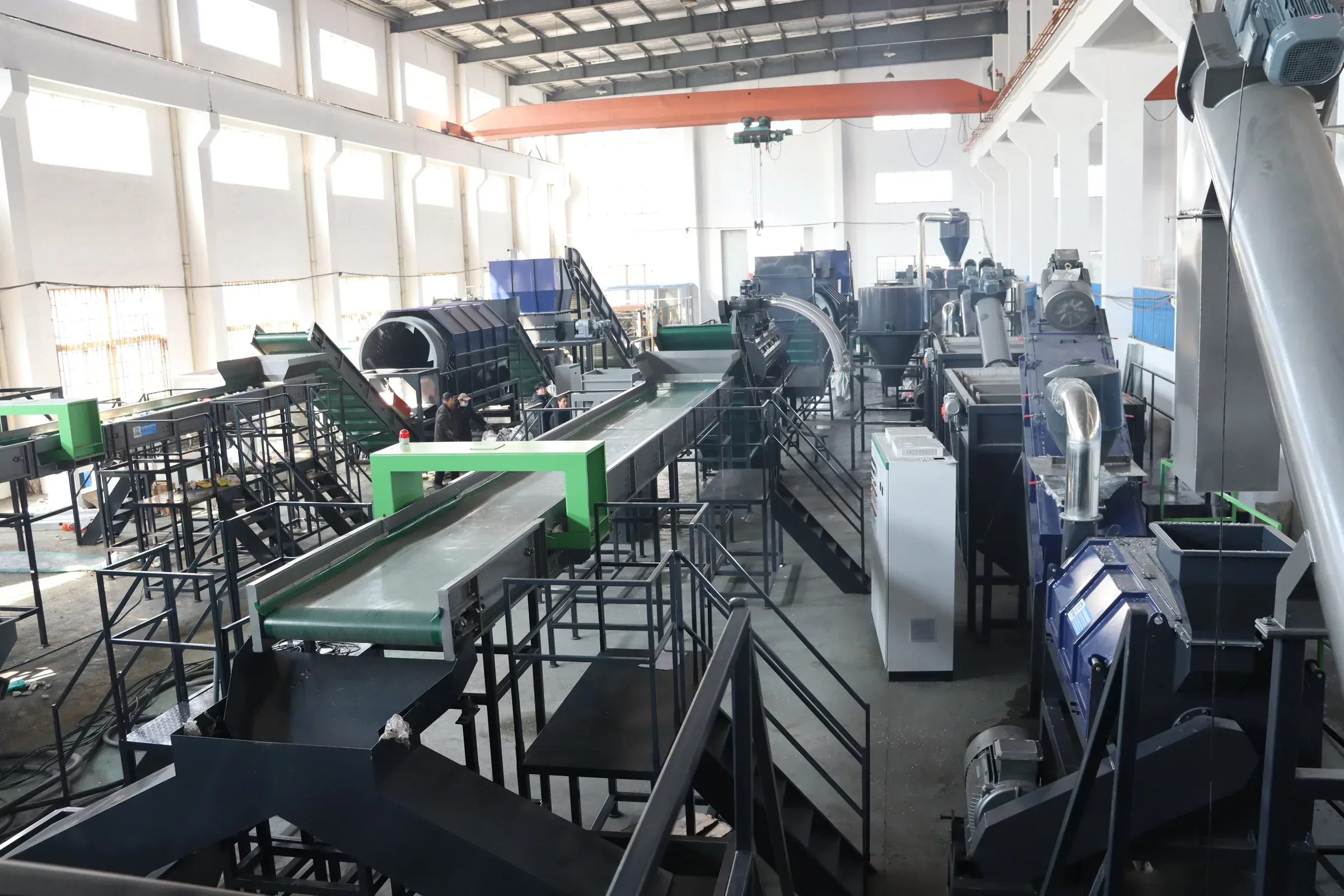
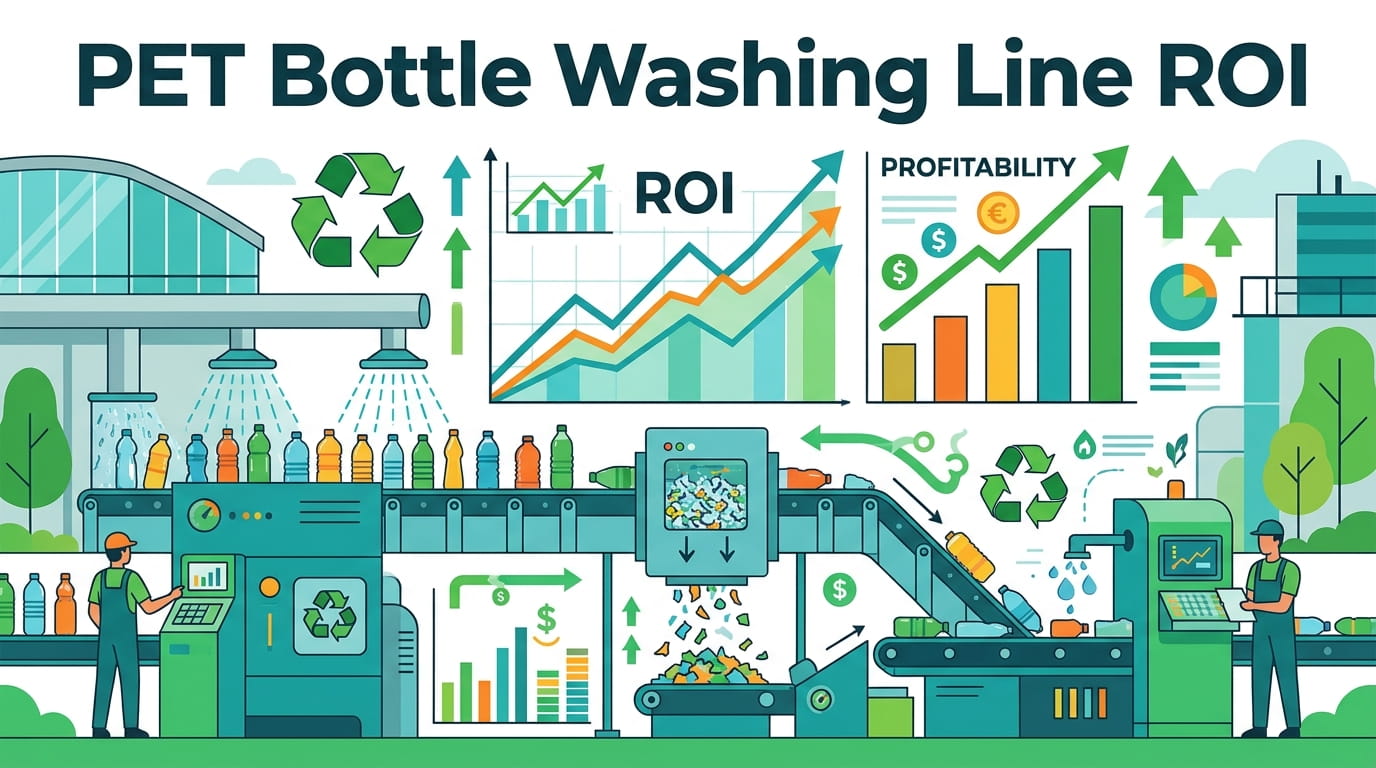
A PET bottle washing line is a capital investment, and the return on that investment depends on variables that are specific to your feedstock, your market, and your operating discipline. Equipment price alone tells you very little about whether the project will pay back in two years or struggle to break even in five.
This article builds the PET bottle washing line ROI calculation systematically. It starts with the profit formula, breaks down the revenue and cost variables, and then shows how to estimate a payback period that reflects your own project conditions rather than a supplier's optimistic assumption.
What Does ROI Mean for a PET Bottle Washing Line?
ROI for a PET bottle washing line is the relationship between the annual profit the line generates and the total capital invested to build and operate it. It is not a single number, and it is not the same as the equipment price.
Three variables determine the outcome:
- Revenue from selling clean flake or pellets, which depends on output quality, yield, and the selling price in your market.
- CAPEX, which includes the equipment but also site preparation, water treatment, electrical infrastructure, and working capital.
- OPEX, which covers electricity, water and wastewater, labor, maintenance, and consumables.
Industry reference data for well-operated plants suggests payback periods of 12 to 24 months. That range is a reference point, not a guarantee, and it assumes full utilization, stable feedstock supply, and consistent output quality. A plant that runs at 60 percent utilization or produces off-spec flake will not achieve the same result.
The sections below examine each variable in turn.
What Is the Profit Formula Behind Every ROI Estimate?
Every ROI estimate reduces to one formula:
Monthly profit = (Output tons × rPET selling price) − (Feedstock + Electricity + Water + Labor + Maintenance)
Each term in this formula has a different level of certainty. Feedstock cost and utility rates can be confirmed locally. Output tons and selling price are the two variables that carry the most uncertainty, and they are also the two variables that have the largest effect on the final result.
The table below lists each variable, what it depends on, and how to confirm it for your project.
| Variable | What it depends on | How to confirm it |
|---|---|---|
| Output tons | Feedstock quality, line yield, operating hours | Request guaranteed saleable output from the supplier, test with your own feedstock |
| rPET selling price | Flake quality grade, color, local market demand | Check current spot prices in your region, confirm with your buyer |
| Feedstock cost | Local collection and baling costs | Collect quotes from local suppliers |
| Electricity | Installed power, operating hours, local tariff | Confirm installed kW from supplier, check local industrial tariff |
| Water and wastewater | Line consumption, recirculation rate, discharge fees | Confirm m³/h from supplier, check local water and discharge costs |
| Labor | Automation level, line capacity, local wage rates | Estimate staffing from line configuration |
| Maintenance | Wear part life, spare part prices, service intervals | Confirm blade and screen prices from supplier |
Two variables deserve closer attention: output tons and selling price. The sections below examine both.
What Determines the Selling Price of rPET Flakes?
The selling price of rPET flake is determined by quality grade, and quality grade is determined by contamination levels, color, and moisture content. Two lines with the same capacity can produce flake that sells at very different prices.
The main quality parameters that affect price are:
- PVC content: Food-grade applications typically require below 30 ppm. Standard applications may accept below 100 ppm. Higher PVC content reduces the price or closes off food-grade buyers entirely.
- Moisture content: Dried flake should be below 1 percent. Higher moisture increases transport weight and can cause processing problems for the buyer.
- Color: Clear flake commands the highest price. Light-blue and mixed-color flake sell at a discount, typically to fiber producers.
- Label and glue residue: Visible contamination reduces the grade and the price.
The Association of Plastic Recyclers (APR) PET Rigid Design Guide is widely used as a reference for recyclability and quality specifications, and ISO/TR 23891:2020 provides the technical framework for mechanical recycling processes. Both are useful references when discussing quality requirements with your buyer.
Color sorting is often the single largest lever on selling price after washing quality. Adding an optical color sorter separates clear, light-blue, and colored fractions, allowing you to sell each fraction at its own price rather than selling mixed-color material at a discount. Whether the capital cost is justified depends on your off-take contract and the local price spread between clear and mixed-color flake.
Yield is the second revenue lever. Industry reference data for PET washing lines suggests a saleable yield of 0.85 to 0.92, meaning 85 to 92 percent of input mass becomes saleable flake. The remainder is water removed plus contaminants rejected. A line that achieves 0.90 yield produces more saleable tons from the same feedstock than a line that achieves 0.85. Over a year of operation, that difference compounds.
CAPEX: Why the Washing Line Is Only 25 to 45 Percent of the Investment
The washing line equipment typically accounts for 25 to 45 percent of total project investment, depending on local site costs, labor rates, and equipment specifications. The remaining percentage covers site preparation, water treatment, electrical infrastructure, building works, installation, commissioning, and working capital for feedstock purchase.
This ratio matters because first-time buyers often budget only for the equipment and then run out of capital before the plant reaches steady operation. A project that budgets for the line but not for the surrounding infrastructure and the initial feedstock purchase is underfunded from the start.
The equipment price itself varies widely depending on capacity, configuration, and output grade. Custom configurations versus standard ones, and standard lines versus food-grade lines, can differ in price by a factor of 3 to 5. The table below lists indicative FOB or EXW price ranges for Retech's standard PET bottle washing line models.
| Model | Capacity | Simple Version | Upgraded Version | Food-Grade Version |
|---|---|---|---|---|
| RM-1000 | 1,000 kg/h | $140,000 to $180,000 | $220,000 to $300,000 | $700,000 to $750,000 |
| RM-3000 | 3,000 kg/h | $280,000 to $320,000 | $350,000 to $400,000 | $850,000 to $1,000,000 |
| RM-5000 | 5,000 kg/h | $280,000 to $320,000 | $350,000 to $400,000 | $1,300,000 to $1,500,000 |
Beyond the washing line itself, the total CAPEX includes several other major components. Water treatment systems typically require an investment of $100,000 to $150,000. Electrical infrastructure adds $60,000 to $80,000, or can be provided by a local contractor. Civil works and installation are also typically handled by local contractors. Finally, working capital for bale procurement during the startup phase usually accounts for about 20 percent of the total project cost, depending on the required processing capacity.
For projects that require pelletizing, adding a granulating section costs approximately $180,000 for a standard non-food-grade configuration, assuming a maximum line capacity of 1 ton per hour. Optional modules such as optical sorting, closed-loop water treatment, and automated bagging are priced separately based on specific requirements.
Having covered the capital side, the next section examines the operating costs that continue after the plant is running.
What Are the Four OPEX Variables That Eat Into Profit?
Operating cost for a PET bottle washing line is dominated by four variables: electricity, water and wastewater, labor, and maintenance. Each one scales differently with capacity and configuration.
Electricity
Electricity scales with installed power and operating hours. Retech's PET bottle washing line models draw 230 kW at 1,000 kg/h, 420 kW at 3,000 kg/h, and 580 kW at 5,000 kg/h. A hot washing line draws more than a cold washing line because of the heating load.
Water and Wastewater
Water and wastewater depend on line consumption and recirculation. Retech's models consume 4 to 5 m³/h at 1,000 kg/h, 6 to 8 m³/h at 3,000 kg/h, and 8 to 10 m³/h at 5,000 kg/h, before recirculation savings. Closed-loop recirculation reduces fresh water demand, but the wastewater that is discharged still requires treatment to meet local consent limits.
Labor
Labor depends on automation level and line capacity. A highly automated line with optical sorting and automated bagging requires fewer operators per shift than a manual line of the same capacity.
Maintenance
Maintenance is driven by wear part consumption. Crusher blades, screens, friction washer paddles, belts, and nozzles all wear at predictable intervals. Industry reference data suggests blade replacement intervals of 500 to 1,000 operating hours, depending on feedstock abrasiveness. A plant that tracks motor current and replaces blades on schedule avoids the higher energy consumption and poorer flake quality that come from running dull blades.
The table below summarizes the OPEX variables and how they scale.
| OPEX variable | Scaling factor | Retech reference data |
|---|---|---|
| Electricity | Installed kW × operating hours | 230 kW at 1,000 kg/h; 420 kW at 3,000 kg/h; 580 kW at 5,000 kg/h |
| Water | m³/h × operating hours | 4 to 5 m³/h at 1,000 kg/h; 6 to 8 m³/h at 3,000 kg/h; 8 to 10 m³/h at 5,000 kg/h |
| Labor | Automation level and capacity | Depends on configuration |
| Maintenance | Wear part life and spare part prices | Blade intervals of 500 to 1,000 hours (industry reference) |
With revenue and cost variables defined, the next step is to combine them into a payback estimate.
How Do You Estimate the Payback Period?
Payback period is calculated by dividing the total project investment by the annual net profit the line generates. The formula is simple; the difficulty is in the assumptions behind each number.
The steps are:
- Estimate annual saleable output in tons, using guaranteed output and planned operating hours.
- Multiply by the expected selling price for your flake grade to get annual revenue.
- Subtract annual feedstock cost, electricity, water and wastewater, labor, and maintenance to get annual net profit.
- Divide total project investment by annual net profit to get the payback period in years.
A worked example makes the logic clearer. Suppose a line produces 1,000 kg/h of saleable flake, runs 20 hours per day and 300 days per year, and achieves 90 percent yield. Annual output would be 5,400 tons. If the selling price is X per ton and annual operating costs are Y, the net profit is 5,400X minus Y. Dividing the total investment by that figure gives the payback period.
The numbers in this example are illustrative only. The point is that the payback period is highly sensitive to output, price, and operating hours, and each of those needs to be confirmed with your own data rather than assumed.
Utilization has a non-linear effect on payback. A line running at 60 percent of design hours does not simply take 40 percent longer to pay back, because fixed costs such as labor and maintenance do not scale down proportionally. Underutilization is one of the most common reasons a project misses its projected payback.
What Makes or Breaks the ROI: Sensitivity Analysis
Small changes in a few variables have a large effect on the payback period. The table below shows the direction of each effect.
| Variable | Change | Effect on payback |
|---|---|---|
| Yield | 1 percentage point lower | Longer, because fewer saleable tons per input ton |
| Selling price | Lower market price | Longer, because revenue per ton falls |
| Operating hours | Lower utilization | Longer, because fixed costs are spread over fewer tons |
| Cold vs hot washing | Cold wash chosen initially, hot wash retrofitted later | Longer, because retrofit cost exceeds the initial premium |
| Pre-sorting quality | Insufficient removal of contaminants | Longer, because downstream quality losses and downtime increase |
| Maintenance discipline | Blades run past replacement interval | Longer, because energy consumption rises and flake quality falls |
The hot wash decision deserves particular attention. Retech's standard washing lines are equipped with hot washing capabilities, and the specific number of hot wash stages depends on the final product quality requirements. The price difference between configurations with fewer or more hot wash stages is approximately 3 to 5 percent of the total line price.
That premium looks modest at the quotation stage. However, retrofitting a basic line to add more hot washing capacity later requires adding heating infrastructure, upgrading water treatment, and often expanding the building footprint.
The retrofit cost typically exceeds the initial premium, and the line loses production during the upgrade. The decision rule is straightforward. If there is any realistic chance that your buyers will require food-grade rPET within the equipment's service life, specifying the required hot washing stages from the start is the lower-risk choice for ROI.
What Are the Common ROI Mistakes to Avoid?
Several avoidable mistakes appear repeatedly in PET bottle washing line projects, and each one erodes the return on investment.
- Comparing equipment prices without comparing guaranteed output and output specifications. A lower-priced line that guarantees less saleable output or a lower flake grade is not cheaper on a per-ton basis.
- Budgeting only for the equipment. The line is 25 to 45 percent of total investment. Underfunding the surrounding infrastructure and startup working capital is a common cause of project failure.
- Choosing a basic configuration to save capital, then retrofitting later. The retrofit cost exceeds the initial premium and disrupts production.
- Using nameplate capacity to calculate revenue instead of guaranteed saleable output. Nameplate capacity is a machine rating; saleable output is what you can actually sell. Our PET bottle washing line selection guide explains how to ask suppliers for guaranteed output figures.
- Ignoring wear part consumption in the OPEX model. Blades, screens, and nozzles are recurring costs, and running them past their replacement interval increases energy consumption and reduces flake quality.
- Accepting a supplier's payback estimate without checking the assumptions. A payback figure that assumes full utilization, ideal feedstock, and premium selling price is not a realistic planning number.
How Do You Build a Project-Specific ROI Model?
A project-specific ROI model requires two sets of data: what the supplier can provide, and what you must confirm locally.
From the supplier, request:
- Guaranteed saleable output at a specified feedstock and output specification
- Installed power in kW
- Water consumption in m³/h
- Hot wash temperature and chemical dosing, if applicable
- Final moisture content
- Typical wear part life and spare part pricing
Locally, confirm:
- Feedstock cost per ton, including collection and baling
- Electricity tariff
- Water and wastewater charges
- Labor rates
- Current selling price for your target flake grade
With both sets of data, the profit formula and payback calculation become specific to your project rather than generic.
Retech provides modular PET bottle recycling solutions covering standard, upgraded, and food-grade configurations to match different output markets. Standard capacities range from 1,000 to 5,000 kg/h. To build an ROI model for your project, send us your feedstock composition, target output grade, planned operating hours, and local utility costs. Our engineering team can provide the specific line data you need to complete the calculation.
Contact Retech to request the configuration and utility data for your PET bottle washing line ROI model.
ABOUT THIS UPDATE
Published by Retech Marketing & Communications Team
The Retech Marketing & Communications Team publishes official company news, exhibition information, factory updates, project milestones and product announcements.
For technical questions about plastic recycling systems, please contact our engineering team.