PET bottles are not waste. They are a renewable feedstock. Once collected and processed, a single PET bottle can be recycled, remade, and recycled again, often multiple times. For recycling plant operators and investors, the practical question is how to process PET bottles efficiently, consistently, and at the purity level required by downstream applications.
This article walks through the complete PET bottle recycling process, from collection to finished rPET flakes and pellets, and highlights the equipment and process decisions that determine output quality.
Why PET Bottle Recycling Matters
PET bottle recycling matters because PET is fully recyclable, and bottle-to-bottle recycling can close the loop on food-grade packaging. PET (polyethylene terephthalate) is lightweight, durable, and one of the most widely recycled plastics in the world. Bottle-to-bottle recycling represents the most demanding quality standard because the final material must meet food-grade purity requirements.
For recycling plant operators and investors, the value of PET recycling lies in three areas:
- Material quality: Clean, consistent flakes or pellets command higher prices and open more downstream markets.
- Regulatory compliance: Food-grade rPET must meet strict purity and decontamination standards.
- Operational efficiency: A well-designed line reduces water, energy, and labor costs per ton of output.
With that context, the next section examines the process itself.
6 steps: How Recycling of PET Plastic Bottles Works
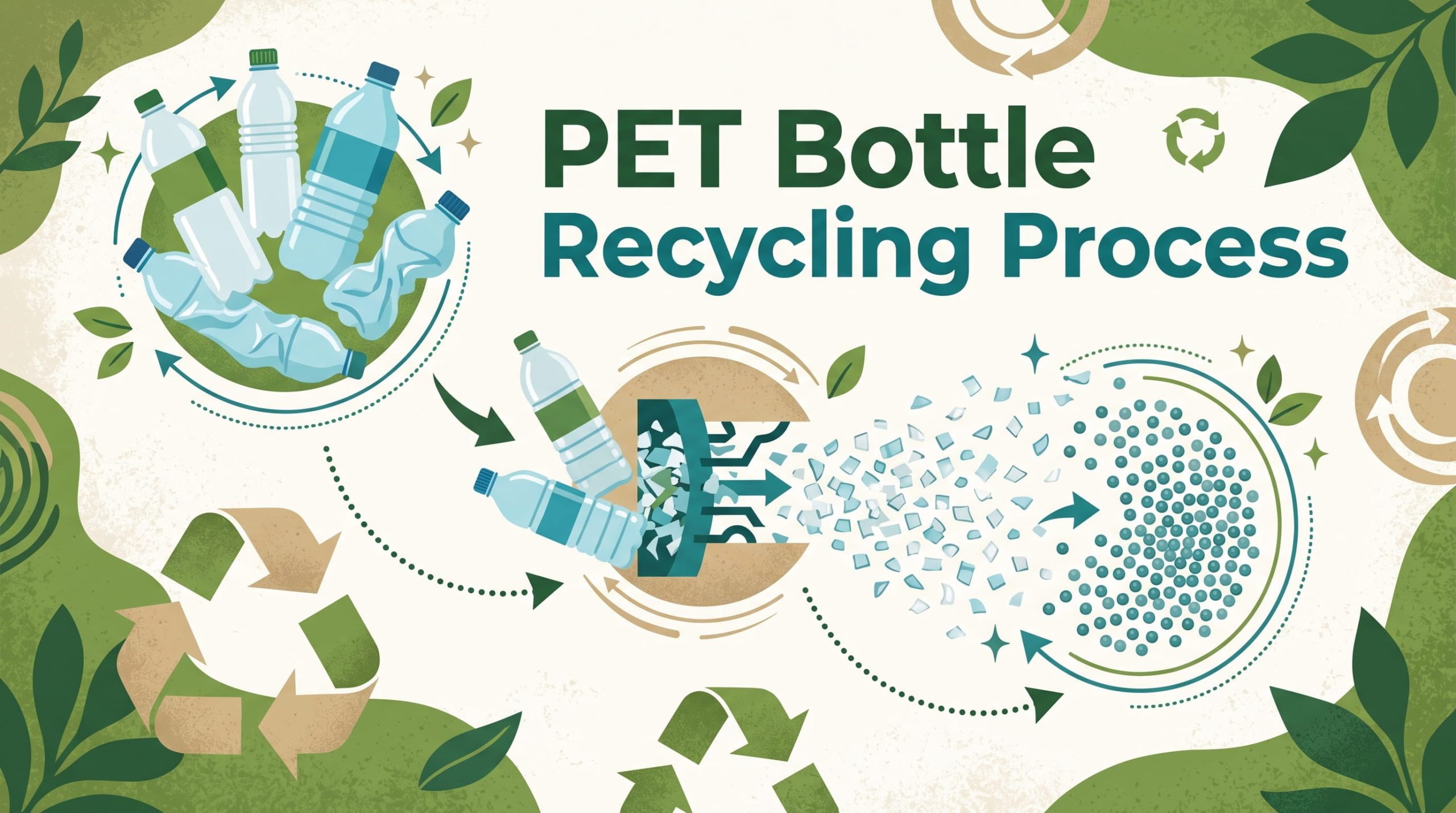
The PET bottle recycling process follows a fixed sequence of stages. Each stage removes a specific type of contamination and prepares the material for the next step.
| Stage | Purpose | Typical Equipment |
|---|---|---|
| Collection and sorting | Remove non-PET materials | Manual or automatic sorting |
| Baling and transport | Compress bottles for efficient transport | Baling press |
| Bale opening and label removal | Open bales and strip labels | Bale opener, rotary label remover |
| Crushing | Reduce bottles to uniform flakes | Crusher or granulator |
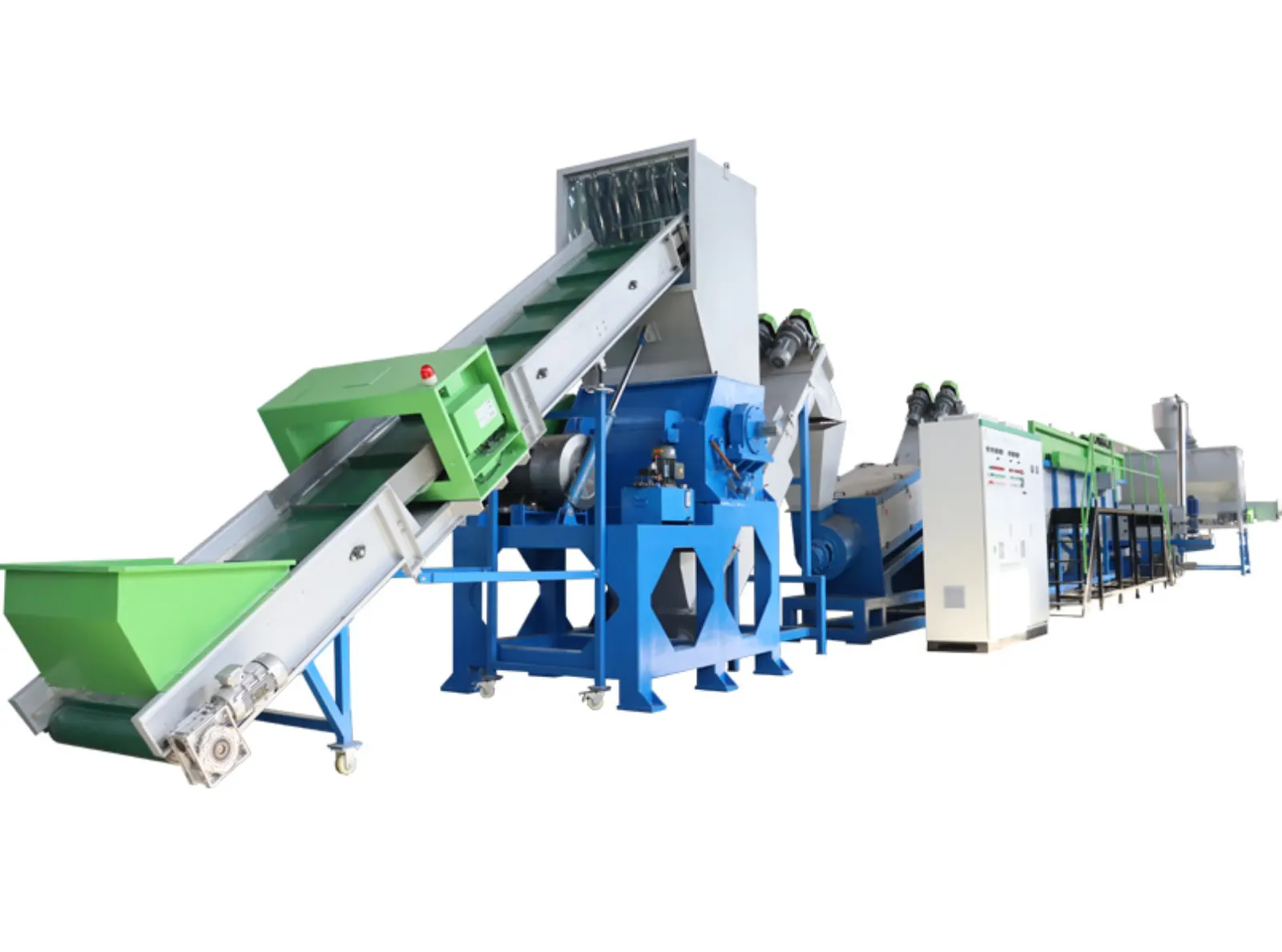
| Washing and decontamination | Remove glue, ink, dirt, oil and residuals | Friction washer, hot caustic tank, sink-float tank, rinsing stages |
| Dewatering and drying | Reduce moisture to ≤1-2% | Centrifugal dewaterer, hot air dryer |
| Pelletizing (optional) | Convert flakes to uniform pellets | Extruder, melt filter, die-face cutter |
The output can be clean rPET flakes ready for fiber or sheet production, or rPET pellets for bottle-to-bottle and injection molding applications. The exact configuration depends on feedstock quality, target output purity, and final product form.
Step 1: Collection and Sorting
Collection and sorting determine the quality ceiling of the entire recycling process. If non-PET materials enter the washing line, they can contaminate the final flake and damage downstream equipment.
At the recycling plant, incoming bottles are inspected and sorted. Manual or automatic sorting removes:
- PVC bottles and other non-PET plastics
- Metal caps, rings, and closures
- Glass fragments and stones
- Paper and cardboard
The more thoroughly non-PET materials are removed at this stage, the more stable the washing and separation process becomes.
Step 2: Baling and Transport
Baling compresses collected PET bottles into dense blocks for efficient transport. Because PET is lightweight and malleable, a large volume of bottles can be compressed into a single bale, which reduces transport costs and emissions per ton of material.
Bale quality also affects downstream processing. Uniform, well-compressed bales are easier to open and feed into the washing line. Loose or irregular bales can cause bridging and inconsistent feeding.
Step 3: Bale Opening, Label Removal, and Crushing
Bale opening, label removal, and crushing convert whole bottles into uniform PET flakes. The first mechanical step is label removal. A rotary label remover strips paper and plastic labels from the bottles, and an air blower separates the waste labels from the bottle stream.
After label removal, the bottles enter a crusher, which cuts whole bottles into uniform PET flakes. Flake size typically ranges from 8 to 16 mm, depending on the crusher screen configuration. Consistent flake size is important because it affects the efficiency of washing, separation, and drying in subsequent stages.
Step 4: Washing and Decontamination
Washing and decontamination is the core of the PET recycling process. The goal is to remove surface contaminants such as glue, printing ink, dust, oil, and residual liquid, and to ensure that the final flake meets the purity requirements of its intended application.
The washing stage typically includes several sub-steps:
- High-speed friction washing: Friction washers scrub flake surfaces to remove glue, ink, and light dirt.
- Hot caustic washing (optional): A hot alkaline tank at 80°C to 95°C dissolves stubborn sticker residues and heavy oil stains. This step is recommended for heavily contaminated feedstock or when high-grade flake quality is required.
- Sink-float separation: PET flakes sink in water, while PP/HDPE caps and light impurities float and are skimmed away. Sand, stones, and metal sink to the bottom for discharge.
- Multi-stage fresh water rinsing: Rinsing removes residual alkali and fine impurities, improving flake cleanliness.
For food-grade applications, an additional decontamination step may be required. This typically involves high-temperature treatment and melt filtration to remove migrated substances and flavors. The specific decontamination configuration depends on the target quality standard and the regulatory requirements of the end market.
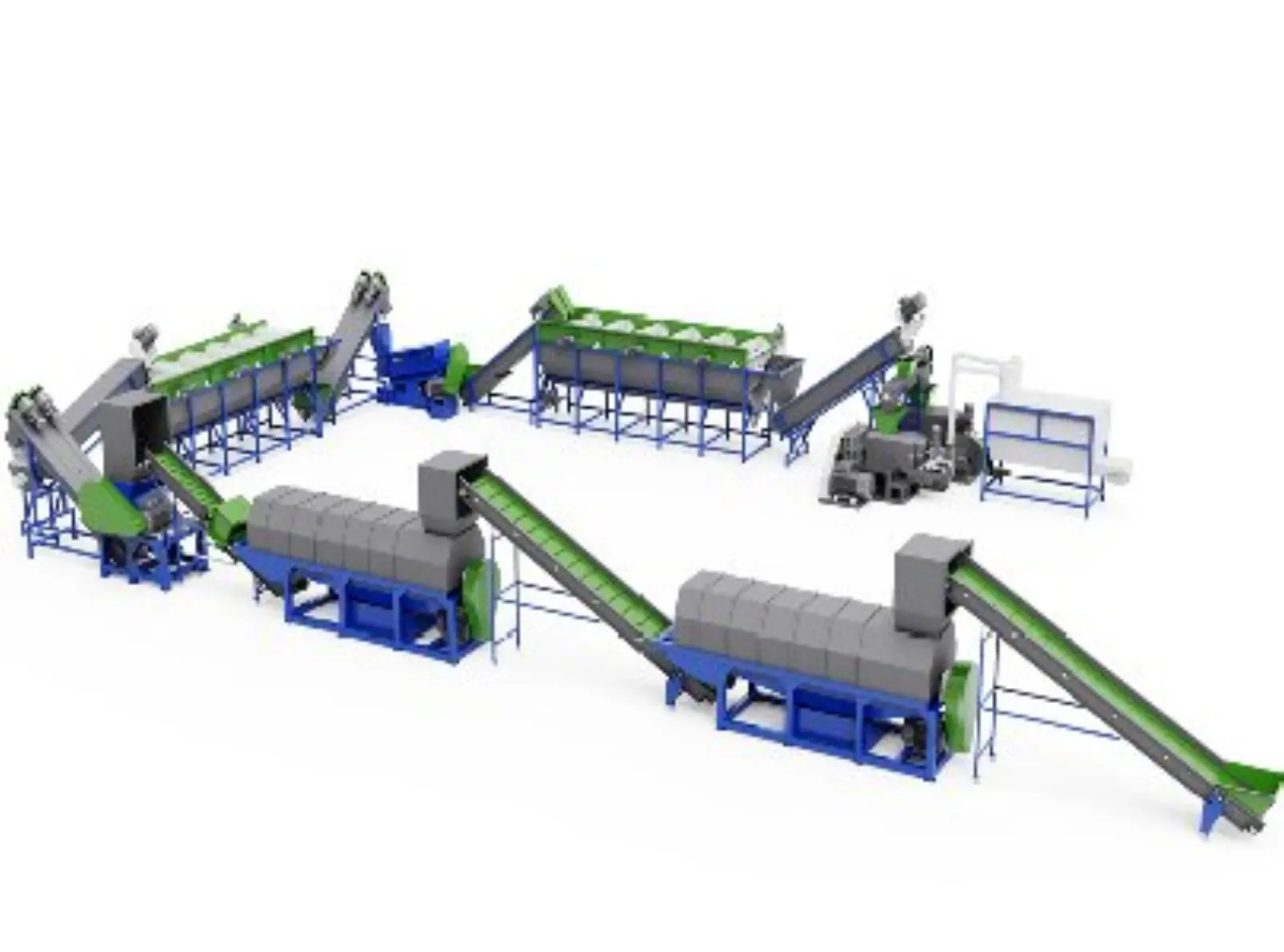
After washing, the flakes are dewatered and dried. For a complete view of the equipment used in this stage, see our PET bottle washing line.
Step 5: Dewatering and Drying
Dewatering and drying reduce the moisture content of washed flakes to a level suitable for storage, transport, or pelletizing. A centrifugal dewaterer removes most of the surface water, and a hot air dryer further reduces moisture.
The final moisture content of dried PET flakes is typically ≤1-2%. Low moisture is important because residual water can cause hydrolysis during pelletizing and affect the quality of the final pellets.
At this point, the material is clean, dry rPET flake. It can be sold directly to fiber or sheet producers, or fed into a pelletizing line.
Step 6: PET Flake Pelletizing (Optional)
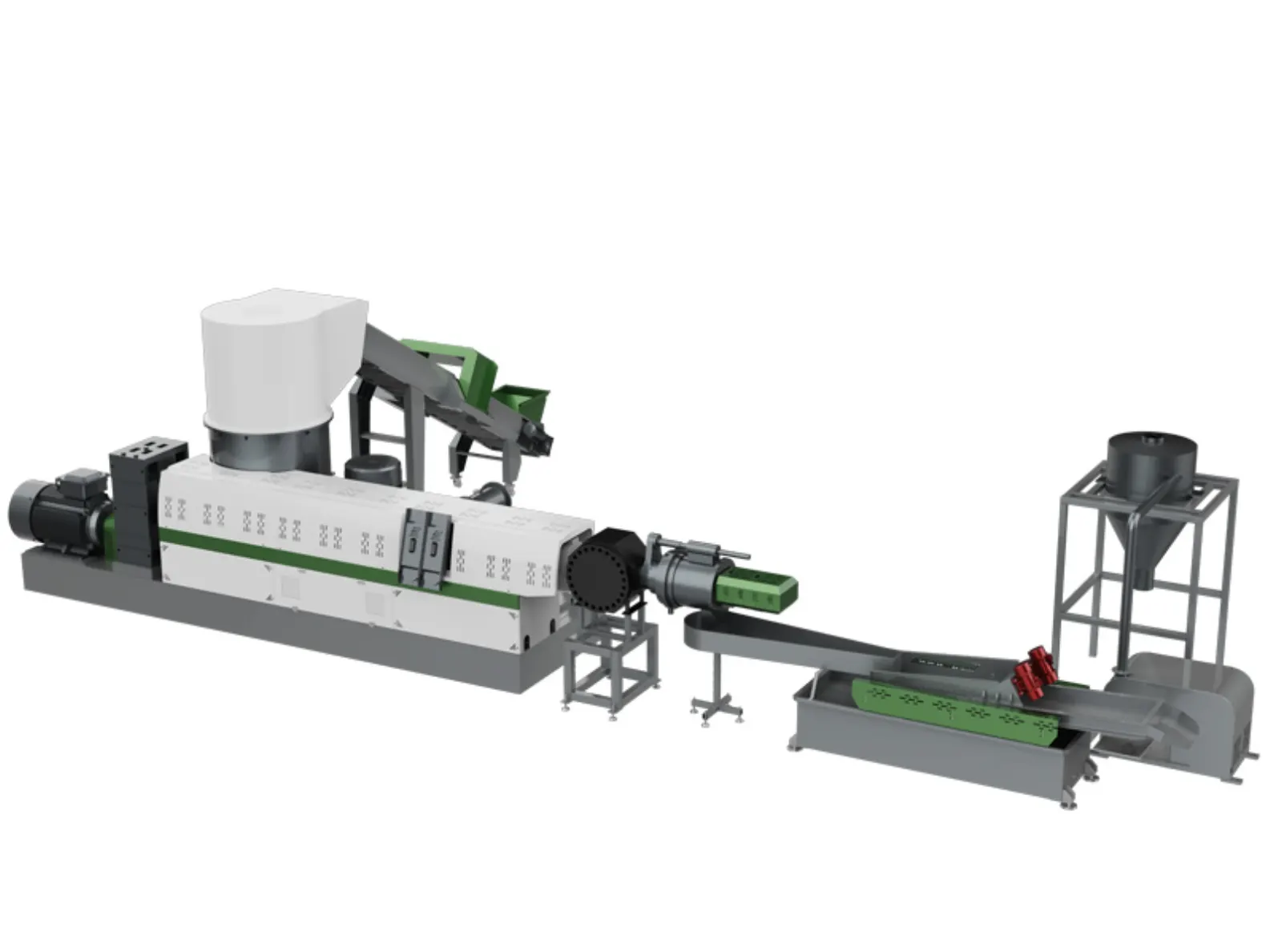
Pelletizing converts clean, dry PET flakes into uniform rPET pellets for bottle-to-bottle recycling and injection molding applications. Not every recycling plant needs a pelletizing line, but for projects targeting food-grade or high-value end products, pelletizing is often necessary.
The typical pelletizing configuration includes:
- A main extruder with vacuum degassing to remove moisture and gas
- A melt filter to remove fine solid contaminants
- A die-face cutting system to produce uniform pellets
The pelletizing line can be integrated with the washing line to form a complete washing-to-pelletizing system. This integrated configuration reduces material handling and ensures consistent quality from flake to pellet. See our integrated washing and pelletizing system for the full line configuration.
From rPET Pellets to New Bottles and Beyond
rPET flakes and pellets can be used in three main downstream routes: bottle-to-bottle recycling, fiber production, and sheet or packaging applications.
Bottle-to-bottle recycling
Bottle-to-bottle recycling is the most demanding route. rPET pellets are converted into preforms, which are then heated and blow-molded into new PET bottles. This application requires food-grade purity and consistent pellet quality.
Fiber Production
Fiber applications represent another major market. Clean rPET flakes can be heated and stretched into polyester fiber, which is then spun into yarn for textiles, carpets, seat belts, and insulation materials.
Sheet and packaging
Sheet and packaging applications use rPET pellets or flakes to produce thermoformed trays, containers, and packaging film.
The choice of output form, flake or pellet, depends on the target market and the technical requirements of the downstream process.
What Determines the Quality of Recycled PET Flakes?
The quality of recycled PET flakes is determined by five factors:
- Feedstock contamination level: Heavily soiled bottles require more intensive washing and may produce lower yields.
- Sorting accuracy: Incomplete removal of PVC, metal, or other plastics leads to contamination in the final flake.
- Washing intensity and configuration: Hot washing and multi-stage rinsing improve flake cleanliness.
- Separation efficiency: Sink-float separation must effectively remove caps, labels, and heavy impurities.
- Dewatering and drying performance: Residual moisture affects storage stability and pelletizing quality.
Each of these factors can be controlled through equipment selection and process configuration.
Designing a PET Bottle Recycling Line: Capacity and Configuration
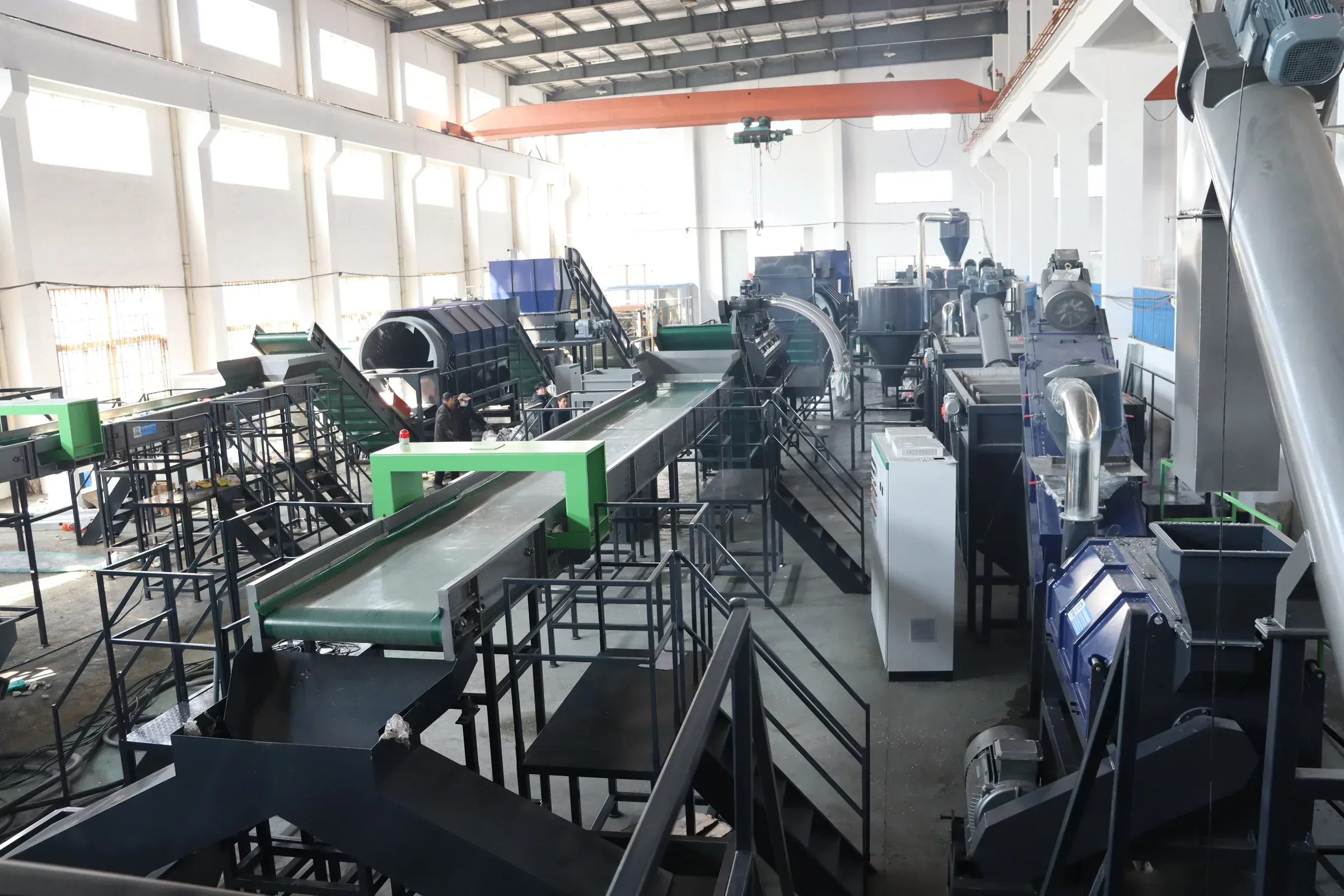
A PET bottle recycling line can be configured in several ways, depending on feedstock quality, target output purity, and final product form. The three main configuration choices are capacity range, washing intensity, and whether to include pelletizing.
Capacity range: PET bottle recycling lines are available from 500 kg/h to 6,000 kg/h, customizable based on feedstock availability and target output.
Modular configuration: The line can be configured as:
- A basic washing line producing clean flakes
- A washing line with hot washing for heavily contaminated feedstock
- A complete washing and pelletizing line producing rPET pellets
Main selection criteria include feedstock contamination level, target flake purity, final product form, available site space, and water and energy supply.
Build a PET Bottle Recycling Line with Retech
A PET bottle recycling line is only as good as its configuration. The right combination of sorting, washing, separation, drying, and, where required, pelletizing determines the quality of the final flake or pellet, and ultimately the profitability of the operation.
Retech provides modular PET bottle recycling solutions ranging from 500 kg/h to 6,000 kg/h, with configurations tailored to feedstock quality, target output purity, and downstream application. Whether you need a standalone washing line or a complete washing-to-pelletizing system, our team can help you design a line that matches your project requirements.
Contact us to discuss your PET bottle recycling project and request a tailored solution.
Frequently Asked Questions
What is the difference between PET flakes and PET pellets?
PET flakes are irregular pieces produced by crushing bottles. PET pellets are uniform, spherical granules produced by melting and cutting flakes. Flakes are typically sold to fiber or sheet producers, while pellets are used for bottle-to-bottle recycling and injection molding.
Why is sink-float separation important for PET bottles?
PET has a higher density than water, so PET flakes sink while PP/HDPE caps and labels float. Sink-float separation effectively removes these light impurities and heavy contaminants such as sand and metal.
What moisture level should PET flakes have before pelletizing?
Dried PET flakes typically have a moisture content of ≤1-2%. Lower moisture reduces the risk of hydrolysis during extrusion and improves pellet quality.
Can a PET washing line be upgraded with a pelletizing section later?
Yes. Modular line design allows a washing line to be expanded with a pelletizing section when production requirements change.
What capacity ranges are available for a PET bottle recycling line?
Standard capacity ranges from 500 kg/h to 6,000 kg/h, with customization available based on feedstock and project requirements.
ABOUT THIS UPDATE
Published by Retech Marketing & Communications Team
The Retech Marketing & Communications Team publishes official company news, exhibition information, factory updates, project milestones and product announcements.
For technical questions about plastic recycling systems, please contact our engineering team.