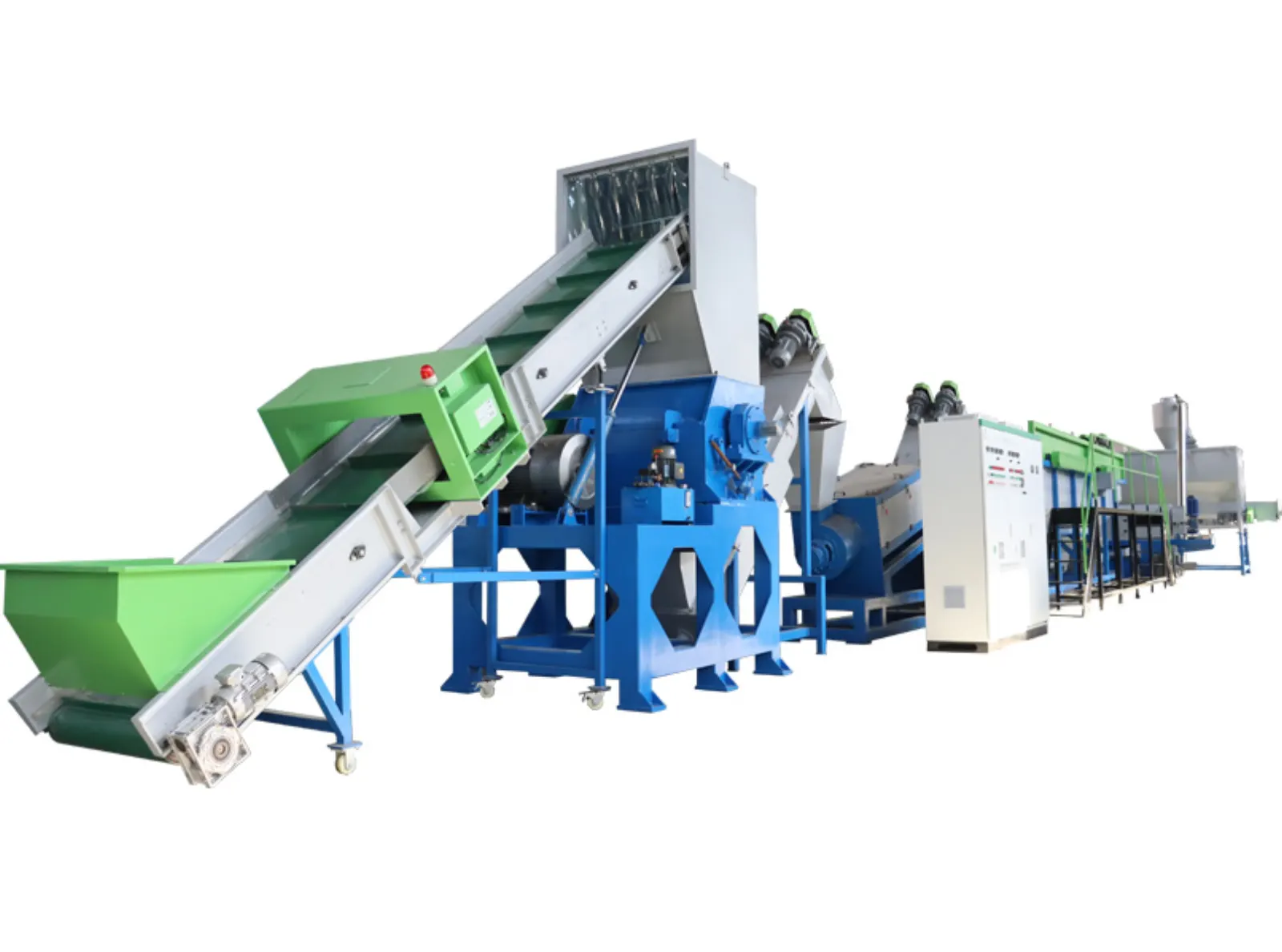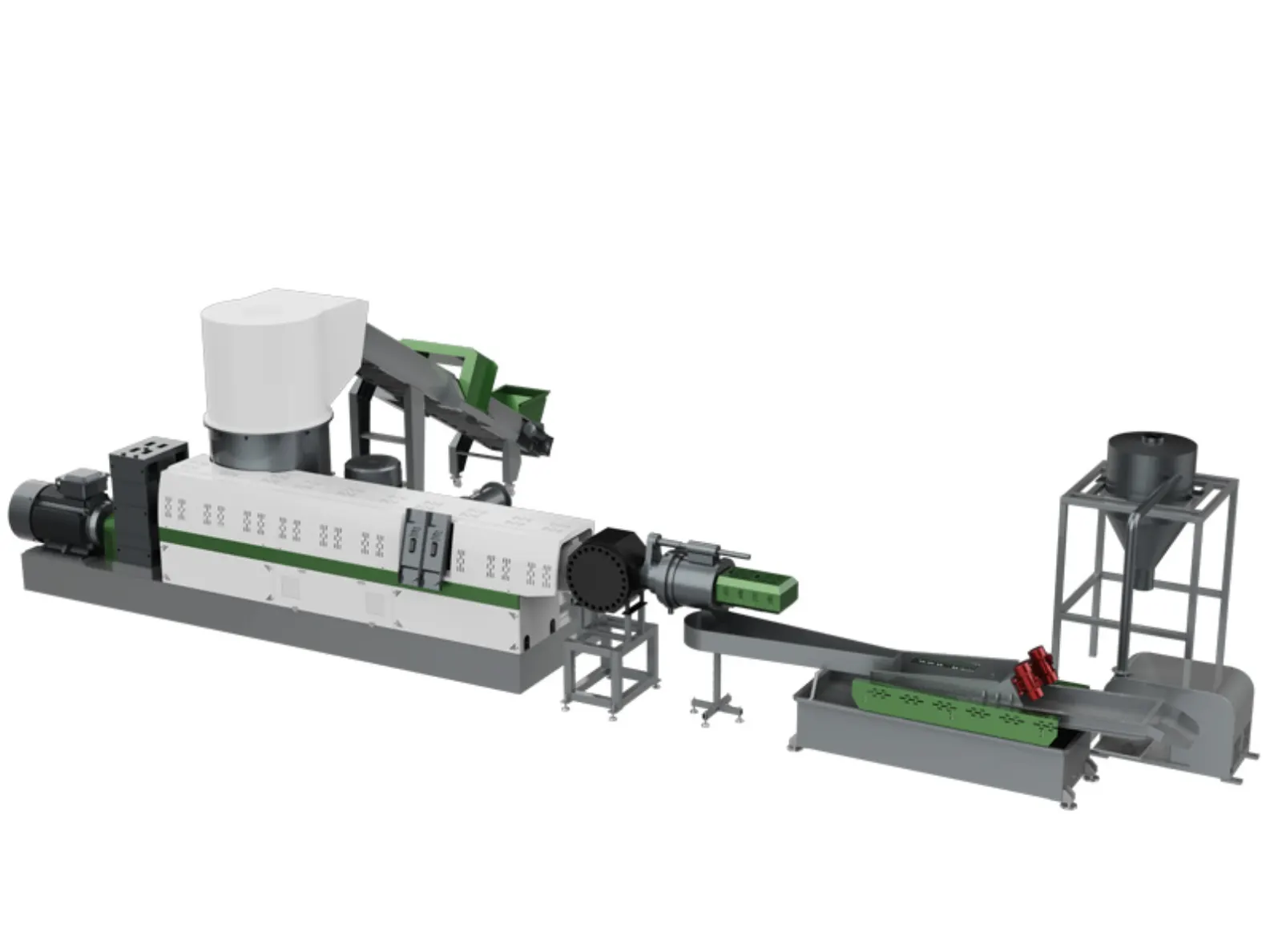

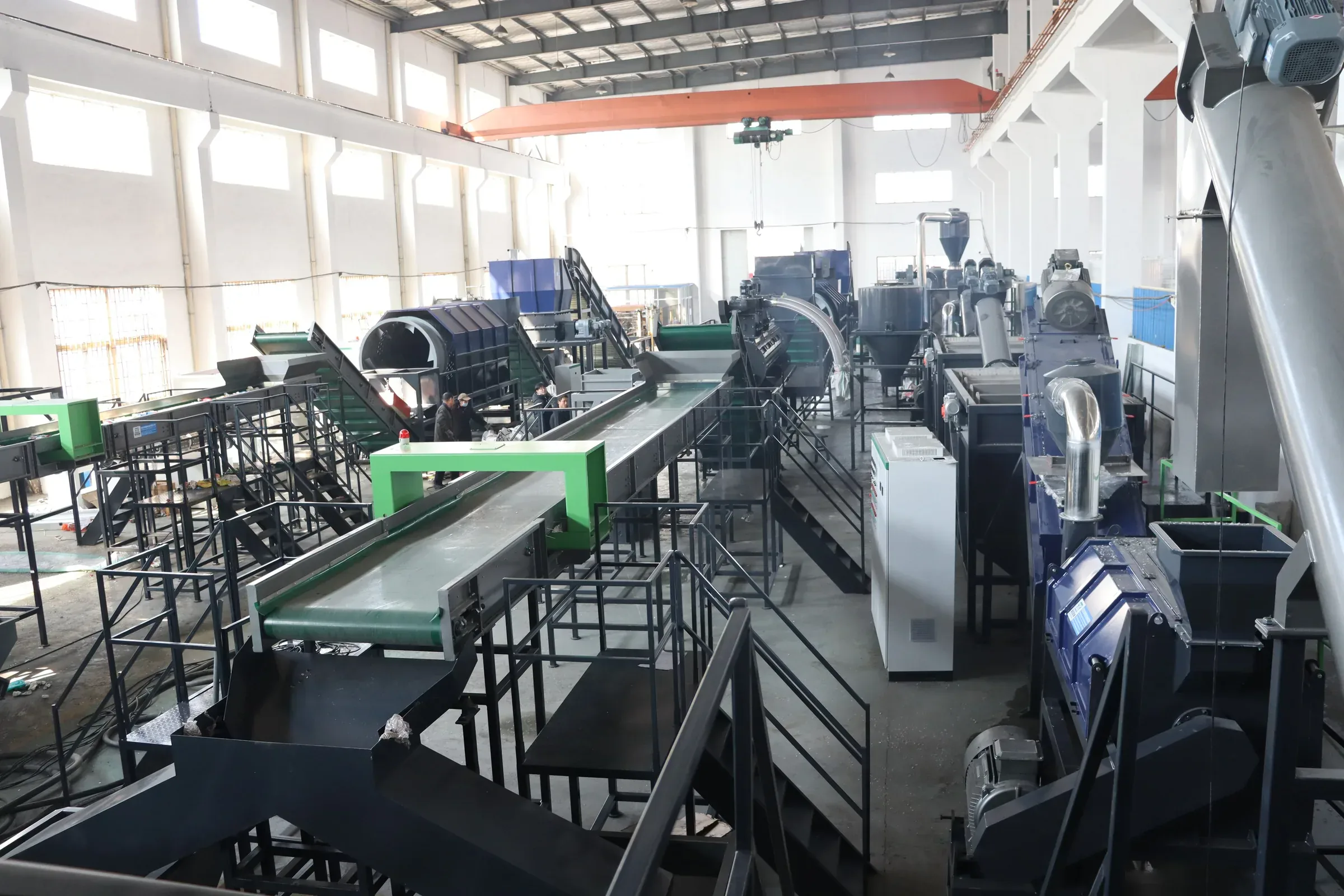
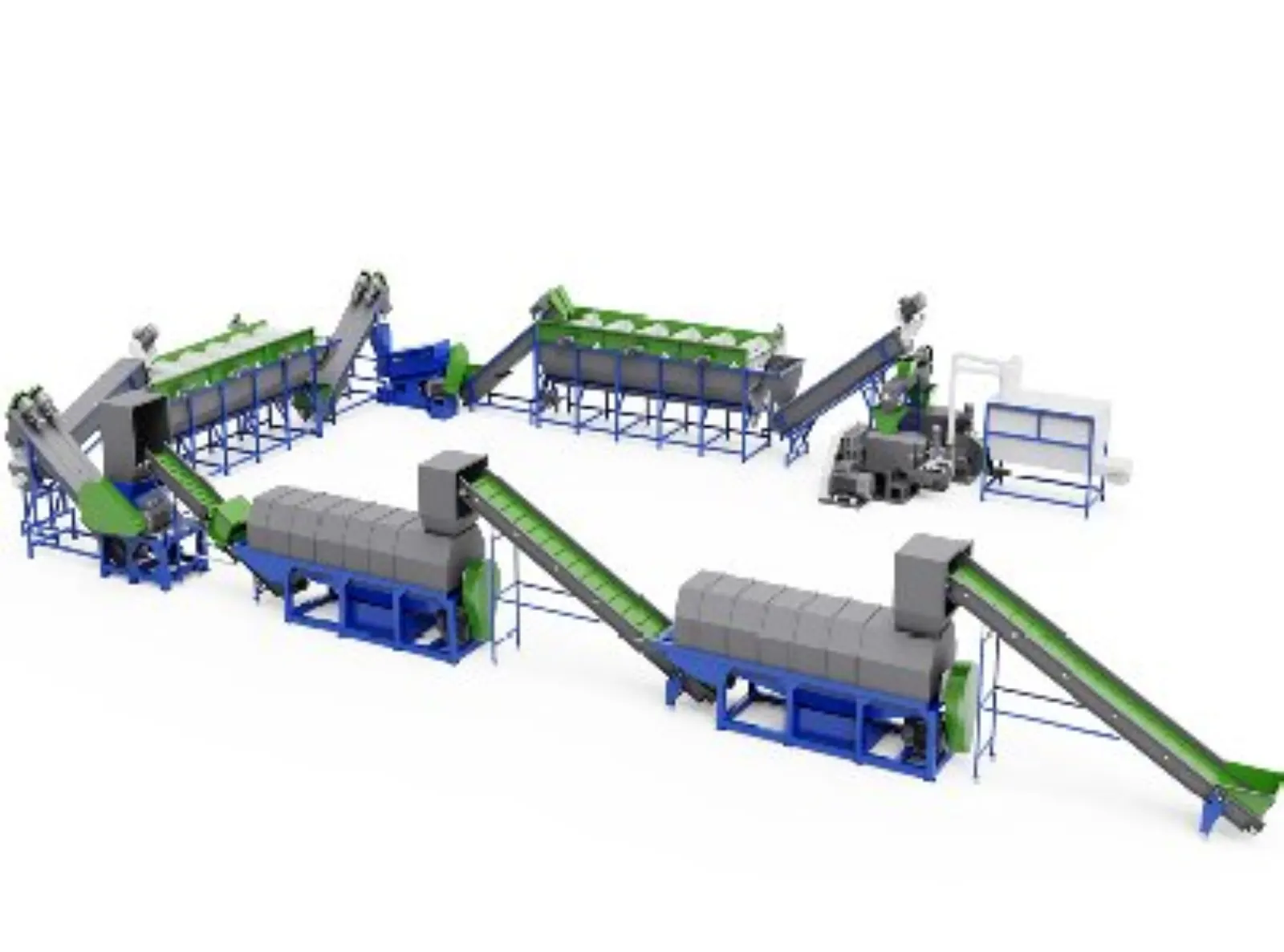
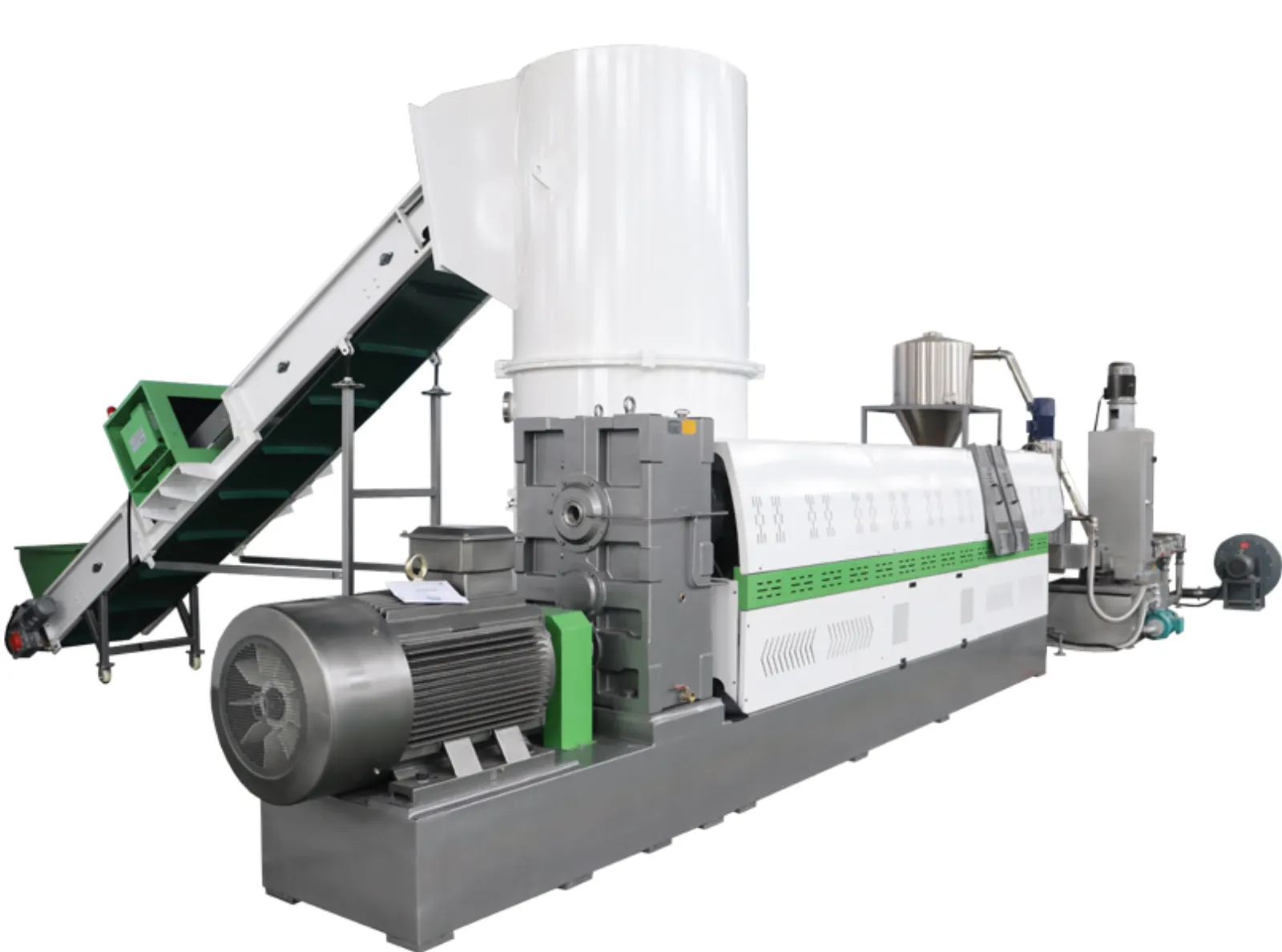
A common mistake in specifying a plastic granulating line is treating PE, PP, PET, and ABS as if they were variations on the same material. They are not. Each one has different bulk density, different melting behavior, different moisture sensitivity, and a different contamination profile — and a line configured correctly for one will underperform or outright fail on another. At Retech Machine, the first conversation with a customer is almost always about material, not equipment. Once the material is clear, most of the equipment choices follow.
This guide covers what actually differs when you configure a granulating line for PE, PP, PET, and ABS — from the feeding stage through to pelletizing. The goal is not to list every possible configuration, but to make clear where the four materials diverge and why.
Why One Line Does Not Fit All Four Materials
The four polymers share a general process flow — feeding, extrusion, degassing, filtration, pelletizing — but the requirements at each stage shift based on three material properties.
Bulk density of the feed. PE film and PP raffia run at 30–80 kg/m³ loose. PET bottle flake is around 300–400 kg/m³. ABS regrind is 400–600 kg/m³. An extruder hopper that happily takes ABS regrind will starve-feed on PE film within minutes unless a force-feeder or cutter-compactor is added upstream.
Moisture sensitivity. PET hydrolyzes in the melt — even small amounts of moisture break the polymer chains and drop the intrinsic viscosity, which is the property buyers care about. PE, PP, and ABS are far more tolerant, though they still benefit from venting.
Melt behavior and contamination. PE and PP film from post-consumer sources carry inks, labels, and grease. PET carries label adhesive and PVC contamination — a few ppm of PVC will yellow the whole batch. ABS often arrives mixed with other plastics and metals from electronics shredder residue. The filtration and degassing stages have to be sized for the actual contamination load, not the ideal one.
These three properties drive nearly every configuration choice in the sections below.
PE — Handling Low-Bulk-Density Film and Regrind
PE is the most common recycled polymer by volume, and most of it arrives as film — agricultural film, packaging film, shopping bags, shrink wrap. The defining challenge is bulk density. A pile of loose film flake has the density of a pillow, and a standard single-screw extruder will starve-feed on it immediately.
The standard configuration for a PE film line includes:
Cutter-compactor (also called an agglomerator) upstream of the extruder, which cuts, heats, and densifies the film flake into semi-melted agglomerates that feed into the extruder throat. This is the single most important unit on a PE film line — without it, throughput collapses.
Single-screw extruder with a long L/D ratio (typically 30:1 or 33:1) to allow full melting and effective degassing.
Double degassing (two vent ports), especially for printed film and washed film with residual moisture. The first vent removes surface moisture; the second removes residual volatiles from inks and additives.
Double-channel screen changer with a fine mesh (typically 80–120 mesh for film, coarser for cleaner regrind) to catch paper, aluminum flakes, and unmelted material.
Water-ring or underwater pelletizing, depending on throughput and pellet quality target. Strand works for HDPE pipe regrind but is unreliable for film.
For HDPE rigid regrind (pipe, crates, bottle caps), the cutter-compactor is usually unnecessary and a force-feeder is enough. LDPE and LLDPE film lines, on the other hand, cannot run profitably without a compactor — the feed is simply too light for a gravity hopper to handle.
PP — Raffia, Woven Sacks, and a Higher Melting Point
PP shares many of PE's handling characteristics — low bulk density when in film or raffia form, similar extruder configuration, similar venting requirements — but it differs in two important ways.
First, the melting point is higher: around 160–170°C for PP versus 110–135°C for PE. Extruder barrel temperatures, die temperatures, and cooling water temperature all need to be set accordingly. A line configured and tuned for PE will under-melt PP if temperatures are not adjusted.
Second, the dominant PP recycling streams are raffia and woven sacks — bulk packaging, FIBC big bags, agricultural sacks. These are denser than film but still low enough to require a cutter-compactor, and they are heavily contaminated with dirt, sand, and stitching thread. The washing stage upstream of the granulator is more critical for PP raffia than for most PE film streams.
A typical PP line configuration:
Cutter-compactor — same as PE film, sometimes with a slightly larger motor for the higher melt energy requirement.
Single-screw extruder, 30:1 or 33:1 L/D, with two degassing ports.
Screen changer sized for the contamination load. For dirty raffia, expect to change screens more often than on PE film.
Strand or water-ring pelletizing, depending on source material. Strand is workable for cleaner PP regrind; water-ring is preferred for raffia.
Hot die-face or underwater pelletizing for high-throughput lines producing saleable pellets.
PP also tends to oxidize more readily than PE in the melt, so residence time in the extruder should be kept short and the degassing effective. Long residence times show up as discoloration and a drop in mechanical properties — a problem that is invisible on the line but very visible to the customer.
PET — The Moisture Problem and Why Drying Is Non-Negotiable
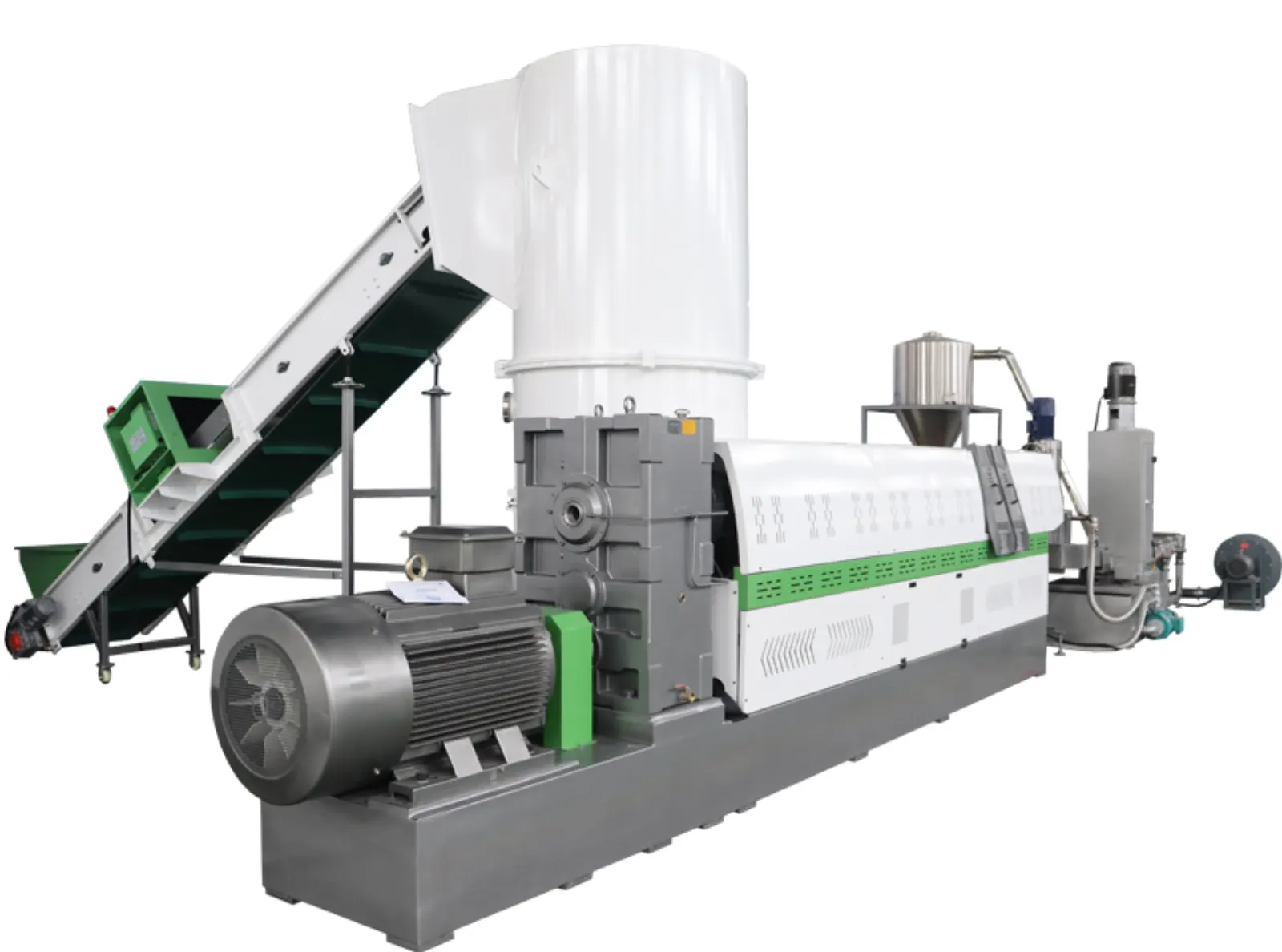
PET is the unforgiving one. Recycled PET (rPET) is overwhelmingly from beverage bottles, and the material is commercially valuable — but PET hydrolyzes in the melt. Even 50 ppm of moisture will break the ester linkages in the polymer chain, drop the intrinsic viscosity (IV), and disqualify the pellets from being used in food-grade or bottle-to-bottle applications. The line configuration has to treat moisture as the primary enemy.
A correct PET granulating line includes:
Crystallization and drying system upstream of the extruder. Washed PET flake is amorphous and will stick together if heated directly. It needs to be crystallized (typically at 150–170°C) and then dried to below 50 ppm moisture, usually in a dehumidifying hopper dryer with desiccant air. This stage alone can take 4–6 hours and is non-negotiable for any PET line that intends to make saleable pellets.
Single-screw or twin-screw extruder, with twin-screw becoming standard on higher-quality lines for better mixing and shorter residence time.
Strong vacuum degassing — usually a single high-vacuum port, sometimes two on larger lines.
Fine filtration — 60–100 mesh, often with a continuous screen changer because PET contamination (aluminum, PVC, glue residue) is relentless.
Strand or underwater pelletizing. Strand is more common on standard rPET lines; underwater is used where premium pellet appearance is required (food-grade, bottle-grade rPET). Water-ring is generally not used for PET.
Process temperature is high — 260–285°C — and the entire material path has to be corrosion-resistant if caustic residues from washing are present. A PET line configured like a PE line will produce discolored, low-IV pellets that no serious buyer will accept. The drying system is not an accessory on a PET line; it is the line.
ABS — Rigid Regrind, Color Sorting, and Strand Pelletizing
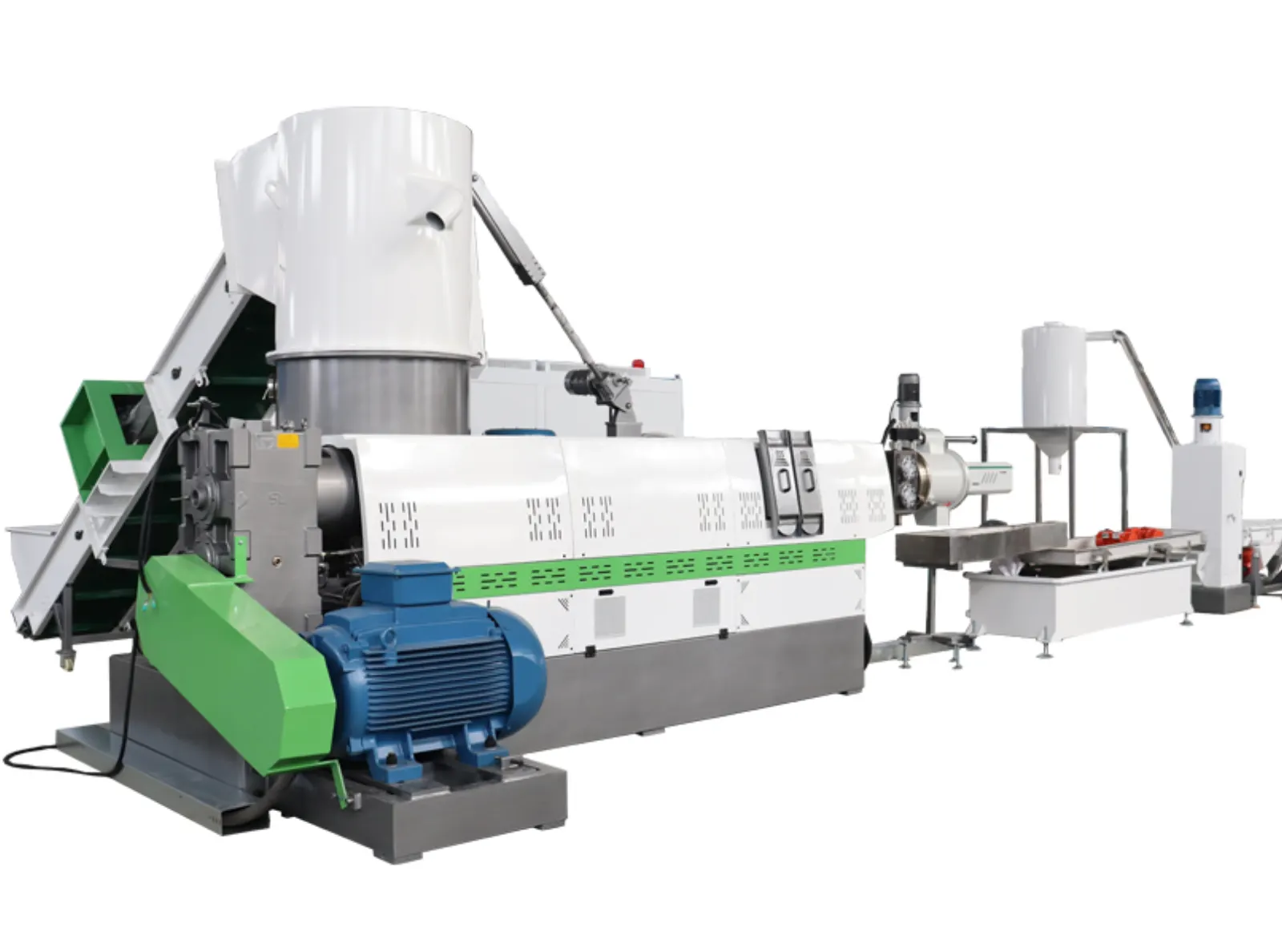
ABS is the odd one out in this group. It arrives as rigid regrind — from electronics housings, appliances, automotive parts, pipe — not as film or fiber. That changes the upstream configuration completely.
Because ABS regrind has a high bulk density (400–600 kg/m³), it feeds a standard extruder hopper directly. No cutter-compactor is needed, and no force-feeder either. The defining challenges are different:
Color sorting and contamination. ABS from electronics shredder residue (WEEE) is typically a mix of black, white, and colored pieces, often with residual metals, PVC, and other plastics. Optical sorting upstream of the extruder is essential if the pellets are going to a buyer with color specifications.
Moisture. ABS is hygroscopic and should be dried before extrusion (typically 80–90°C for 3–4 hours) to prevent surface defects on the pellets. This is not as severe as PET, but skipping it produces silver streaks and bubbles that show up immediately on the customer's injection-molded part.
Pelletizing. Strand pelletizing is the standard for ABS. ABS forms stable strands, the pellets are clean and cylindrical, and the simpler maintenance of a strand line fits ABS compounders and recyclers well. Water-ring and underwater are rarely used for ABS.
A typical ABS line configuration:
Shredder and granulator upstream to bring the parts to a uniform regrind size.
Optical color sorters — often two-stage: black/white separation first, then color sort.
Drying hopper at 80–90°C.
Single-screw extruder, 28:1 to 30:1 L/D, with one degassing port.
Screen changer with 60–80 mesh for non-melt contamination.
Strand pelletizing line with a water bath and pelletizer.
ABS lines are usually the simplest of the four to configure, but the upstream sorting determines whether the pellets are worth anything. A perfectly extruded batch of mixed-color ABS is worth a fraction of the same batch sorted and run by color.
Shared Building Blocks and What Usually Differs
Across all four materials, the major equipment blocks are the same: extruder, degassing, filtration, pelletizer. What changes is the sizing and the presence of upstream units.
| Stage | PE Film | PP Raffia | PET Flake | ABS Regrind |
|---|---|---|---|---|
| Cutter-compactor | Required | Required | Not used | Not used |
| Force-feeder | Optional | Optional | Optional | Standard hopper |
| Drying system | Usually none | Usually none | Crystallizer + desiccant dryer (essential) | Drying hopper (recommended) |
| Degassing ports | 2 | 2 | 1 high-vacuum | 1 |
| Screen mesh | 80–120 | 80–120 | 60–100 | 60–80 |
| Pelletizing | Water-ring or underwater | Strand or water-ring | Strand or underwater | Strand |
The pattern is clear: PE and PP lines are configured around bulk density and contamination. PET lines are configured around moisture. ABS lines are configured around sorting. Any line specification that does not start from the material — and that treats the equipment list as the starting point — is going to miss something important.
If you are planning a granulating line for any of these four materials and want a configuration matched to your specific feedstock and throughput, that is the conversation we are set up to have. The equipment matters, but the material is what tells you which equipment.
This article is carried over from the Retech technical archive and keeps its original URL.
ABOUT THIS UPDATE
Published by Retech Marketing & Communications Team
The Retech Marketing & Communications Team publishes official company news, exhibition information, factory updates, project milestones and product announcements.
For technical questions about plastic recycling systems, please contact our engineering team.