Anyone who has run a film recycling line knows the bottleneck usually shows up at the very first step. Whole rolls of agricultural film, packaging film, or stretch wrap arrive at the plant wound tight, often several hundred kilograms apiece, and someone has to turn them into manageable pieces before they can go anywhere near a shredder or granulator. Manual cutting is slow, inconsistent, and frankly dangerous when you are dealing with dense multi-layer rolls. That is the problem the hydraulic double-cylinder single-blade plastic film guillotine cutter is built to solve — and at Retech Machine, we have spent enough years in this industry to know exactly where the old methods fall short.
The machine, sometimes called a vertical hydraulic guillotine cutter or simply a roll film cutting machine, uses high-pressure hydraulic force to shear through entire rolls of plastic film, sheeting, rubber, and even PVC / PE / PET roll stock in a single downward stroke. No pre-stripping, no manual layer separation. Load the roll, press the button, and the blade comes down.
Tackling Whole Rolls in a Single Pass
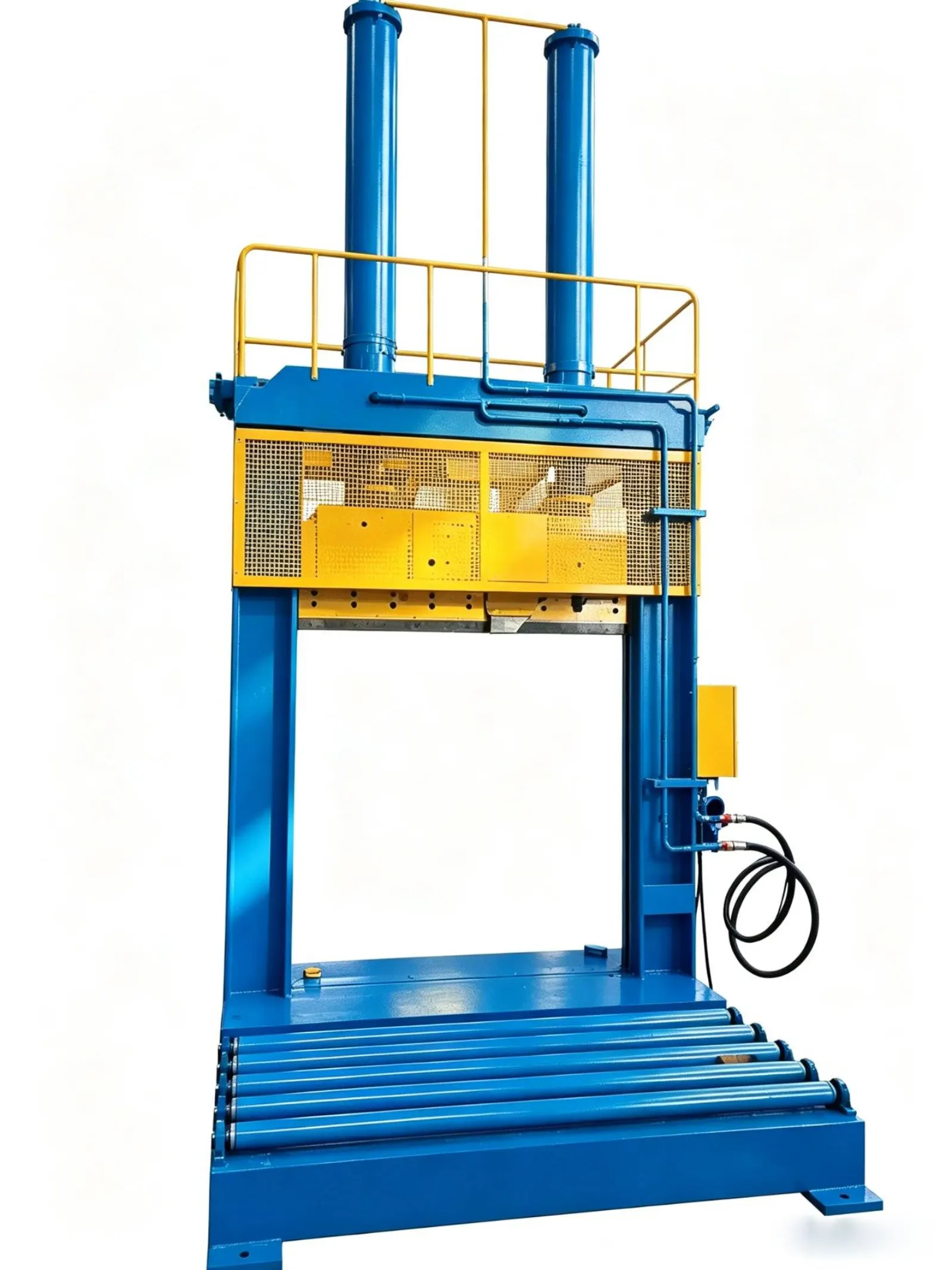
The core idea is straightforward: replace manual cutting with a controlled, high-force vertical shear. A hydraulic cylinder drives a hardened high-speed steel (HSS) flat blade down through the material, while the geometry of the gantry frame keeps everything aligned during the stroke. There is no rotary motion, no tearing — just a clean vertical cut.
What makes this worth talking about is the range of materials it actually handles in practice, not just on a spec sheet:
PE agricultural film rolls, often muddy and densely wound
Master rolls of packaging film and stretch wrap
PET and PVC rolls
Plastic purge lumps and thick plastic blocks
Rubber blocks, silicone blocks, and rubber rolls
Non-woven fabric rolls, paper rolls, and aluminum foil rolls
In a recycling context, the value becomes obvious the first time you run one. A whole roll of waste film that would take a worker twenty minutes to cut apart by hand — leaving uneven edges that jam the downstream conveyor — is sheared clean in seconds. The vertical cutting action leaves smooth edges with no stringing or chipping, which matters more than people tend to realize: rough, stringy edges tangle in the granulator feed, while clean cuts feed evenly and keep the pelletizing line running. That single detail has a real effect on overall plant uptime.
Built Around a Reinforced Gantry Frame
The frame is where a lot of cheaper machines cut corners, and it is the first thing we tell customers to look at when evaluating one of these cutters. Retech's design uses a heavy-duty welded steel plate gantry frame with a bottom-mounted material platform sized to hold a full roll. The frame has to absorb the full cutting force without flexing — any deflection shows up immediately as an uneven cut and accelerated blade wear, and over time it fatigues the welds.
The hydraulic cutting unit itself comes in single-cylinder and dual-cylinder configurations, with cutting force ranging from 40 to 120 tons. For large rolls of thick film, we recommend the dual-cylinder models — the force is distributed more evenly across a wide blade, and the cut stays true from one edge to the other instead of dipping in the middle. The HSS flat blade is quenched for wear resistance, and the material choice is not a minor detail: a softer blade will deform under load and start dragging plastic instead of cutting it, which is exactly how you get the adhesion and stringing problems that plague lower-end machines.
Behind the cutting unit sits the hydraulic power station — motor, oil pump, and valve assembly, with motor options from 7.5 kW up to 30 kW depending on the model. The electrical control console offers both manual (inching) and automatic blade descent, an emergency stop, and safety limit switches. A blade guard and upper / lower limit switches round out the safety system. These are not optional extras; they are what let an operator work next to a 100-ton blade all day without it being a problem.
Choosing the Right Model
Selecting the right machine comes down to three things: the maximum roll width you need to cut, the material density, and your throughput target. The table below maps our standard models to those variables.
| Model | Working Route (mm) | Oil Pressure | Power | Cutting Pressure |
|---|---|---|---|---|
| RM-60 | 600 | 20 MPa | 7.5 kW | 60 T |
| RM-80 | 800 | 20 MPa | 11 kW | 80 T |
| RM-100 | 1000 | 25 MPa | 22 kW | 100 T |
| RM-120 | 1500 | 25 MPa | 30 kW | 120 T |
As a rule of thumb, the RM-60 and RM-80 cover smaller film rolls and rubber blocks, while the RM-100 and RM-120 are built for full-width master rolls and high-volume recycling plants running continuous shifts. Cutting width, blade dimensions, and route can also be customized to match an existing line — we build to fit the plant, not the other way around. If you are unsure which model fits your material, send us a sample roll weight and film type and we will size it for you.
Where It Fits in the Plant
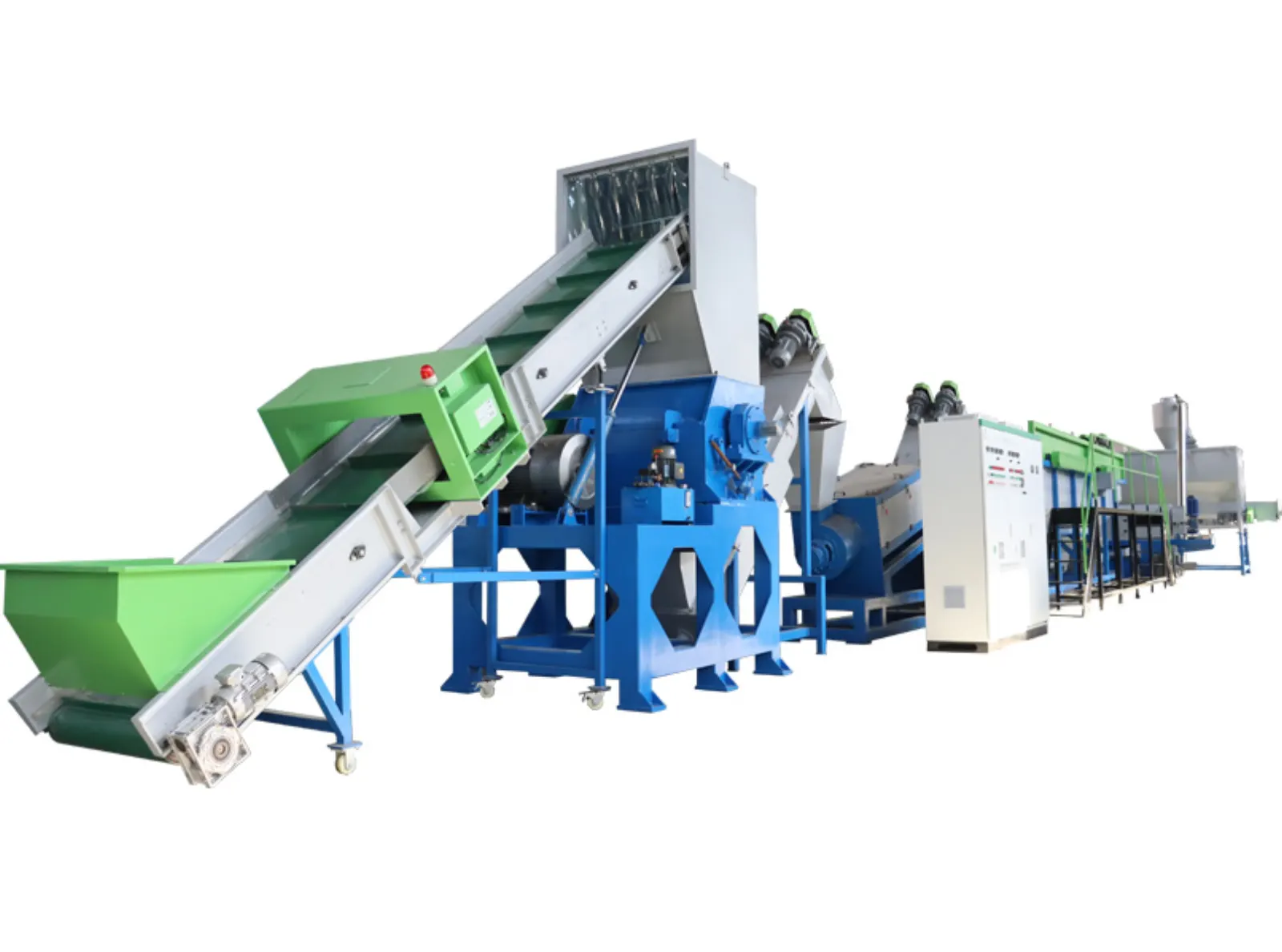
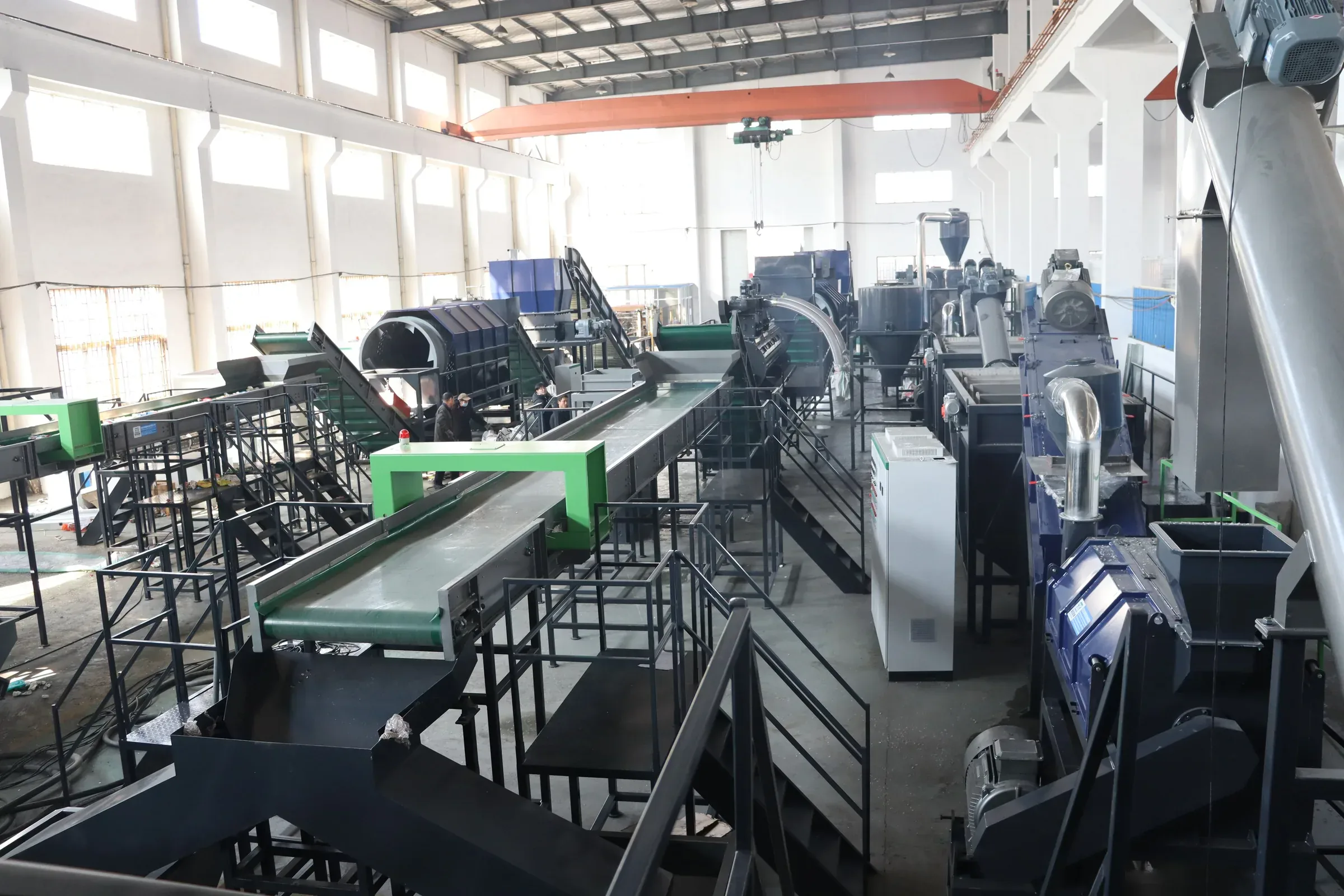
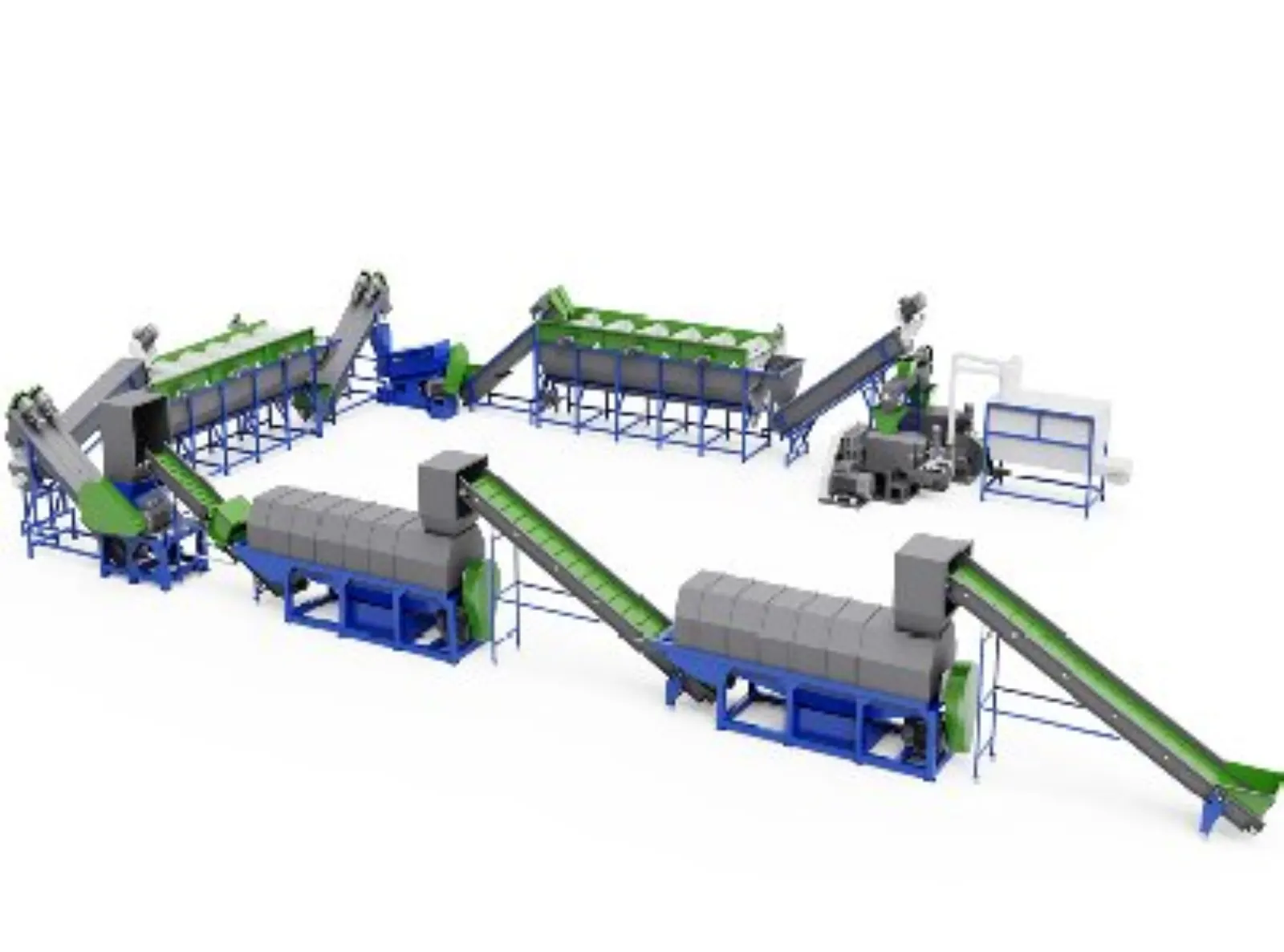
The guillotine cutter rarely works alone. In a typical post-consumer film washing line, it sits at the very front, taking whole rolls or bales of waste film and reducing them to uniform pieces before they hit the shredder or granulator. Downstream, a belt conveyor carries the cut pieces to the next stage, and the hydraulic station and electric panel integrate with the rest of the line's controls. A standard configuration includes a rolling feeder, the guillotine cutter itself, a hydraulic station, a belt conveyor, and an electric panel — five units working as one.
Typical applications include:
Plastic granulation and recycling plants
Greenhouse and agricultural film processing facilities
Packaging material factories handling waste or off-spec rolls
Rubber product factories
Film extrusion workshops processing purge material and edge trim
General waste-to-resource recovery operations
The machine is designed for continuous 24-hour operation, which is the actual working condition in most recycling plants. It is not a lab tool — it is a production-line workhorse, and the frame, blade, and hydraulic system are all sized accordingly.
Operation, Safety, and Maintenance
Operating the machine is intentionally simple — single-operator roll loading, one-touch cutting — but the safety protocols are not negotiable. Before startup, check the hydraulic oil level and inspect for leaks; examine the blade for nicks or rolled edges. Center the material on the platform, and never reach into the cutting zone beneath the blade assembly. The upper and lower limit switches are there for a reason, and operators should keep clear of the gantry frame during the cutting stroke.
For maintenance, power must be disconnected and hydraulic pressure fully released before any cleaning or blade service. And this should go without saying, but the blade is not designed for metal or hard rigid objects — cutting those will damage the blade and can damage the frame. The HSS blade holds up well to plastic and rubber, but it is not a universal shear, and treating it like one is the fastest way to shorten its life.
For plants handling any meaningful volume of waste film, roll stock, or rubber blocks, a hydraulic guillotine cutter is one of those machines that pays for itself in labor savings and downstream efficiency within the first year. The cut is consistent, the operation is safe when protocols are followed, and the build is heavy enough to handle daily production loads for years. If you are specifying a new recycling line or upgrading an outdated cutting stage, the RM-series is worth a close look — and we are happy to help match a model to your specific materials and throughput.
This article is carried over from the Retech technical archive and keeps its original URL.
ABOUT THIS UPDATE
Published by Retech Marketing & Communications Team
The Retech Marketing & Communications Team publishes official company news, exhibition information, factory updates, project milestones and product announcements.
For technical questions about plastic recycling systems, please contact our engineering team.