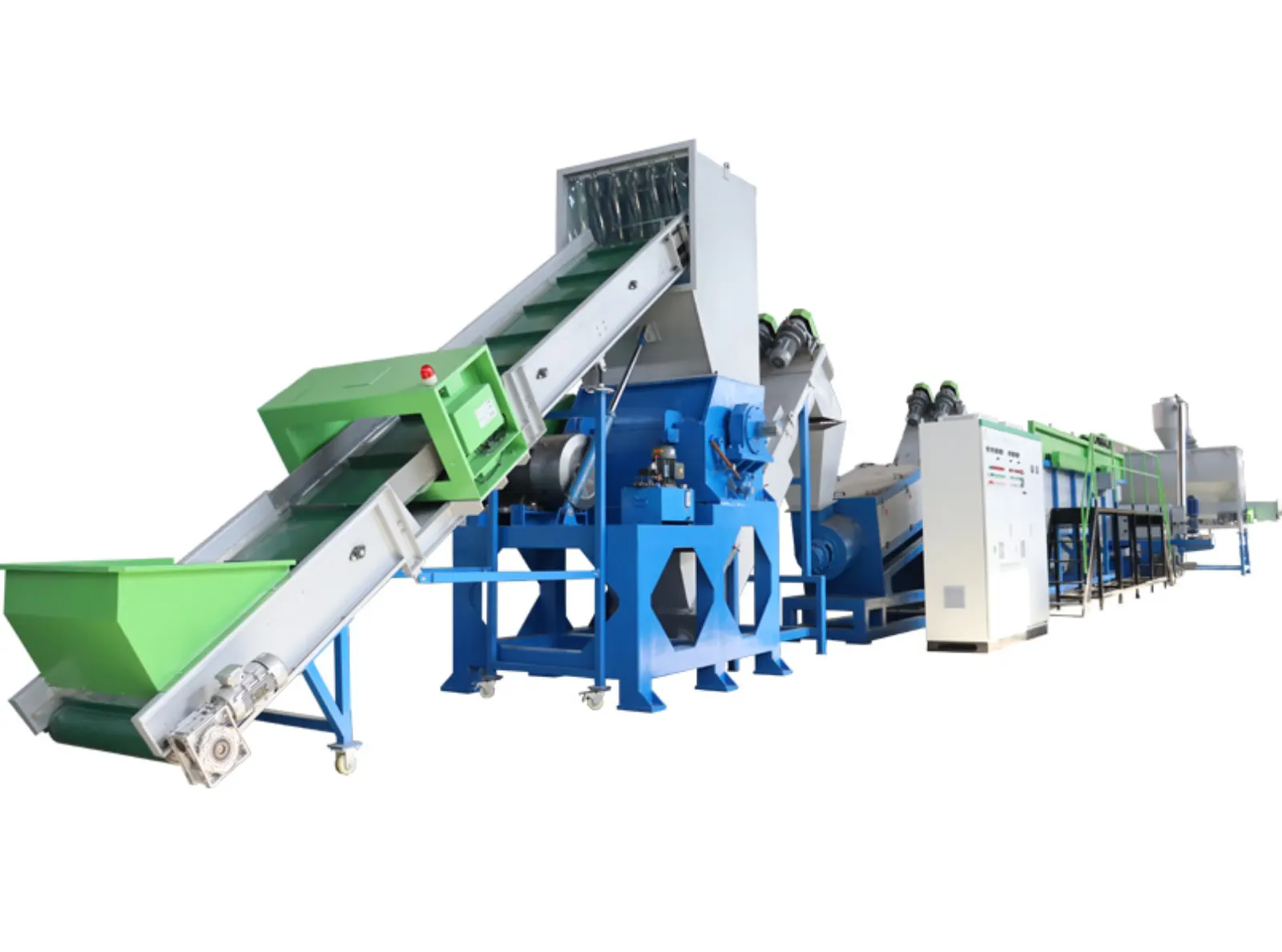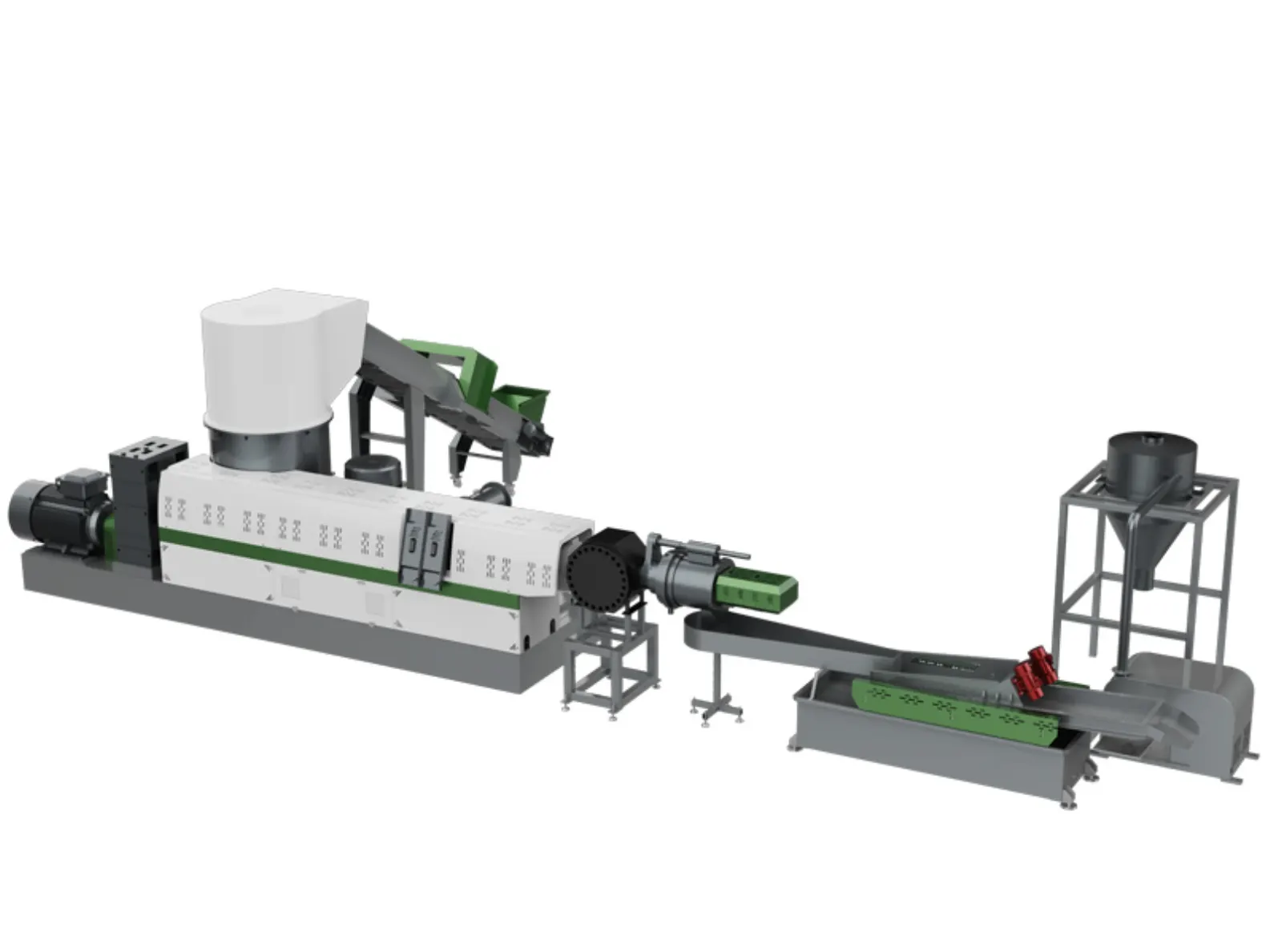
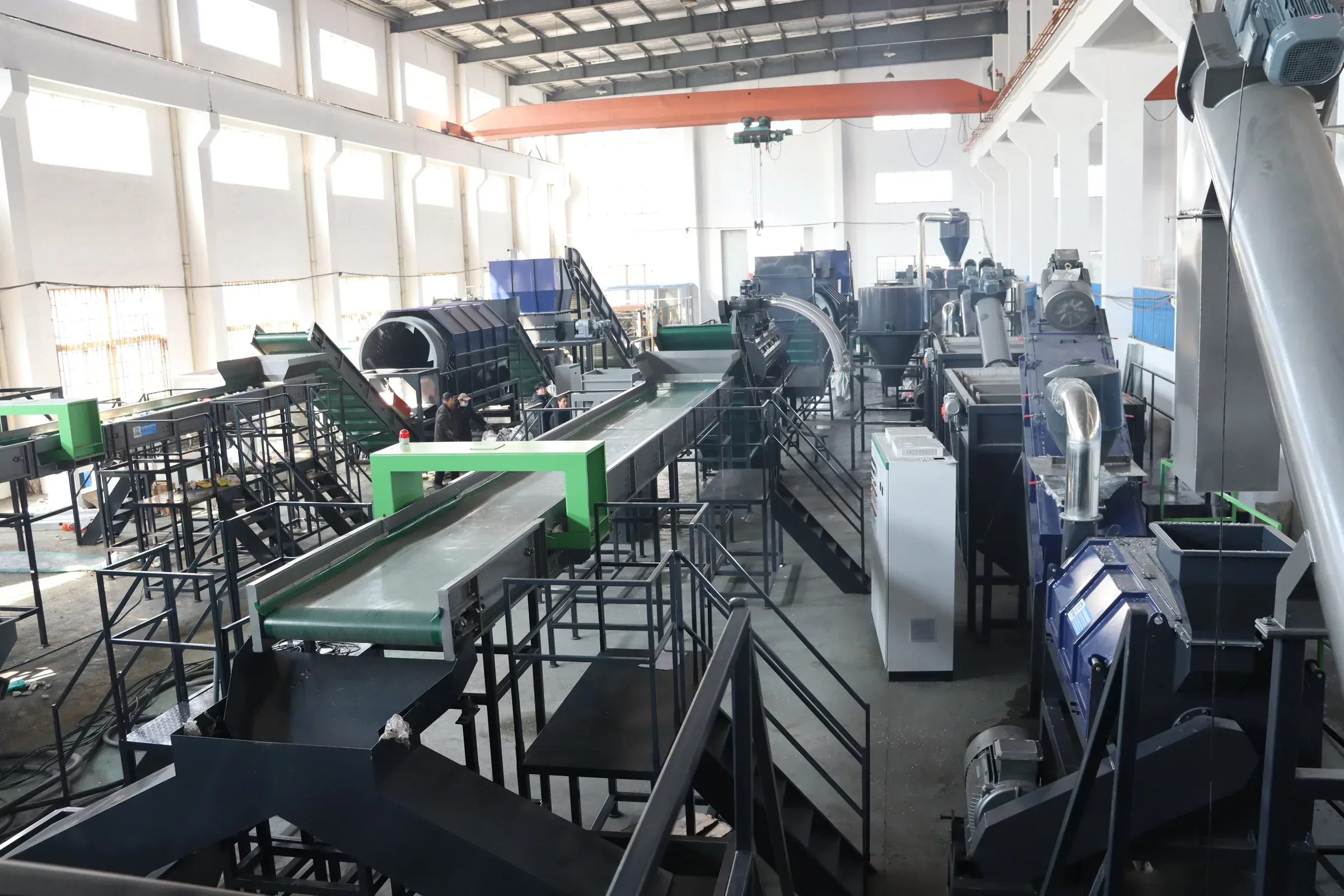
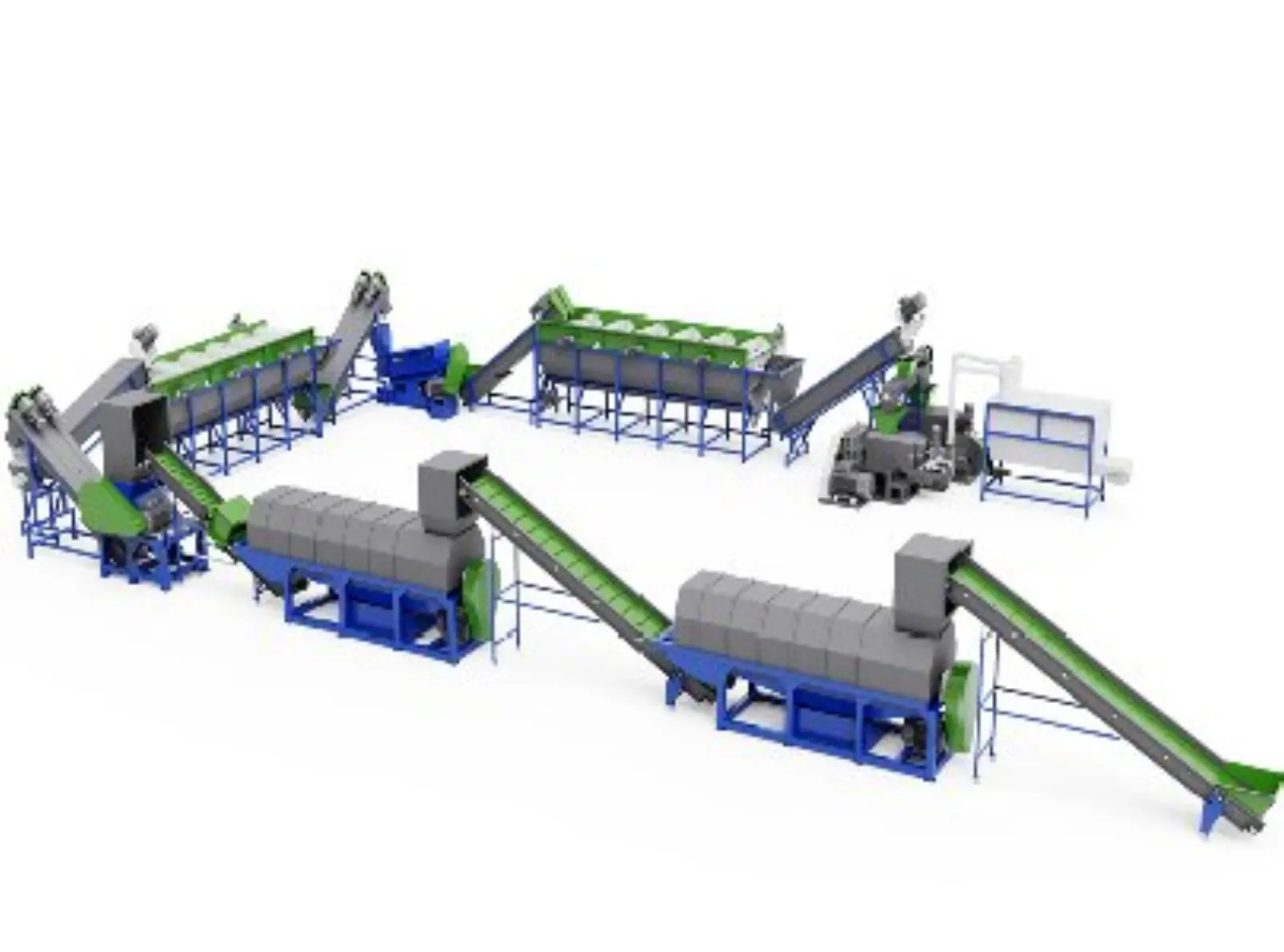
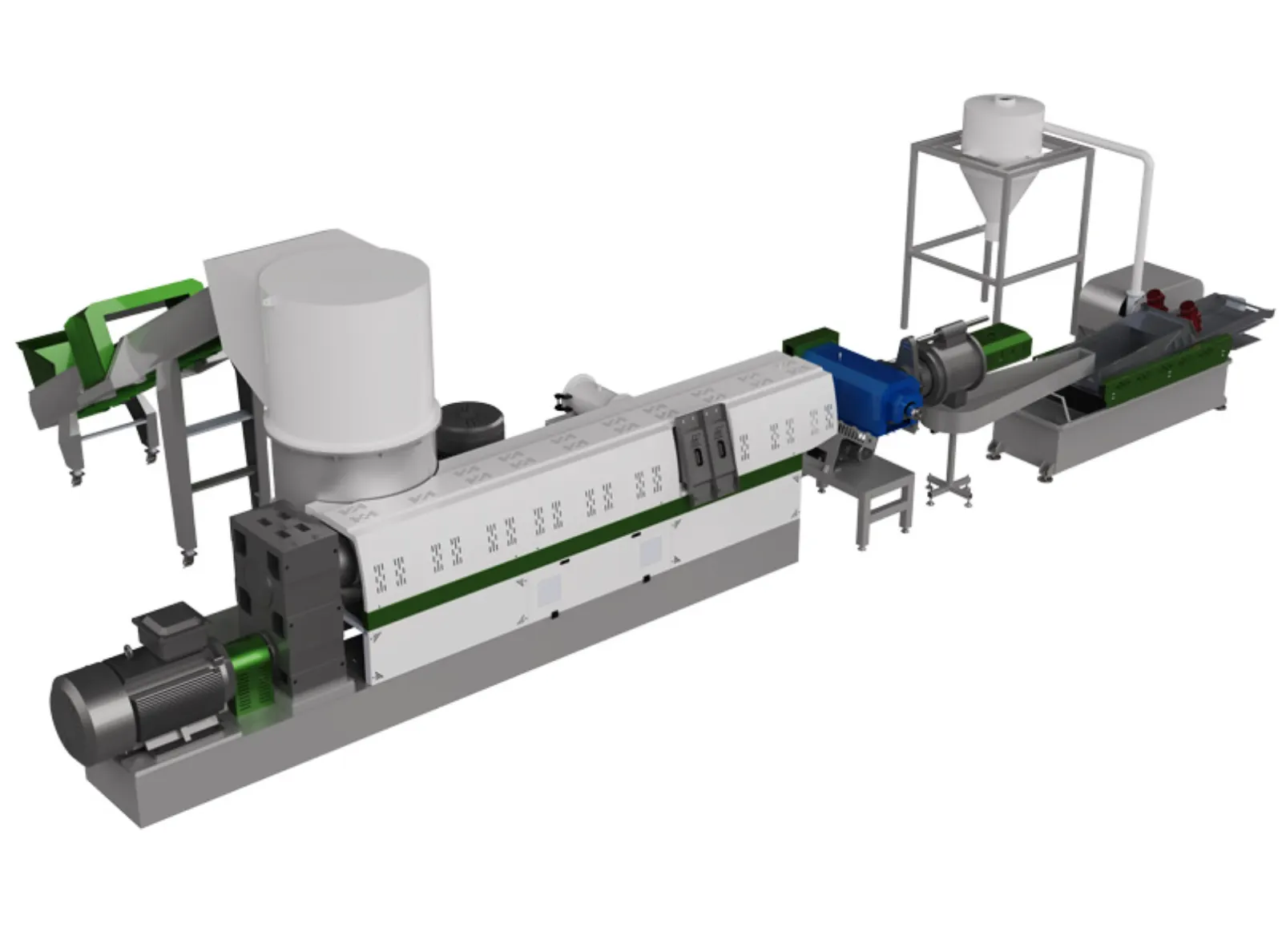
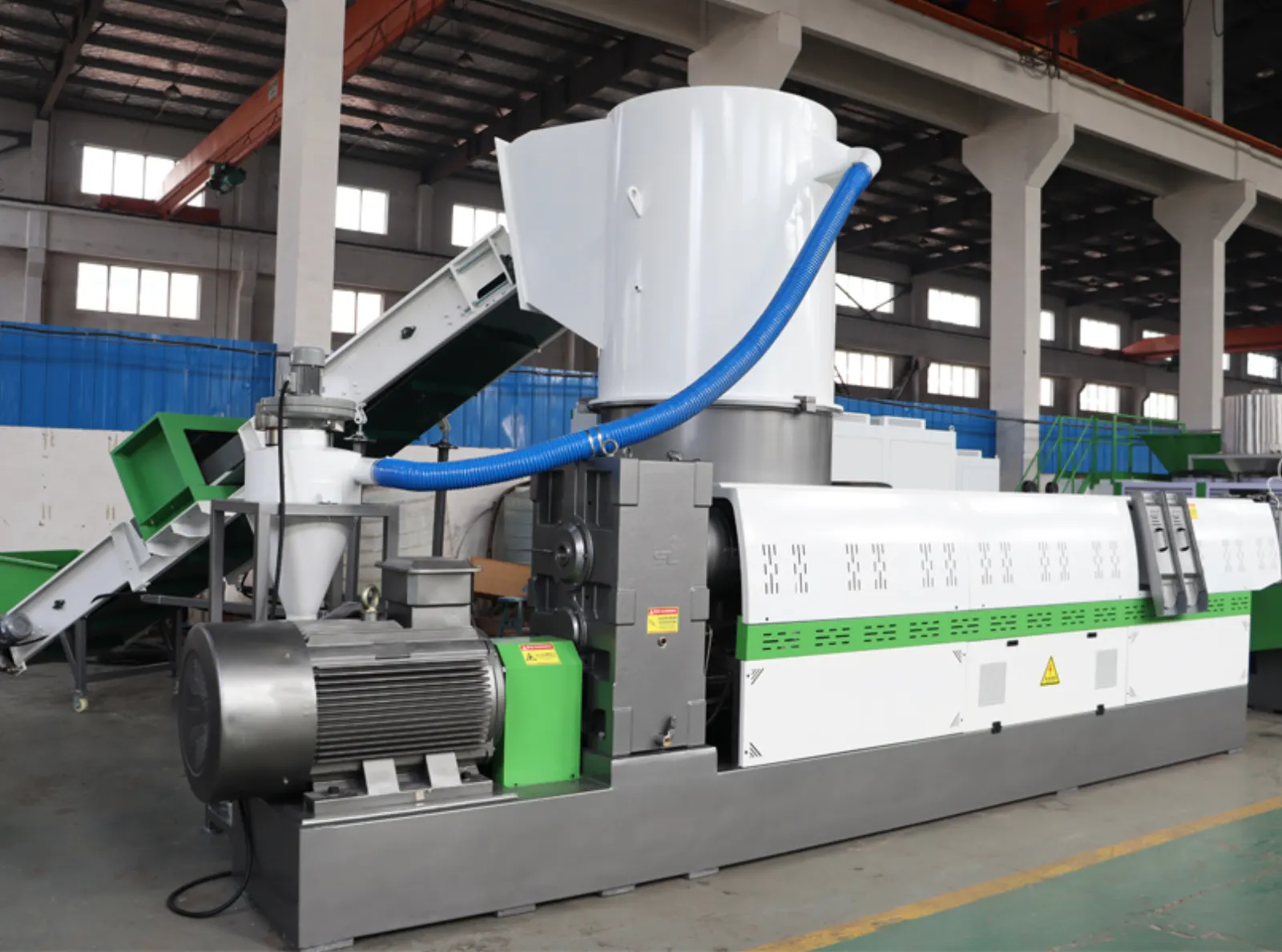
By the time molten polymer reaches the die, a recycling or compounding line has already done most of the heavy lifting — washing, drying, melting, degassing, filtering. The pelletizer is the last step, but it is also the step where the wrong choice quietly costs you money for years. Pellet shape, size consistency, throughput ceiling, and downtime for cleaning all trace back to that one decision. At Retechマシン, we have configured pelletizing lines for everything from post-consumer PE film regranulation to engineering plastics compounding, and the pelletizing method is almost always the first thing we settle with the customer — before anything else.
Three mainstream cutting methods dominate the thermoplastics industry: strand, water-ring, and underwater pelletizing. They are not interchangeable. Each one fits a different combination of material, throughput, and pellet quality requirement, and pretending otherwise is how plants end up with shaped lumps instead of pellets, or with a machine that needs cleaning every four hours.
How Each Method Actually Works
Before comparing them, it helps to be precise about what each one is doing. The differences sound small on paper; in production, they are not.
ストランドカット方式 is the oldest and simplest of the three. Molten polymer exits a horizontal die as a row of continuous strands, drops into a long water bath for cooling, and is then pulled into a pelletizer where two feed rolls pull the strands past a rotating knife that chops them into cylindrical or oval pellets. Cooling and cutting happen in two separate places, several meters apart.
ウォーターリングカット方式 moves the cut to the die face. Molten polymer exits a vertical die, is sliced by rotating knives immediately as it leaves the die, and the freshly cut pellets are flung outward into a rotating ring of water that cools and conveys them to a dewatering unit. Cutting happens in air at the die face; cooling happens a fraction of a second later in the water ring.
水中カット方式 submerges the entire cutting operation. The die face sits inside a water-filled chamber, and the rotating knives cut the polymer the instant it exits the die — underwater. The water simultaneously quenches the cut surface, cools the pellet, and conveys it out to a dewatering and drying unit. Everything happens in one place, in water, at the same time.
Strand Pelletizing — Simple, Reliable, Hard to Beat on Cost
If strand pelletizing were a worse method, it would not still be the default on so many compounding lines. Its strengths are real: the equipment is mechanically simple, the die is easy to clean, the cutting action is gentle, and the pellets — cylindrical or oval, clean-cut on the ends — are well suited to further processing or direct sale.
Strand lines are at their best with polymers that form stable, continuous strands and do not stick to themselves in the water bath. That covers most PE and PP grades, general-purpose PS, ABS, SAN, PMMA, most engineering plastics, and masterbatch carriers. Throughputs typically run from a few hundred kilograms per hour on small lab or recycling lines up to several tons per hour on large compounding lines.
Where strand pelletizing struggles is with soft, tacky, or very low-melt-strength polymers. Hot-melt adhesives, some TPEs, soft PVC, and highly filled or sticky compounds tend to break strands in the bath or weld together — the line spends more time being restarted than running. Strand is also a footprint-hungry option: the water bath has to be long enough for full cooling, which on a high-throughput line can mean five to ten meters of floor space just for the bath.
For most rigid and semi-rigid recycling applications, strand pelletizing is still the right answer. The capital cost is lower, the maintenance is simpler, and the operator skill required is minimal. It is the pelletizer we default to unless the material or the throughput forces a different choice.
Water-Ring Pelletizing — The Middle Ground for Soft and Sticky Polymers
Water-ring pelletizing exists to solve the problems strand pelletizing cannot. By cutting at the die face instead of after a long water bath, it eliminates strand breakage entirely. The pellets are lentil- or disc-shaped, evenly sized, and the line footprint is much smaller because there is no bath to lay out.
This method shines with low-melt-strength and slightly tacky polymers that will not form stable strands — soft PE and PP, EVA, thermoplastic elastomers, some adhesive compounds, and recycled film where melt strength varies from batch to batch. It is also the standard choice on many PE/PP film recycling lines, where the upstream material is irregular and the operator cannot afford to babysit strand integrity all shift.
The trade-off is throughput and pellet shape. Water-ring pelletizers are usually capped in the lower-to-middle throughput range — roughly 200 to 2,000 kg/h on most commercial units — and the disc-shaped pellets, while perfectly good for downstream processing, do not have the premium look of round underwater pellets. That matters if you are selling pellets into a market where appearance is part of the spec.
Die design is more critical than on a strand line. The die holes are smaller and the knife geometry has to be precise, because the cut happens hot, in air, and any smearing shows up as tails or deformation on the pellet. Knives wear faster than strand pelletizer knives, and die maintenance becomes a regular scheduled task rather than an occasional one.
Underwater Pelletizing — High Throughput and Premium Pellet Quality
Underwater pelletizing is the most demanding of the three, and the most capable. Because the cut happens underwater, the pellet surface is quenched instantly, which gives the perfectly round, uniform, glossy appearance that buyers of virgin-grade and premium recycled pellets expect. Throughput can scale from a few hundred kilograms per hour on lab units to 10 tons per hour or more on large production lines, with no real ceiling at the upper end beyond die size and water system capacity.
Almost any thermoplastic can be underwater pelletized — PE, PP, PET, PS, PA, PC, PMMA, TPU, masterbatch, filled compounds, and soft TPEs that defeat both strand and water-ring systems. The water at the die face prevents the smearing, tailing, and sticking problems that plague the other two methods on difficult materials. For sticky, soft, high-throughput, or appearance-critical products, there is no real substitute.
The cost is in capital, complexity, and process sensitivity. Underwater systems require a conditioned water loop with temperature control, a centrifugal dryer, and a more sophisticated control system. Start-up is more involved — the die has to be brought to temperature while water is already flowing, and the start-up sequence has to be executed correctly or the die freezes. Maintenance is more specialized, and a single blocked die hole in production can mean a full stop and clean-out.
For high-throughput recycling plants — especially PET bottle and PE film lines — and for compounders selling into markets that demand consistent pellet geometry, underwater pelletizing is the right answer despite the higher capital cost. For everyone else, it is overkill.
Matching the Method to Your Material and Line
The selection logic is rarely as complicated as buyers make it. Three questions usually settle it: does the material form a stable strand, how much throughput do you need, and does pellet appearance matter to your buyer.
| Material Type | Throughput | Pellet Quality Required | Recommended Method |
|---|---|---|---|
| PE / PP / PS / ABS rigid regrind | Medium to high | 標準的 | ストランド |
| PE / PP film, soft or tacky polymers | Low to medium | 標準的 | 水環式(ウォーターリング) |
| PET, PA, PC, TPU, masterbatch | Medium to high | High (round, uniform) | 水中式(アンダーウォーター) |
| Soft TPE, adhesives, sticky compounds | Low to medium | 標準的 | 水環式または水中式 |
| 高スループットのバージン材同等再生ペレット | 高 | プレミアム | 水中式(アンダーウォーター) |
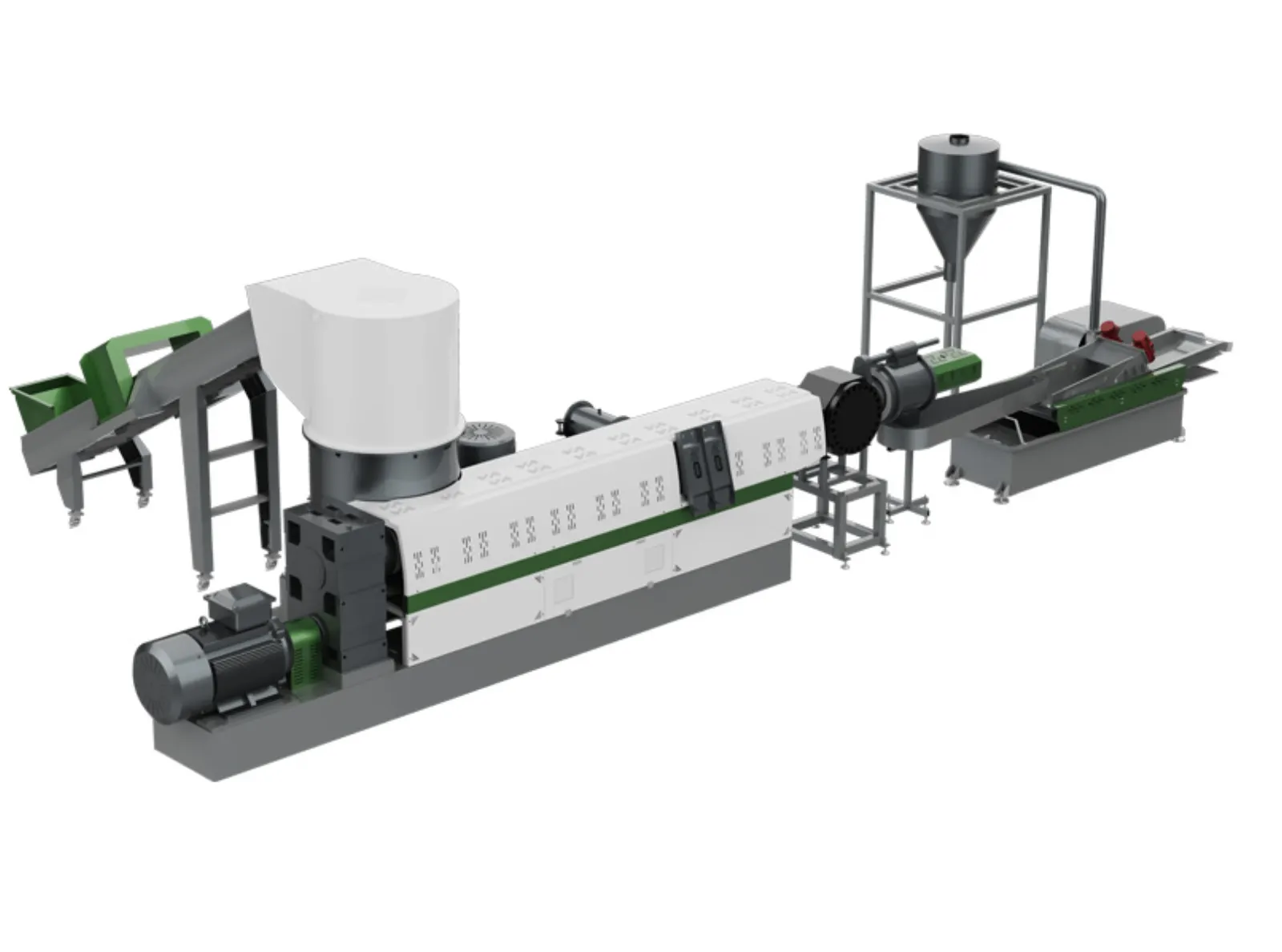
材料が安定したストランドを形成できる場合は、水中ペレット化は不要であり、設備投資を抑えられます。安定したストランドが形成できず、スループットが中程度であれば、通常は水環式が適しています。スループットが高い場合や、ペレットの外観が販売上の強みとなる場合は、これら3つの中で水中式が唯一の選択肢となります。.
見落とされがちな点として、ペレット化方式は上流工程のラインから独立しているわけではないということが挙げられます。ストランドラインは溶融温度やフィルター圧力の変動に対して許容範囲が広い一方、水中ラインはこれら双方に敏感です。リサイクルラインでは洗浄済みフィルムなどを扱うため、押出機の出力が変動しがちですが、ストランド式や水環式の方が水中式よりもこうした変動を吸収しやすくなっています。上流からの供給が非常に不安定で、シフトごとにダイが凍結してしまうようなラインに水中ペレット化方式を指定してしまったお客様の事例を見たことがあります。問題はペレット化装置ではなく、ライン構成にありました。データシート上の見栄えで選ぶのではなく、ラインに適合するペレット化装置を選択してください。.
ペレット化装置は最終工程ですが、ペレットが売れるかどうかを決定づける重要なステップです。まずは材料への適合性、次にスループット、最後にカタログスペックの順で選定してください。.
この更新について
発行者 Retechマーケティング&コミュニケーションチーム
Retechマーケティング&コミュニケーションチームは、公式の企業ニュース、展示会情報、工場アップデート、プロジェクトの進捗、および製品発表を公開しています。.
プラスチックリサイクルシステムに関する技術的なご質問は、弊社エンジニアリングチームまでお問い合わせください。.