


Recycling plastic is not simply a matter of collecting waste, shredding it, and turning it into a new product. Before recycled plastic can be processed into flakes, pellets, sheets, pipes, films, or other products, the material needs to be properly cleaned. This is where the quality of the plastic washing process becomes critical.
A washing line determines much more than how clean plastic looks after processing. The effectiveness of washing directly affects the purity of recycled material, processing stability, equipment performance, final product quality, and ultimately the commercial value of the recycled plastic. Poorly washed material may contain dirt, organic residues, labels, adhesives, oil, sand, and other contaminants that can create problems throughout the downstream recycling process.
For recyclers, therefore, washing quality should be viewed as a key part of material preparation rather than a secondary cleaning step. A well-designed plastic washing process helps convert contaminated plastic waste into a consistent and usable secondary raw material.
What Does Plastic Washing Quality Actually Mean?
Plastic washing quality refers to the degree to which unwanted contaminants are removed from plastic waste during the recycling process. However, cleanliness is not determined by a single factor.
Different types of plastic waste carry different contaminants. PET bottles, for example, may contain beverage residues, labels, adhesives, dirt, and caps. Post-consumer PE or PP films can carry food residues, soil, dust, oil, and moisture. Agricultural films may contain particularly high levels of soil and organic contamination.
A high-quality washing process needs to address these contaminants without causing unnecessary damage to the plastic itself.
Several factors can be used to evaluate washing quality:
- Contaminant removal: How effectively dirt, sand, oil, food residue, labels, and other foreign materials are removed.
- Material purity: The proportion of usable target polymer remaining after washing and separation.
- Moisture control: Whether excess water is effectively removed before further processing.
- Color and appearance: Whether contamination and unwanted materials that affect the appearance of recycled flakes have been reduced.
- Material loss: Whether useful plastic is being lost together with wastewater or rejected contaminants.
- Consistency: Whether the washing line can maintain stable cleaning performance as feedstock contamination changes.
This means that a washing line can appear to produce "clean" plastic while still failing to deliver the quality required by a downstream processor. The real test is whether the washed material performs consistently during subsequent processing.

Why Clean Feedstock Is Essential for Plastic Recycling
The quality of recycled plastic starts with the quality of the feedstock entering the recycling process. Washing cannot completely compensate for unsuitable sorting, excessive contamination, or incorrect material separation. At the same time, even well-sorted plastic can contain contaminants that must be removed before extrusion or pelletizing.
Contamination can affect recycled material in several ways.
Contamination Can Affect Melt Quality
When dirty plastic enters an extruder, contaminants may melt, burn, carbonize, or react with the polymer. Organic residues can generate unpleasant odors or create thermal degradation products. Fine particles such as sand can also remain in the material and interfere with melt filtration.
As contamination increases, the extruder has to work harder to produce a stable melt. Filters may become blocked more frequently, reducing production efficiency and increasing maintenance requirements.
Contamination Can Reduce Product Performance
Recycled material is often used in products where consistent mechanical and physical properties are important. Residual contaminants can weaken the material, create visible defects, or cause inconsistent color and appearance.
For applications requiring higher-quality recycled resin, even relatively small amounts of contamination can become a problem.
Contamination Can Lower the Value of Recycled Material
Not all recycled plastic has the same market value. Cleaner and more consistent flakes generally have access to a wider range of applications than heavily contaminated material.
This creates a direct commercial relationship between washing quality and material value. A recycler that invests in effective cleaning may be able to sell the resulting material into more demanding markets instead of limiting it to lower-value applications.
Washing Quality Depends on the Entire Process
A common mistake is to assume that one washing machine determines the final cleanliness of recycled plastic. In reality, washing quality is usually the result of several stages working together.
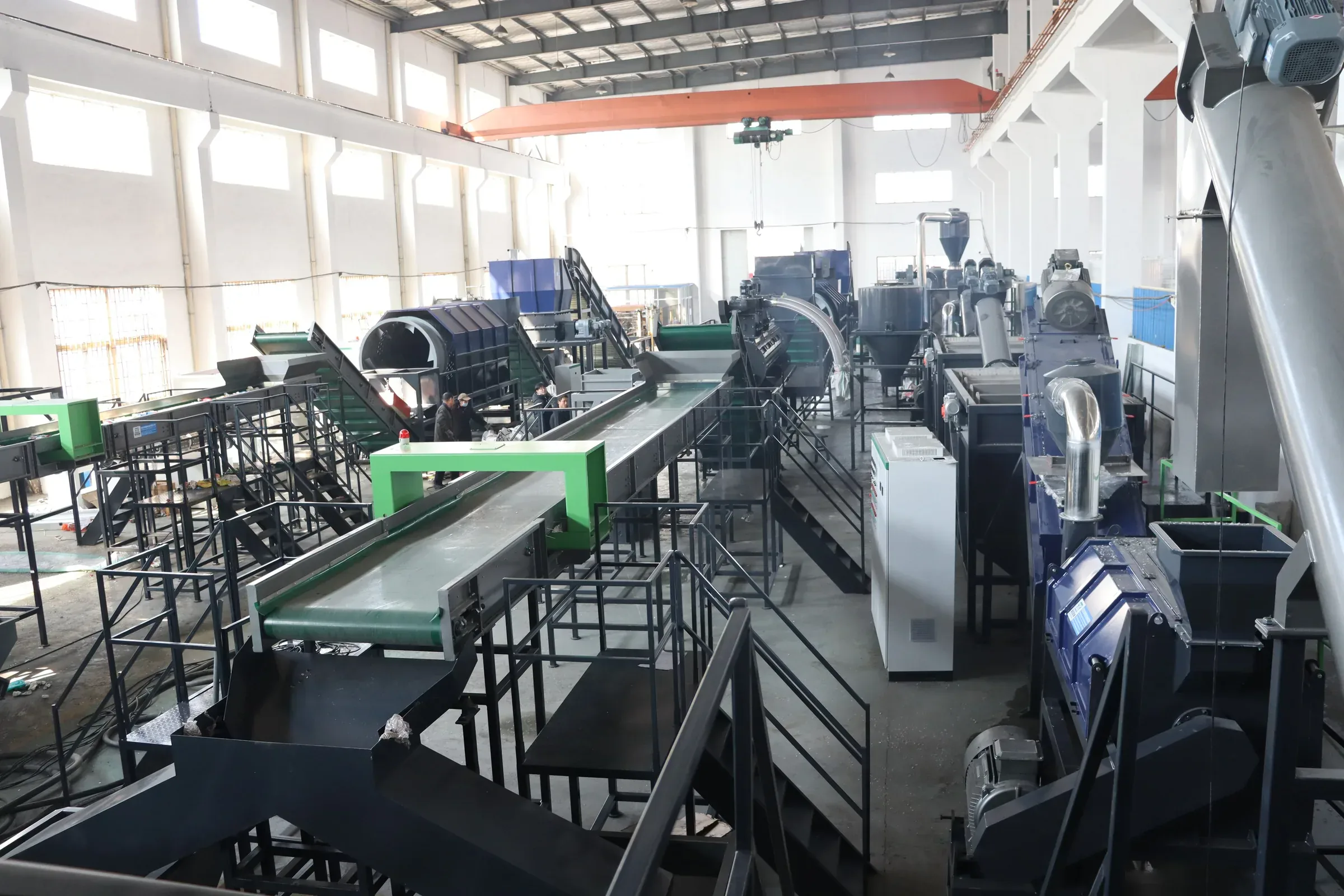
A typical plastic washing line may include equipment such as conveyors, shredders or granulators, pre-washing equipment, friction washers, hot washing systems, rinsing tanks, dewatering machines, and drying systems. The exact configuration depends on the type and contamination level of the feedstock.
Each stage has a different purpose.
For example, a pre-washing stage may remove loose dirt before size reduction. A friction washer can then provide more intensive mechanical cleaning. Hot washing may be required when the material contains oil, grease, food residues, or stubborn adhesives. Rinsing and separation stages help remove loosened contaminants, while dewatering and drying prepare the material for further processing.
The important point is that washing quality comes from process design, not simply from installing a more powerful washer.
The Role of Friction in Plastic Washing
Mechanical friction is one of the most important cleaning mechanisms in many plastic washing systems.
During friction washing, plastic flakes are exposed to mechanical agitation and repeated contact with water and other flakes. This helps remove dirt and contaminants that remain attached to the plastic surface.
However, more friction is not automatically better.
Excessive mechanical force can increase fines generation, reduce material recovery, and potentially damage certain types of plastic feedstock. The machine needs to provide sufficient cleaning intensity while maintaining reasonable material loss.
This is particularly important when processing thin films or lightweight plastic materials, which behave differently from rigid flakes.
A properly designed washing system therefore needs to balance:
- Mechanical cleaning intensity
- Residence time
- Water flow
- Material throughput
- Feedstock characteristics
- Acceptable material loss
The goal is not simply to make the plastic move faster or apply more force, but to achieve the required cleaning level efficiently.
When Cold Washing Is Enough and When Hot Washing Is Needed
Not every recycling application requires hot washing.
Cold washing can be sufficient when the main contaminants are loose dirt, dust, sand, and other relatively easy-to-remove materials. It can also provide a more economical solution for feedstocks with moderate contamination.
Hot washing becomes more important when contaminants are strongly attached to the plastic surface. Depending on the application, elevated-temperature washing can help loosen materials such as oil, grease, food residues, and certain adhesives.
The choice between cold and hot washing should therefore be based on the actual feedstock rather than simply choosing the more intensive process.
Using hot washing when it is unnecessary can increase energy and water consumption. On the other hand, relying only on cold washing for heavily contaminated material may result in insufficient cleaning and create greater problems during extrusion.
The right approach is to match washing intensity to contamination characteristics.
Water Quality and Water Management Also Matter
Water is one of the main resources used in plastic washing, but simply increasing water consumption does not guarantee better results.
Dirty process water can quickly become loaded with suspended solids, organic matter, oil, and other contaminants. If this water is continuously reused without adequate treatment, the washing performance may gradually decline.
Effective water management can therefore have a significant influence on the stability of a recycling line.
Depending on the application, water treatment systems may be used to remove suspended solids and other contaminants so that water can be reused. This can reduce freshwater consumption while maintaining suitable washing conditions.
Good water management should consider both cleaning performance and operating cost. A recycling plant that uses large amounts of water without controlling water quality may end up spending more without achieving better recycled material.
Washing Quality and Material Loss Must Be Balanced
One of the less obvious challenges in plastic washing is material loss.
A washing line removes contaminants, but some useful plastic can also be lost during washing, separation, wastewater treatment, or dewatering. This is especially important when processing lightweight materials such as films and flexible packaging.
For example, if a washing process is extremely aggressive, it may generate excessive fines that are carried away with wastewater. The result may be very clean output, but with a lower overall recovery rate.
For recyclers, the objective is not to achieve the highest possible cleaning intensity at any cost. The objective is to achieve the required material quality with acceptable plastic loss and operating cost.
This balance is one of the most important considerations when designing or selecting a plastic washing line.
Poor Washing Can Increase Extrusion Problems
The impact of washing quality becomes especially obvious when recycled plastic reaches the extrusion stage.
Residual moisture can cause problems during melting and extrusion, while dirt and other solid contaminants can increase the load on melt filters. Organic contamination can contribute to odors, smoke, discoloration, and unstable processing.
If contamination levels vary significantly from one batch to another, extrusion conditions may also become difficult to control.
A cleaner and more consistent feedstock allows downstream equipment to operate under more stable conditions. This can improve production efficiency and reduce interruptions caused by filter replacement, cleaning, or process adjustments.
In this sense, a good washing line is not only a cleaning system. It is also a way to protect the equipment and processes that come after it.
Washing Quality Is Closely Linked to Final Recycled Material Quality
The final application determines how demanding the washing process needs to be.
For lower-grade applications, a moderate level of contamination may be acceptable. However, applications requiring higher-quality recycled flakes or pellets usually demand much better control over contamination, moisture, polymer purity, and color.
For example, recycled PET used in demanding applications requires careful removal of contaminants because residual materials can affect subsequent processing and product performance. PE and PP recycling can also require different washing strategies depending on whether the feedstock comes from post-consumer packaging, agricultural film, industrial waste, or other sources.
This is why there is no universal definition of "good washing quality." The correct target depends on:
- Feedstock type
- Polymer type
- Contamination level
- Required recycled material quality
- Downstream processing method
- Final product application
- Production capacity
A recycling line should be designed around the desired output quality rather than simply the input material.

How to Improve Plastic Washing Quality
Improving washing performance usually requires looking at the complete recycling process rather than changing a single machine.
First, the feedstock should be properly sorted before washing. Removing metals, unsuitable polymers, and large foreign objects at an early stage reduces the burden on the washing system.
Second, the size reduction process should produce a suitable flake size. If the material is too large, contaminants may remain attached. If it is excessively fine, material loss and energy consumption can increase.
Third, the washing stages should be selected according to the contamination profile. A combination of pre-washing, friction washing, hot washing, rinsing, separation, and drying may be appropriate for heavily contaminated materials, while simpler systems can be sufficient for cleaner industrial waste.
Finally, the washing line should be monitored continuously. Water quality, material throughput, moisture content, contamination levels, and material loss can all provide useful information about whether the process is operating as intended.
Choosing the Right Plastic Washing Line
When selecting a plastic washing line, recyclers should look beyond the machine's nominal capacity.
A system rated for a certain number of tons per hour does not necessarily deliver the same output quality with every type of plastic waste. Actual performance depends on the feedstock, contamination level, moisture, bulk density, material size, and required cleanliness.
Important questions to consider include:
- What type of plastic will be processed?
- Is the feedstock rigid plastic, film, bottles, or a mixture?
- What contaminants are present?
- How heavily contaminated is the material?
- What level of cleanliness is required after washing?
- Is hot washing necessary?
- How will process water be treated and reused?
- What level of material loss is acceptable?
- What moisture level is required before extrusion?
- What is the desired final recycled product?
Answering these questions before selecting equipment can prevent a common problem in recycling projects: choosing a washing line based primarily on capacity while overlooking output quality.
The Real Value of High-Quality Plastic Washing
Plastic washing is sometimes viewed as one of the less important stages of recycling because it does not create the final recycled product. In practice, its influence extends through almost the entire recycling process.
Effective washing helps produce cleaner flakes, supports stable extrusion, protects downstream equipment, reduces contamination-related defects, and improves the consistency and marketability of recycled material. It can also contribute to better material recovery when the washing and separation stages are properly balanced.
The key is to think of washing quality as part of the overall value chain. A recycling line is only as effective as the quality of material it can consistently deliver to the next stage.
For recyclers looking to improve profitability and product quality, investing in the right plastic washing process is therefore not simply an equipment decision. It is a decision about the quality, reliability, and commercial value of the recycled material produced every day.
This article is carried over from the Retech technical archive and keeps its original URL.
ABOUT THIS UPDATE
Published by Retech Marketing & Communications Team
The Retech Marketing & Communications Team publishes official company news, exhibition information, factory updates, project milestones and product announcements.
For technical questions about plastic recycling systems, please contact our engineering team.

