Real Project Proof
500 kg/h PP Raffia Woven Bag Washing Line Project in South Africa
A South African plastics recycling operator partnered with Retech to implement a dedicated washing and drying solution for post-use polypropylene (PP) jumbo bags and woven raffia bags. Because industrial ton bags feature heavy-duty load-bearing straps and contain calcium carbonate filler, standard high-speed processing causes blade jams and excessive powder loss. Retech engineered a 500 kg/h line integrating pre-shredding, wet crushing, controlled friction washing, and low-loss dehydration to produce clean, dry PP flakes.
Project Data
Project Overview
- Country
- South Africa
- Input material
- PP jumbo bags, PP woven raffia bags
- Main contamination
- Chemical powder, oil, dust
- Capacity
- 500 kg/h
- System Model
- RM-500 PP Jumbo Bag & Woven Bag Washing Line
- Target Output
- High-quality PP flake
- Year
- 2023
Customer Challenge
Recycling PP jumbo bags and woven sacks presents two core operational challenges:
- Throughput Stability and Strap Handling: Heavy load-bearing belts on jumbo bags frequently stall standard crushers, requiring synchronized upstream shredding and wet grinding to maintain steady output.
- Washing Cleanliness vs. Calcium Powder Loss: Woven bags often contain calcium carbonate additives that generate fine PP powder under excessive mechanical agitation, requiring balanced washing intensity and tailored dehydration to prevent material waste while meeting moisture targets.
Process Route & System Configuration
The RM-500 line coordinates pre-shredding, wet size reduction, density separation, and controlled drying to protect flake yield and maintain continuous operation.
1. Pre-Shredding and Wet Crushing
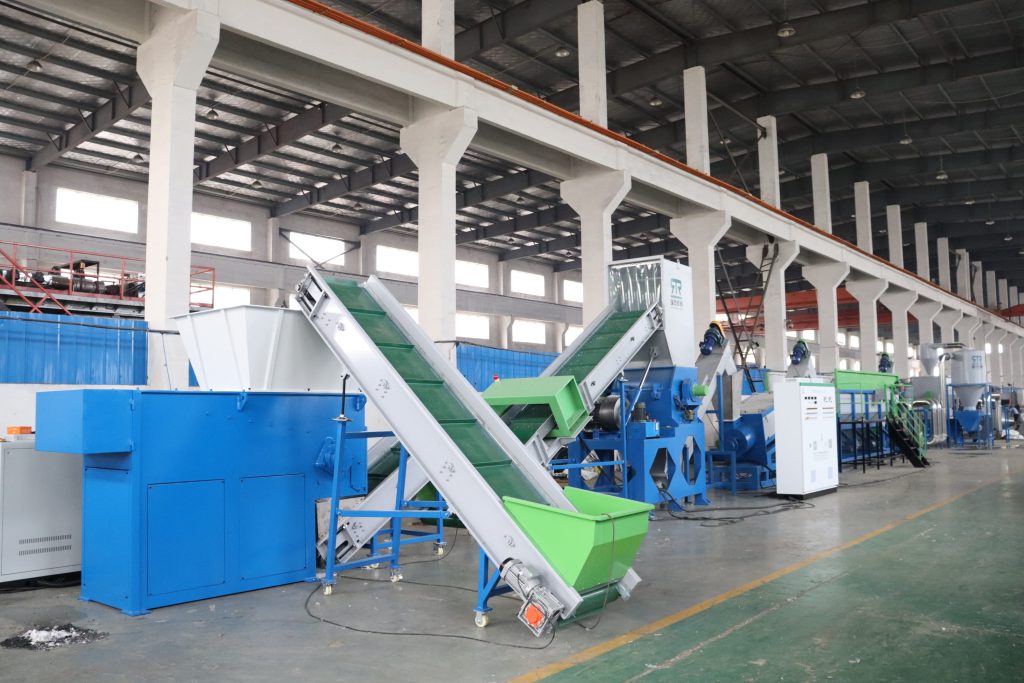
- Equipment Sequence: Belt Conveyor → Single Shaft Shredder → Belt Conveyor with Metal Detector → Wet Crusher
- Technical Execution: Operators feed woven bags and jumbo bags into a single-shaft shredder equipped with a pressure-protection auto-reverse system to prevent jams from lifting straps. After passing a metal detector, shredded strips enter a wet crusher that cuts the material into uniform 40 to 60 mm flakes while water spraying prevents screen blockage and heat buildup.
2. Friction Washing and Density Separation
- Equipment Sequence: Screw Conveyor → High-Speed Friction Washer → Screw Conveyor → Floating Washer
- Technical Execution: A high-speed friction washer operating at 1,200 RPM scrubs off adhered chemical powder, dust, and oil stains. The material then enters a sink-float washing tank where rotating paddles submerge and advance the PP flakes while heavy contaminants such as sand, mud, and fine metals sink. An end-mounted plate chain conveyor discharges the washed flakes while draining free water to reduce fresh water consumption.
3. Mechanical Dewatering, Hot-Air Drying, and Control
- Equipment Sequence: Screw Conveyor → Dewatering Machine → Drying System with Hot Air Pipeline → Storage Hopper → Electric Panel
- Technical Execution: Depending on raw material calcium carbonate content, the drying stage pairs mechanical dewatering (centrifugal dehydration for high-grade woven bags, or a squeezer for high-calcium bags to prevent powder spin-off loss) with a pipeline hot-air drying system, bringing final flake moisture down to 3% to 5% prior to hopper storage.
Verified Operational Results
Following commissioning in 2023, the RM-500 PP woven bag washing line achieved the following verified performance metrics:
| Item | Result |
|---|---|
| Processing capacity | 500 kg/h |
| Final output | 500 kg/h clean PP flake |
| Final Moisture Level | 3% to 5% |
| Continuous Operation | 12 to 24 hours per day |
Project Proof
Project Photo Gallery
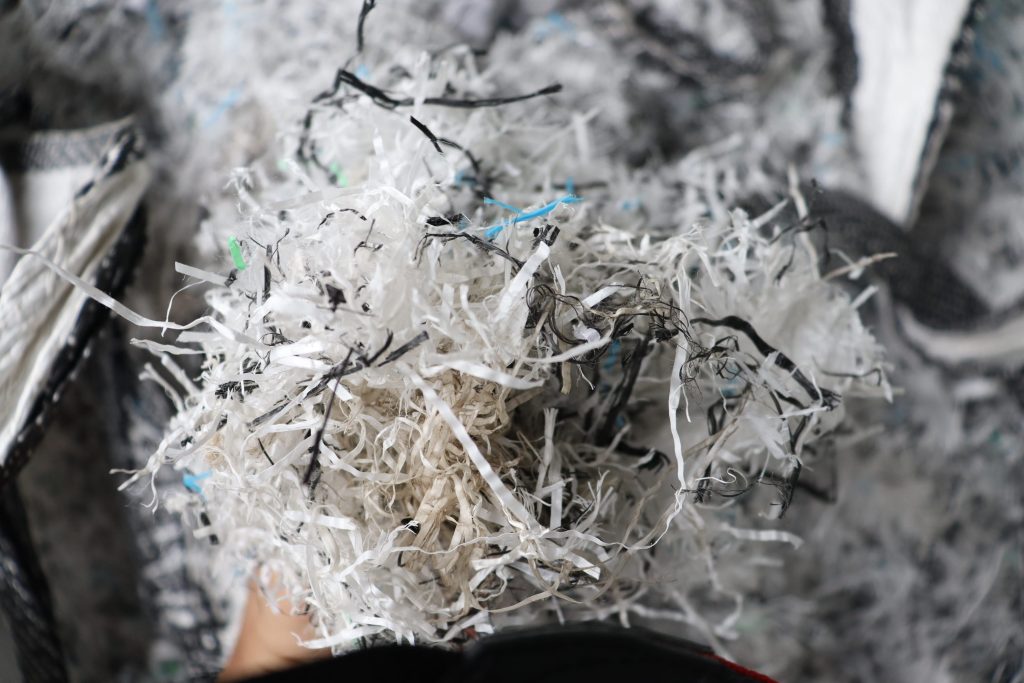
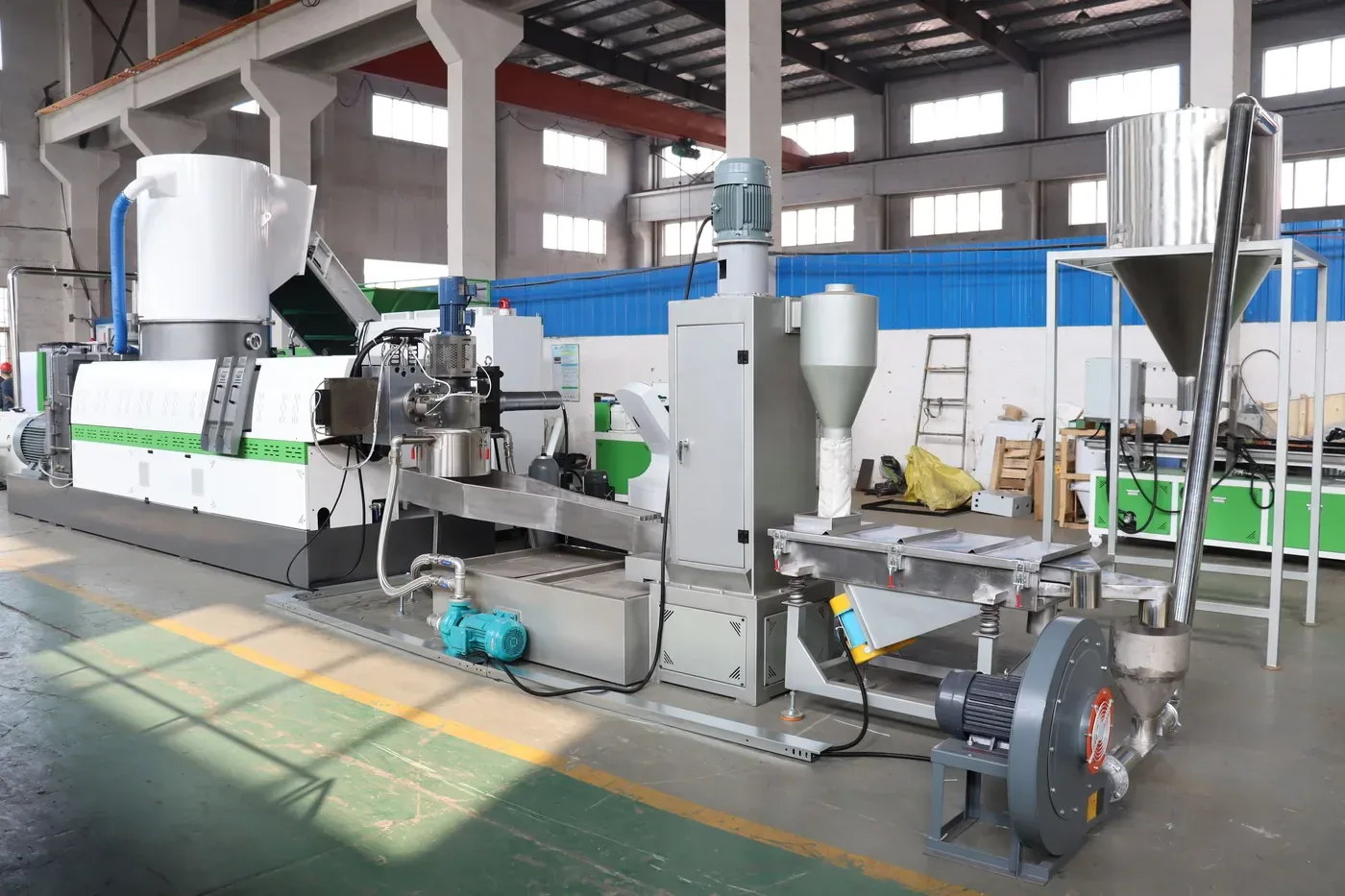
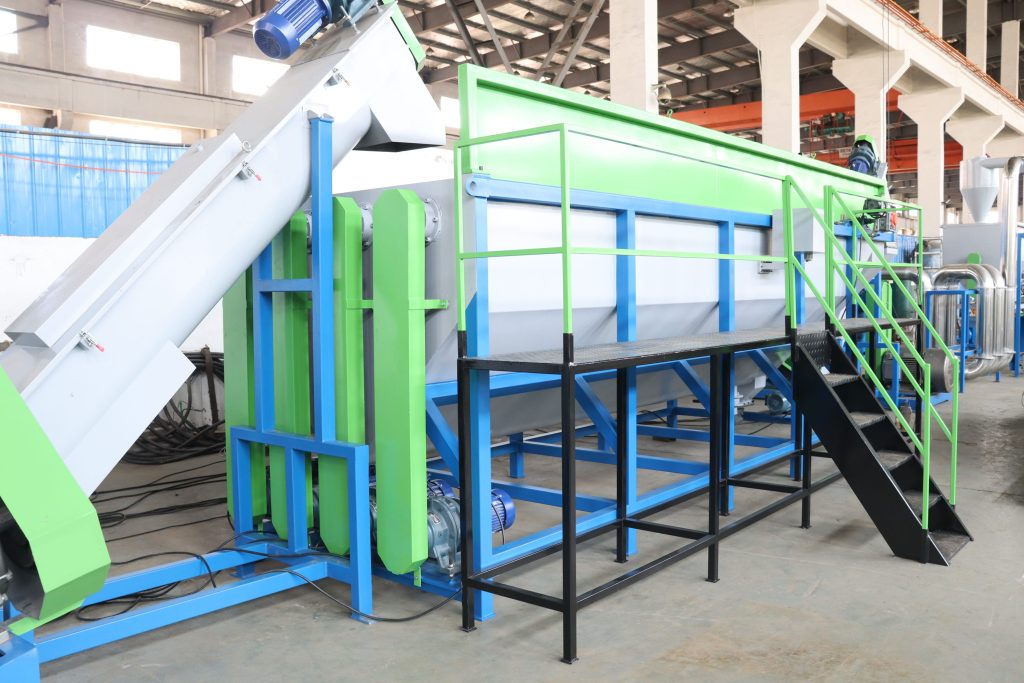
Visual records from the South African facility show the complete RM-500 washing line equipment, incoming PP jumbo and woven raffia bags, and final dry washed PP flakes.