Real Project Proof
500 kg/h PP Raffia Woven Bag Shredding and Pelletizing Line Project in Brazil
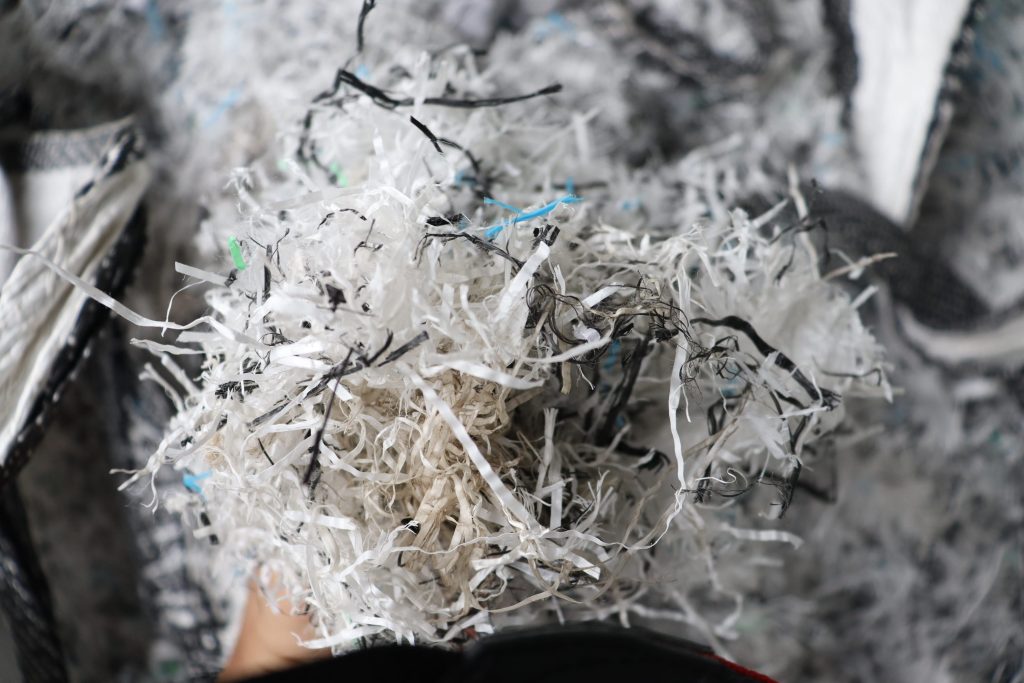
South America's largest polypropylene (PP) filament-woven bag manufacturer, operating multiple Starlinger filament-winding lines, generates substantial quantities of clean in-house PP raffia and woven bag production scrap. To reclaim this material for direct reuse in extrusion, the client replaced its legacy granulation machinery with Retech's RCDJ-130 shredding and pelletizing system. Following initial commissioning in 2019, the manufacturer purchased three complete 500 kg/h production lines to standardize its internal recycling operations.
Project Data
Project Overview
- Country
- Brazil
- Input material
- Post-industrial PP raffia, PP woven bags
- Main contamination
- None (clean in-house production scrap)
- Capacity
- 500 kg/h
- System Model
- RCDJ-130 PP Raffia Bag Recycling Shredding Pelletizing Line
- Target Output
- High-quality PP granules
- Year
- 2019 (3 lines purchased since 2019)
Customer Challenge
During large-scale woven bag manufacturing, accumulating waste raffia and off-spec bags directly impacts raw material costs and profit margins. The client's existing two-step granulation setup, which relied on conventional crushing followed by side-feeding into an extruder, suffered from high power consumption, low throughput, manual handling hazards, and poor automation. The manufacturer needed an integrated, safe, and continuous pelletizing solution capable of turning bulky woven scrap directly into uniform PP granules
Process Route & System Configuration
Retech replaced traditional crushing and side-feeding with an integrated single-shaft shredder and cutter-compactor extrusion line designed specifically for PP raffia.
1. Pre-Shredding and Metal Protection
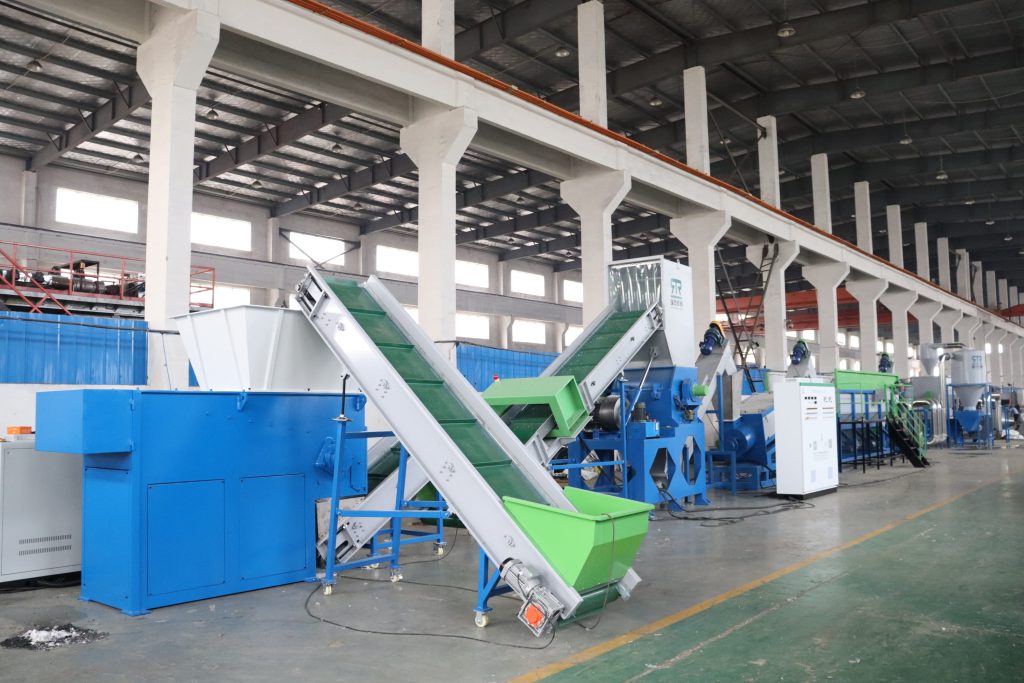
- Equipment Sequence: Belt Conveyor → Single Shaft Shredder → Belt Conveyor with Metal Detector
- Technical Execution: A belt conveyor feeds waste PP raffia and jumbo woven bags into a single-shaft shredder equipped with overload protection, where rotating and fixed blades shear long fibers into uniform strips. The discharge conveyor passes through an automatic metal detector to prevent stray metal from damaging the downstream extruder screw.
2. Cutter Compaction and Vacuum-Vented Extrusion
- Equipment Sequence: RCDJ130 Main Extruder
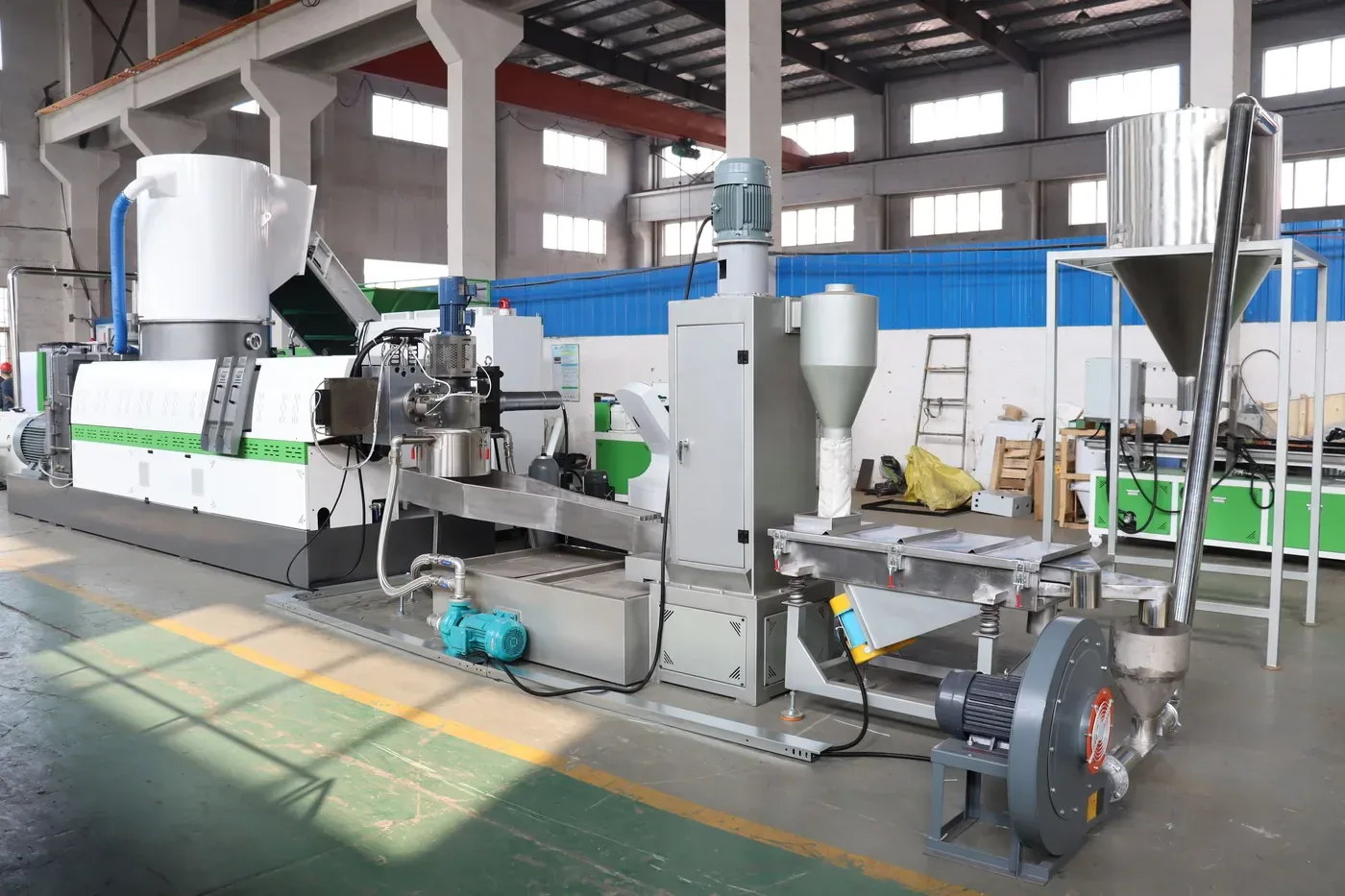
- Technical Execution: A speed-controlled, high-speed cutter-compactor shears, densifies, and force-feeds the shredded raffia directly into the extruder screw. Built with SKF bearings, water cooling for thermal stability, and a top-mounted camera for live internal monitoring, the compactor ensures consistent feeding. Driven by a high-torque gearbox, the RCDJ-130 main extruder features a PP-specific screw profile for stable die-head pressure and a vacuum exhaust system for thorough dehumidification and deoxygenation.
3. Vertical Water-Ring Pelletizing, Drying, and PLC Control
- Equipment Sequence: Die Face Cutter → Dewatering Machine → Vibrator Screen → Silo → PLC Controlling Cabinet
- Technical Execution: Tailored for PP materials with a Melt Flow Index (MFI) between 2 and 10 (optimal around 8), a vertical water-ring die-face cutter forms uniform, smooth granules while eliminating the labor-intensive downtime of traditional strand-slitting systems. Pellets then pass through a centrifugal dewatering machine and vibrating classifier screen before pneumatic transfer to the storage silo, with the entire line centrally managed via a PLC control cabinet.
Verified Operational Results
Following commissioning in 2019, the RCDJ-130 PP shredding and pelletizing lines achieved the following verified performance metrics:
| Item | Result |
|---|---|
| Processing capacity | 500 kg/h per line |
| Final output | 500 kg/h uniform PP granules |
| Filtration Purity | Under 100 mesh |
| Final Moisture Level | < 1% |
| Continuous Operation | 24 hours per day |
Project Proof
Project Photo Gallery
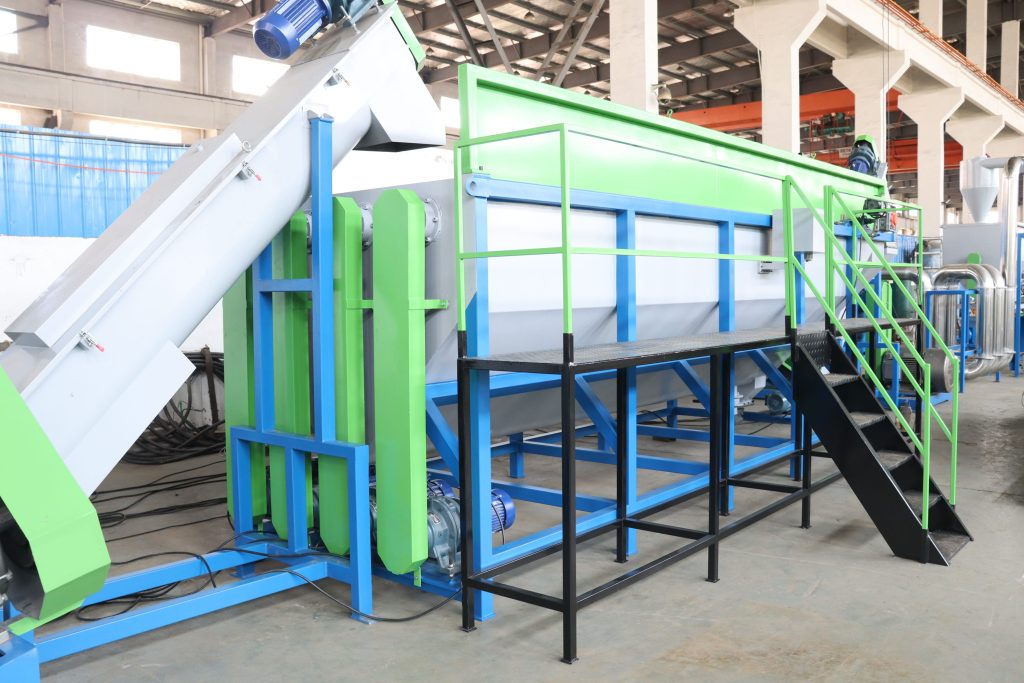
Visual records from the Brazilian manufacturing plant show the complete RCDJ-130 shredding and pelletizing equipment, incoming in-house PP raffia and woven bag scrap, and final uniform recycled PP granules.