Real Project Proof
3,000 kg/h PET Bottle Washing Line Project in Italy
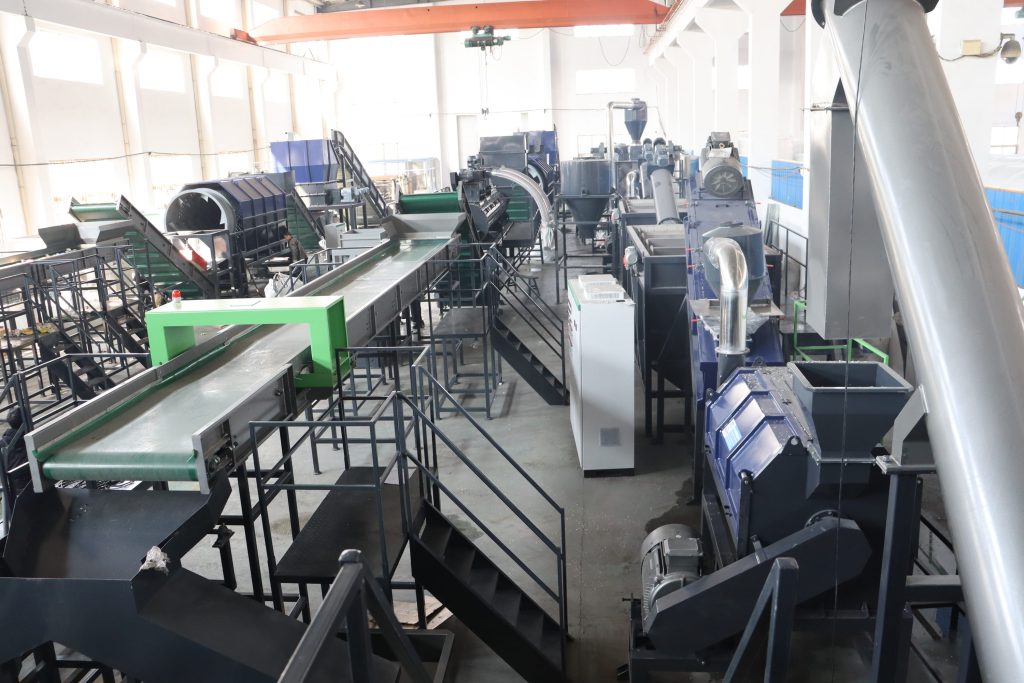
An Italian plastic packaging and sorting company handles the collection, classification, packaging, and recycling of waste plastics. After a two-year period of technical investigation and communication, the client selected Retech's customized 3,000 kg/h PET recycling and washing line. The system covers the entire processing sequence, from PET bottle bale opening, separation, and crushing to hot washing, cold washing, and optical flake color sorting.
Project Data
Project Overview
- Country
- Italy
- Input material
- Post-consumer PET Bottles
- Main contamination
- Metal, sand, stone, labels, glue, PVC, PP, PE
- Capacity
- 3,000 kg/h
- System Model
- RM-3000 PET Bottle Recycling Washing Line
- Target Output
- High-quality PET Flake
- Year
- 2025
Customer Challenge
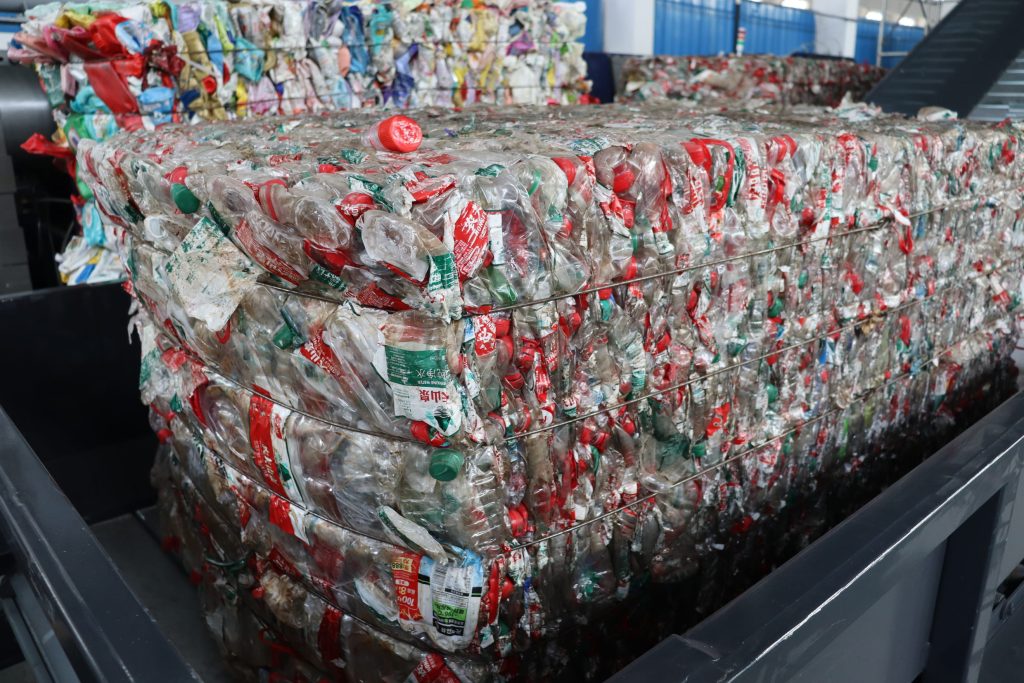
Post-consumer waste PET plastic bottles first enter the client's sorting station for classification and baling via a PET bottle baler machine before moving to the washing line. In this PET recycling operation, the primary technical difficulty is reducing the final impurity content below 50 PPM while separating out uniform, clean PET flakes after washing.
Process Route & System Configuration
The RM-3000 production line uses mechanical separation, chemical-thermal washing, and multi-stage optical sorting to meet the client's purity requirements.
1. Pre-Sorting and Polymer Separation
- Equipment Sequence: Metal Chain Conveyor → Bale Opener → Belt Conveyor → Trommel Screen → Belt Conveyor → Polymer Sorting System → Belt Conveyor with Magnetic Separator → Label Separator → Manual Sorting System
- Technical Execution: At the collection stage, the packaging station groups bottles of similar color and quality to improve downstream cleaning efficiency. During bale opening and sorting, a polymer sorting machine works alongside manual sorting stations to remove mixed PP, PE, and PVC plastics, while magnetic separators and trommel screens extract metals, sand, and stones.
2. Crushing and Multi-Stage Washing
- Equipment Sequence: PET Crusher → Screw Conveyor → Floating Washer → High-Speed Friction Washer → Hot Steam Washer → High-Speed Friction Washer → Hot Steam Washer → High-Speed Friction Washer → Floating Washer → Floating Washer → Floating Washer → Dewatering Machine → Hot Air Drying System
- Technical Execution: The PET crusher uses V-shaped blades for uniform size reduction. Two stages of hot steam washing with chemical additives such as soda remove residual glue, labels, and surface stains. Continuous cold-water rinsing and three high-speed friction washers scrub the flake surfaces, while four floating washing tanks separate lighter polyolefin caps and rings.
3. Drying, Optical Flake Sorting, and Control
- Equipment Sequence: Zigzag Label Separator → Color Sorter → Polymer Sorter → Color Sorter → Color Sorter → Storage Silo → PLC Electric Cabinet
- Technical Execution: Following mechanical dewatering and hot-air drying, a zigzag separator removes fine label particles. At the final stage, three flake color sorters and one flake polymer sorter isolate discolored flakes and trace non-PET polymers, keeping total impurities under 50 PPM.
Verified Operational Results
| Item | Result |
|---|---|
| Processing capacity | 3000 kg/hr |
| Final output | 3,000 kg/h PET pure flake |
| Final Moisture Level | < 0.5% |
| Final Impurity Content | < 50 PPM |
| Continuous Operation | 8 to 24 hours per day |
Project Proof
Project Photo Gallery
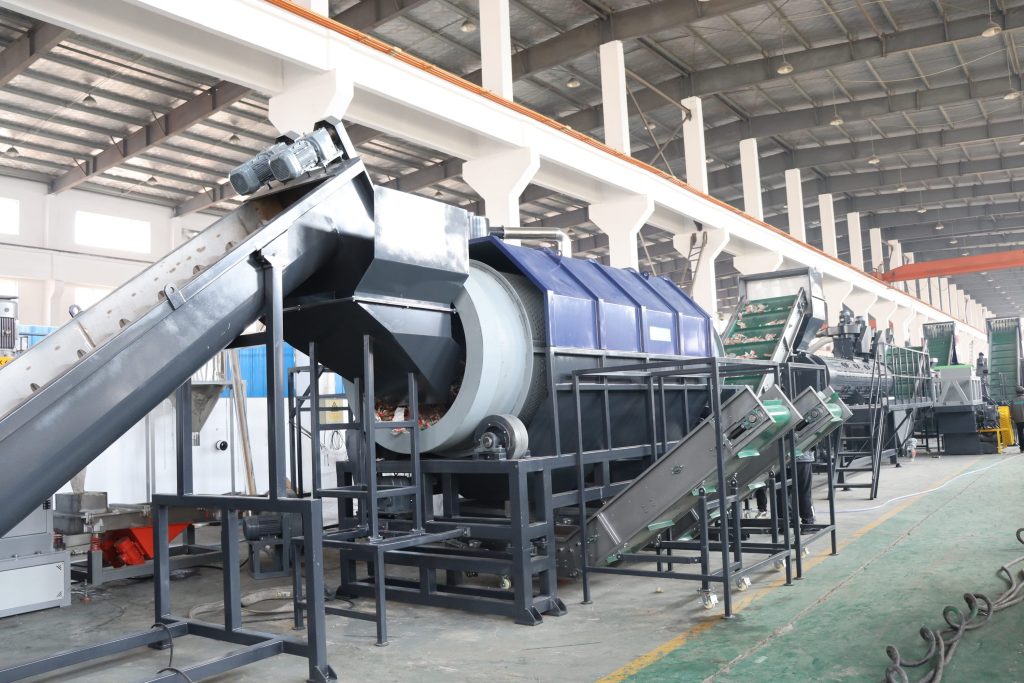
Visual records from the Italian facility show the complete RM-3000 washing line equipment, incoming post-consumer PET bottle bales, and final high-purity washed PET flakes.