Real Project Proof
1,000 kg/h LDPE Film Washing Line Project in Bulgaria
A Bulgarian plastics recycler discovered Retech's four-axis film washer design online and scheduled a video consultation with our engineering and finance teams to finalize a custom recycling line. Processing industrial waste LDPE and LLDPE packaging films contaminated with paper price-tag labels and oil stains, the client required a reliable system for shredding, washing, and drying. Impressed by the equipment performance after commissioning, the client ordered a second identical 1,000 kg/h LDPE film washing line just one month later.
Project Data
Project Overview
- Country
- Bulgaria
- Input material
- Industrial Waste LDPE and LLDPE Film
- Main contamination
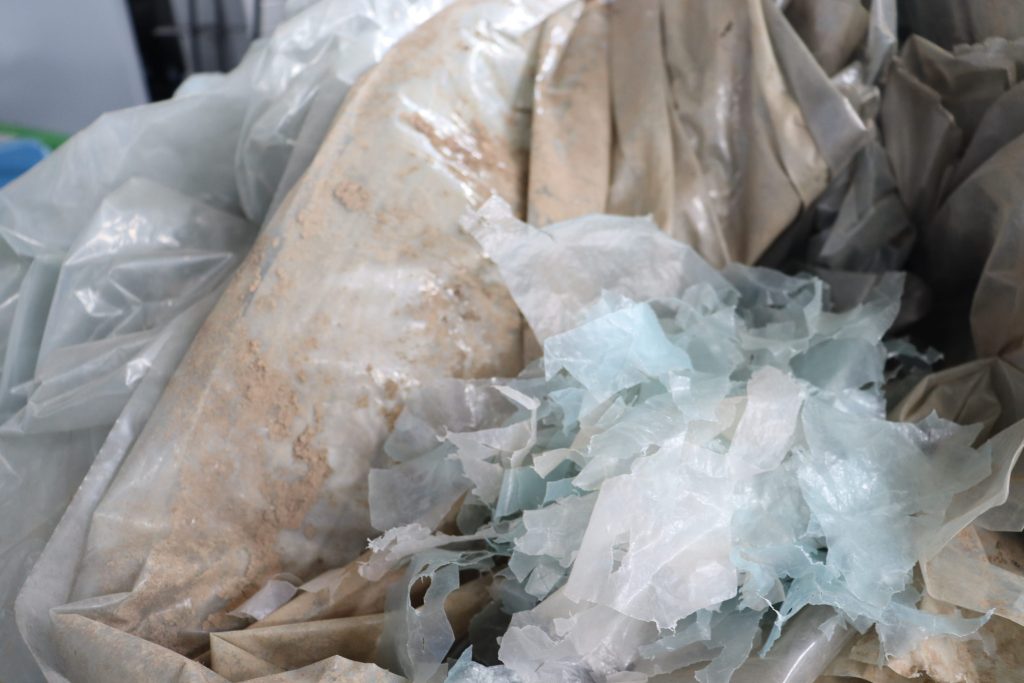
- Paper price tags, labels, dust, soil, oil stains
- Capacity
- 1,000 kg/h
- System Model
- RM-1000 LDPE Film Washing Line
- Target Output
- High-quality LDPE Washed Flake
- Year
- 2020
Customer Challenge
The client's raw materials consist of industrial LDPE and LLDPE packaging films carrying stubborn contaminants, specifically oil stains and adhesive paper price tags. Because the client already had prior operational experience with recycling machinery, they needed a targeted cleaning configuration capable of stripping away grease and paper pulp without slowing down continuous production.
Process Route & System Configuration
To remove oil and label residues while keeping final moisture low, the RM-1000 line combines wet size reduction, multi-stage friction and hot agitation washing, and two-stage thermal drying.
1. Pre-Shredding and Wet Size Reduction
- Equipment Sequence: Belt Conveyor → Single Shaft Shredder → Belt Conveyor with Metal Detector → Film Wet Crusher
- Technical Execution: Sorted plastic films are fed into a single-shaft shredder and pass a metal detector before entering the film wet crusher. Water-spray crushing pre-washes the film while cooling the staggered knife shafts, which increases throughput and lowers operating noise.
2. Multi-Stage Friction, Four-Axis Hot Washing, and Separation
- Equipment Sequence: Double Screw Conveyor → High-Speed Friction Washer → Double Screw Conveyor → Four-Shaft Hot Washing Tank → Double Screw Conveyor → High-Speed Friction Washer → Double Screw Conveyor → Sink Float Washing Tank
- Technical Execution: Alternating high-speed friction washers and a four-axis stirring hot washing tank with a hot water reuse system break down oil stains and paper labels through intense mechanical scrubbing and thermal decontamination. Screen mesh collisions and centrifugal force dislodge surface dirt, while a sink-float tank settles heavy impurities for bottom-screw discharge into the wastewater treatment system.
3. Mechanical Dewatering, Dual Hot-Air Drying, and Control
- Equipment Sequence: Double Screw Conveyor → Dewatering Machine → Hot Air-Drying System 1 → Transition Hopper → Hot Air-Drying System 2 → Storage Silo → PLC Electric Cabinet
- Technical Execution: Washed film flakes pass through a high-speed centrifugal dewatering machine followed by two sequential pipeline hot air-drying stages, reducing final material moisture below 5% before silo storage.
Verified Operational Results
Following commissioning in 2020, the RM-1000 film washing line achieved the following verified operational metrics:
| Item | Result |
|---|---|
| Processing capacity | 1,000 kg/h |
| Final output | 1,000 kg/h washed LDPE film flake |
| Final Moisture Level | < 5% |
| Repeat Order | Second identical production line ordered one month after initial startup |
| Continuous Operation | 8 to 24 hours per day |
Project Proof
Project Photo Gallery
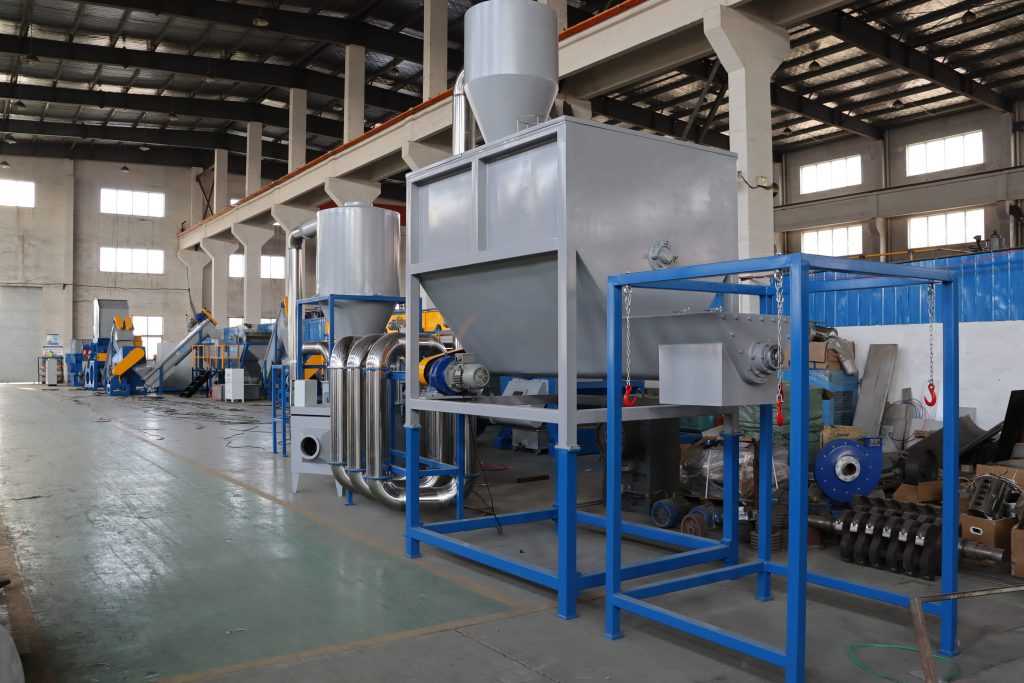
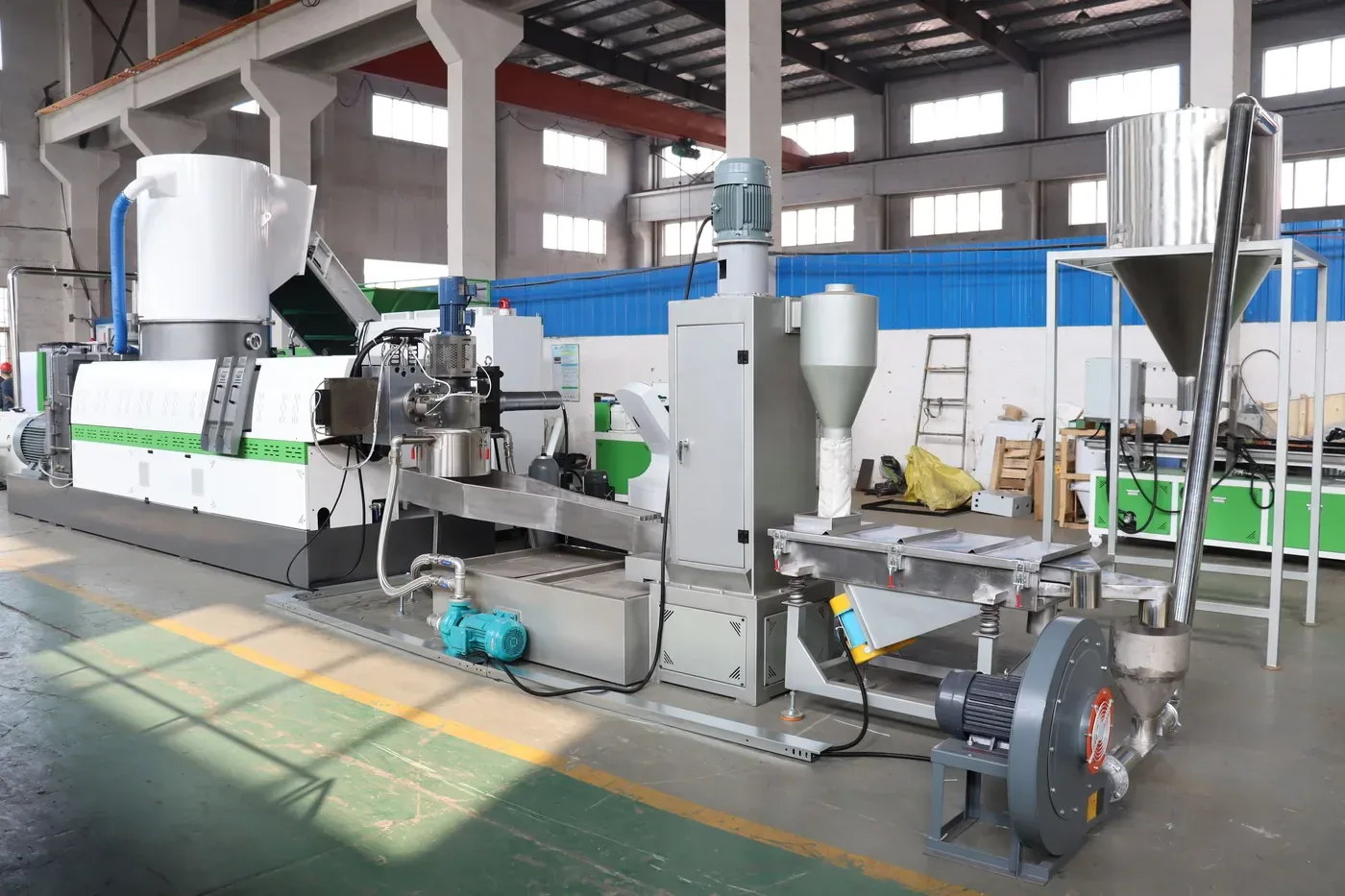
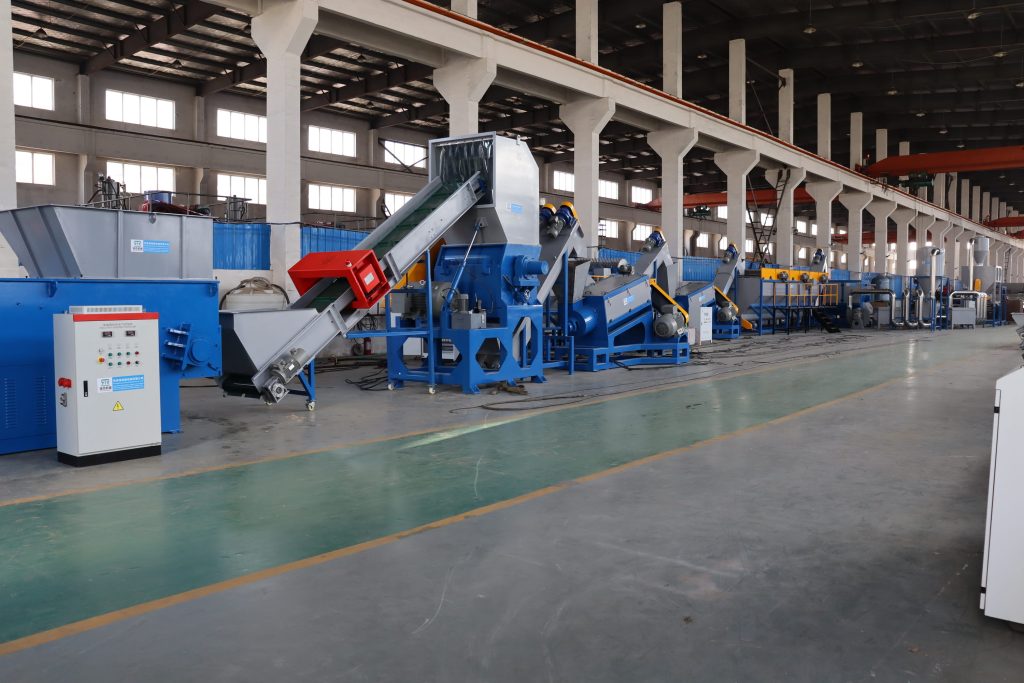
Visual records from the Bulgarian facility show the complete RM-1000 film washing line equipment, incoming oil- and label-contaminated LDPE/LLDPE film bales, and final dry washed LDPE flakes.