
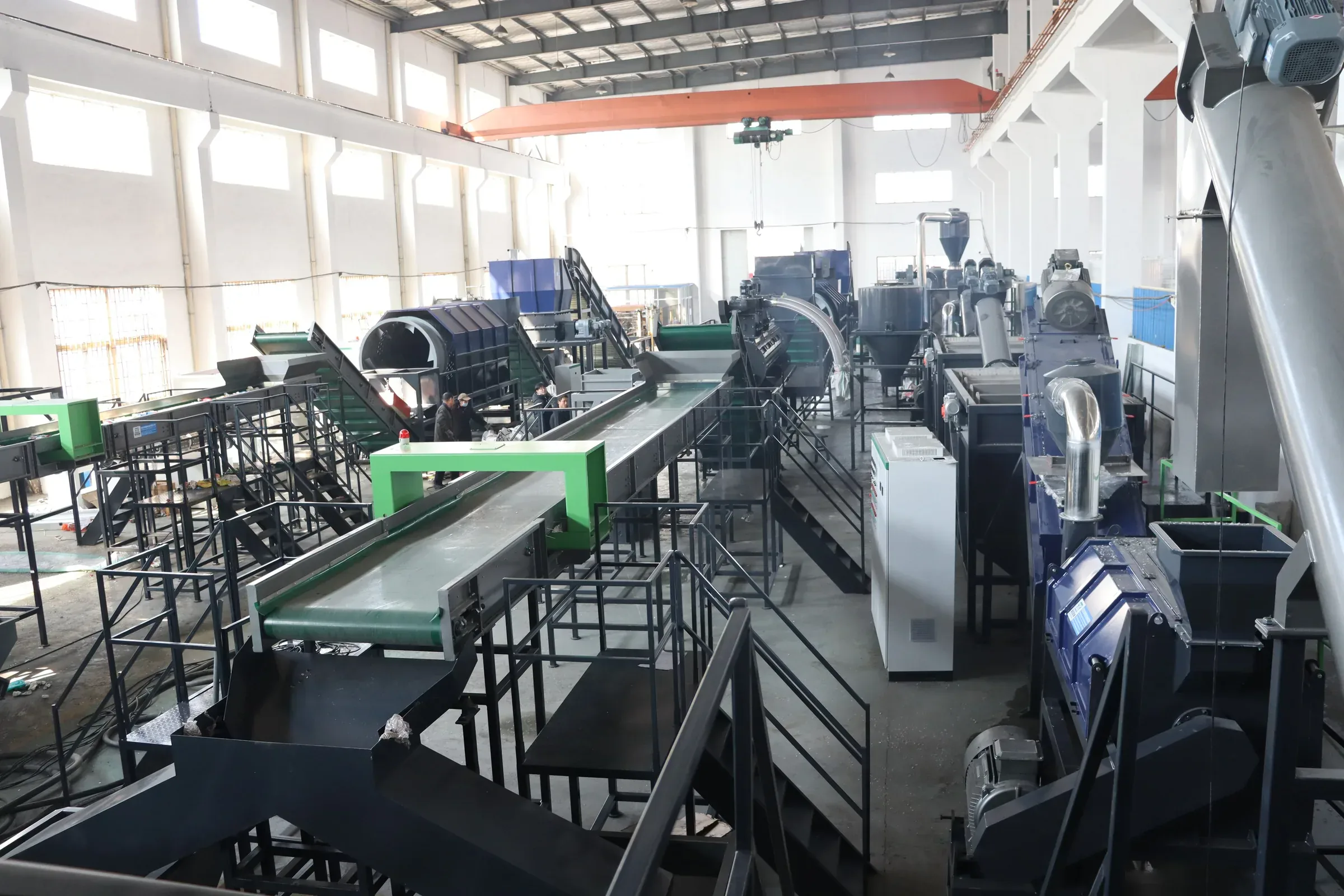


PET bottle recycling has become a cornerstone of modern plastic recycling systems, driven by environmental regulations, brand sustainability commitments, and the growing demand for recycled PET (rPET). At the heart of every efficient PET bottle recycling line lies a well-designed size-reduction process. Among the most critical machines in this process are shredders and granulators. Although both are used to reduce material size, their roles, working principles, and impact on final flake quality are quite different.
Understanding how shredders and granulators function within a PET bottle recycling line is essential for recycling plant designers, operators, and investors seeking stable output, high recovery rates, and consistent rPET quality.
Overview of a Typical PET Bottle Recycling Line
A PET bottle recycling line usually follows a multi-stage process, beginning with raw material handling and ending with clean PET flakes or pellets. The main steps typically include:
Bale breaking and feeding
Label removal and pre-sorting
Shredding or crushing
Washing and separation
Granulation or fine size reduction
Drying and final classification
Shredders and granulators are strategically placed within this sequence to ensure efficient material preparation for washing and downstream processing.
Why Size Reduction Is Critical in PET Bottle Recycling
Used PET bottles come in various shapes, sizes, and conditions. Many are compressed into bales and may contain caps, labels, residual liquids, or foreign materials. Without proper size reduction, it is difficult to achieve effective washing, accurate separation, and uniform processing.
Reducing PET bottles into smaller pieces increases surface area, allowing washing systems to remove contaminants more effectively. It also ensures stable feeding into washing tanks, dryers, and extrusion systems. Shredders and granulators work together to achieve this goal in a controlled and economical way.

The Role of Shredders in PET Bottle Recycling Lines
Shredders are primarily responsible for primary size reduction. In PET bottle recycling, shredders are often positioned early in the line, especially when dealing with tightly compacted bales or mixed plastic streams.
Breaking Down Baled PET Bottles
Baled PET bottles can be dense and difficult to process directly. A shredder efficiently tears open the bales, separating bottles and reducing them into coarse pieces. This step prevents bottlenecks and ensures smooth material flow to downstream equipment.
Handling Mixed and Contaminated Input Material
In real-world recycling operations, PET bottles are rarely perfectly sorted. Shredders are robust enough to handle mixed materials, including PET bottles with caps, rings, labels, and light contamination. Their high-torque, low-speed operation reduces the risk of machine damage and excessive wear.
Preparing Material for Label Removal and Washing
By reducing bottle size, shredders expose labels, adhesives, and internal surfaces that would otherwise be difficult to clean. This preparation significantly improves the effectiveness of label separation and washing processes.
Key Advantages of Shredders in PET Lines
Shredders offer several practical benefits in PET bottle recycling:
Ability to process whole bottles and compacted bales
High tolerance for contamination and foreign materials
Stable and continuous operation under heavy loads
Reduced stress on downstream granulators and washing equipment
Because of these advantages, shredders are often considered the backbone of the front-end processing stage.
The Role of Granulators in PET Bottle Recycling Lines
Granulators perform secondary or fine size reduction and are typically placed after shredding and initial washing steps. Their primary purpose is to produce uniform PET flakes that meet quality requirements for washing, drying, and final applications.
Producing Uniform PET Flake Size
Granulators cut PET material into consistent flakes, usually within a defined size range such as 8–12 mm. Uniform flake size is critical for stable washing, efficient drying, and consistent extrusion performance.
Improving Washing and Separation Efficiency
When PET flakes are evenly sized, they move more predictably through washing tanks and friction washers. This improves the removal of labels, glue, and residual contaminants while enhancing separation from non-PET plastics.
Enhancing Final rPET Quality
Granulated PET flakes have smoother edges and more consistent geometry, which leads to better melting behavior and fewer defects during extrusion and pelletizing. This directly impacts the quality and market value of recycled PET.
Key Advantages of Granulators in PET Lines
Granulators bring precision and consistency to the recycling process:
Controlled and uniform flake size
Higher washing and drying efficiency
Improved downstream processing stability
Better appearance and performance of final rPET
For high-quality rPET production, granulators are indispensable.
Shredder vs. Granulator: Complementary, Not Competing
In PET bottle recycling lines, shredders and granulators are not alternatives but complementary machines. Each serves a distinct function at a specific stage of the process.
Shredders focus on strength, durability, and bulk reduction. Granulators focus on precision, uniformity, and refinement. When used together, they balance capacity with quality, ensuring both robust front-end processing and fine control at the output stage.
Process Integration and Line Design Considerations
Proper integration of shredders and granulators is essential for overall line performance. Factors such as throughput capacity, contamination level, target flake size, and energy consumption must be carefully considered during system design.
In high-capacity PET recycling plants, the shredder often operates continuously, feeding material to washing units, while the granulator ensures final size consistency before drying or extrusion. Well-matched equipment reduces downtime, minimizes knife wear, and lowers operating costs.

Impact on Operating Costs and Equipment Longevity
Using shredders for primary size reduction significantly reduces the load on granulators. This results in lower knife wear, fewer maintenance interruptions, and longer equipment life. At the same time, granulators operating on pre-shredded material consume less energy and deliver more stable output.
From an economic perspective, the combined use of shredders and granulators leads to lower total cost of ownership and higher plant profitability.
Conclusion
Shredders and granulators play distinct yet interconnected roles in PET bottle recycling lines. Shredders handle the heavy-duty task of breaking down bales and bulky bottles, while granulators refine the material into uniform, high-quality PET flakes suitable for washing, drying, and reprocessing.
A well-designed PET recycling line recognizes the strengths of each machine and integrates them effectively. By doing so, recyclers can achieve higher efficiency, better material quality, and a more reliable production process—key factors in meeting the growing global demand for recycled PET.
This article is carried over from the Retech technical archive and keeps its original URL.
ABOUT THIS UPDATE
Published by Retech Marketing & Communications Team
The Retech Marketing & Communications Team publishes official company news, exhibition information, factory updates, project milestones and product announcements.
For technical questions about plastic recycling systems, please contact our engineering team.

