


The global demand for recycled plastics continues to grow as industries embrace sustainability and governments impose stricter environmental regulations. At the heart of plastic recycling lies the waste plastic washing line, a systematic and highly engineered process that transforms contaminated plastic waste into clean, high-quality flakes suitable for pelletizing or direct reuse.
This article explains—step by step—how a waste plastic washing line works, the technologies behind each stage, and the factors that influence washing efficiency. The goal is to provide a detailed and realistic overview that reflects true industrial practice, written in a natural, professional tone.

Understanding the Purpose of a Waste Plastic Washing Line
Waste plastics, particularly post-consumer materials such as bottles, films, woven bags, and packaging waste, usually contain:
Dirt and soil
Organic residues
Labels and adhesives
Oils and chemicals
Mixed materials (paper, metal, or other polymers)
A washing line removes these impurities so the plastic can meet the purity level demanded by downstream extrusion and pelletizing. The cleaner the flakes, the higher the recycled pellet quality and the better the mechanical properties of the final product.
While the exact configuration varies by material type (PE, PP, PET, PVC, PS, etc.), the overall workflow follows a similar logic across the industry.
Raw Material Collection and Pre-Sorting
Before entering the washing line, waste plastics undergo initial sorting, often done manually or semi-automatically.
Purpose of Pre-Sorting
Remove non-plastic items such as metal, wood, stones, textiles
Separate materials by polymer type (e.g., PET vs. PE)
Remove oversized or hazardous items that could damage equipment
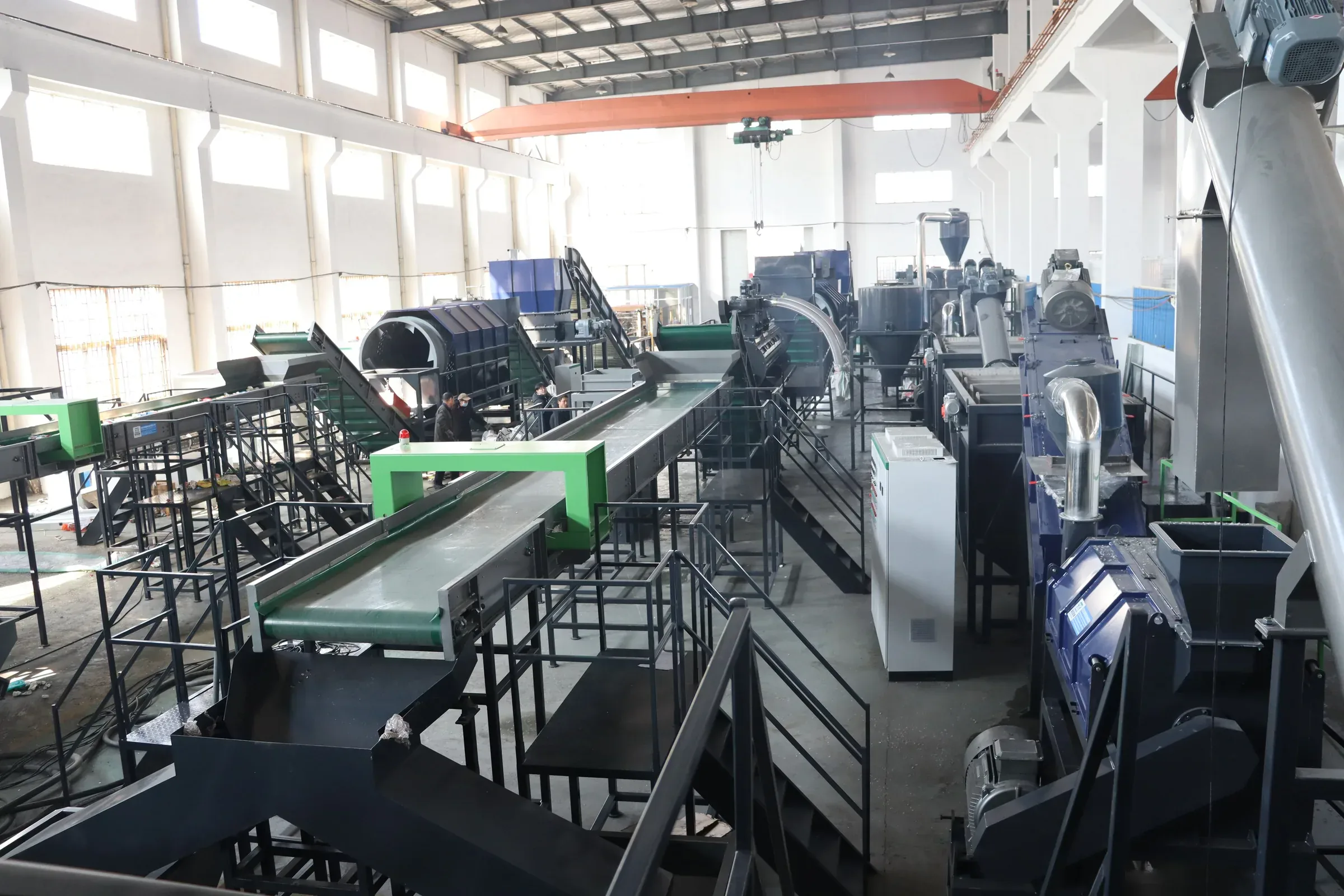
Sorting determines the final flake purity and reduces unnecessary wear on downstream machines. In professional recycling facilities, pre-sorting may include conveyor inspection tables, metal detectors, and basic mechanical separators.
Shredding and Size Reduction
Once sorted, materials enter the shredding system, where large items are broken down into manageable sizes.
Typical Size Reduction Equipment
Single-shaft shredder (for bulky items like barrels, crates, large films)
Double-shaft shredder (for tougher or mixed waste)
Crusher / granulator (for final size reduction to 10–20 mm pieces)
Why Size Matters
Properly sized flakes improve washing efficiency, allow contaminants to separate more easily, and ensure steady feeding into the next stages.
Many washing lines adopt a two-stage shredding and crushing setup for maximum stability and productivity.
Pre-Washing: Removing Heavy Contaminants
Pre-washing is designed to eliminate the heaviest dirt before deeper cleaning.
Common Pre-Wash Equipment
Trommel drum screen for removing soil, stones, and sand
Pre-wash tank where plastics float and heavy contaminants sink
High-speed pre-washer for breaking apart light contaminants
Benefits
Reduces wear on downstream machines
Improves water quality in later washing stages
Increases overall line efficiency
This stage is especially critical for waste film, agricultural films, and post-consumer packaging that typically contain mud and organic waste.
Friction Washing: High-Speed Surface Cleaning
Friction washers are the workhorses of the washing line. Using high rotational speed, they scrub plastic surfaces to remove:
Paper labels
Glue
Organic residues
Fine dirt
Food or chemical waste
How the Friction Washer Works
A fast-rotating internal shaft equipped with paddles or blades creates intense friction between water and plastic flakes. This constant impact and centrifugal force drive contaminants away from the plastic surface.
Because this system delivers powerful cleaning within a compact design, almost every modern washing line uses at least one friction washer, and some lines use two for enhanced cleanliness.
Sink-Float Separation Tank: Material & Contaminant Separation
The sink-float tank serves two crucial functions:
Removing Residual Contaminants
Dirt, stones, and metals sink to the bottom while most plastics float due to their lower density.
Separating Plastic Types
PE and PP float
PET, PVC, and other high-density plastics sink
This density-based separation ensures higher purity in the final flake output.
The tank usually uses a continuous paddle system that moves floating plastics to the next stage while contaminants settle at the bottom for automatic discharge.
Hot Washing: Deep Cleaning for High-Quality Recycled Flakes
For high-grade applications such as food packaging or fiber production, the washing line includes a hot washing system.
Hot Wash Key Functions
Removes bottle labels and adhesives
Eliminates oils, grease, and leftover organic material
Enhances color and transparency of PET flakes
Ensures high purity for premium recycled pellets
Typical hot washing uses water heated to 80–95°C combined with detergents or caustic soda (in PET lines). Not all plastics require hot washing—PP and PE often use cold-wash-only systems unless heavily contaminated.
High-Speed Friction Washing (Final Cleaning Stage)
After hot washing, another friction washer is often used to remove any remaining detergent or contaminants. This ensures the flakes meet strict quality standards and prepares them for drying.
This additional cleaning step is critical for:
Food-grade PET production
High-quality PE/PP recycled pellets
Film-grade applications
Dewatering and Drying
Clean and wet flakes exit the washing stages and enter the drying system.
Drying Components
Dewatering machine (centrifugal dryer) with 1,000–1,500 rpm rotating blades
Thermal drying system (hot air dryer or pipe dryer)
Air separation system to remove labels and dust
Why Drying Matters
Moisture negatively affects extrusion, pelletizing, and downstream molding. High-quality washing lines achieve less than 1% moisture after drying.
Air Classification and Final Flake Refining
Before packaging, flakes pass through an air classifier or zig-zag separator.
Purpose
Remove lightweight impurities
Remove fine dust or leftover labels
Ensure consistent flake size distribution
This refining ensures the flakes are ready for pelletizing or direct reuse.
Storage and Packaging
Clean, dry, refined flakes are collected through:
Storage silos
Big bag packers
Automated weighing systems
Factories can now transport flakes to a pelletizing line or sell them as-is to the market.
Workflow Summary of a Waste Plastic Washing Line
To understand the full process in a simplified sequence:
Sorting → separates material and removes foreign objects
Shredding → breaks waste into smaller pieces
Pre-washing → removes heavy contaminants
Friction washing → scrubs off surface dirt and labels
Sink-float separation → removes heavy contaminants & separates plastics
Hot washing → deep cleans high-value materials
Final friction washing → removes residues
Dewatering → removes water
Thermal drying → reduces moisture
Air classification → refines final flakes
Packaging → prepares for storage or pelletizing
This systematic approach allows recycling plants to convert dirty waste into clean, saleable, high-purity plastic flakes.

Factors That Influence Washing Line Efficiency
A washing line's performance does not only depend on equipment but also on operational factors such as:
Raw Material Type and Contamination Level
Highly contaminated agricultural film requires more intense washing than factory offcuts.
Water Quality and Recycling System
Efficient water filtration reduces operating costs and maintains stable cleaning efficiency.
Blade Configuration and Screw Design
In shredders and friction washers, optimal blade geometry boosts performance while reducing wear.
Temperature Control
Hot wash systems must maintain stable temperature for best cleaning results.
Automation Level
Modern lines include PLC systems for controlling feeding, water flow, temperature, and output, minimizing human error.
Applications of Flakes Produced by a Washing Line
Clean recycled flakes can be used in various applications:
From PE/PP Waste
Injection molding
Blow molding
Film blowing
Pipe production
Compounding applications
From PET Waste
Polyester fibers
Food-grade pellets (after further purification)
Sheet and strapping production
Packaging and container manufacturing
The value of recycled flakes increases significantly when contamination is minimized.
Conclusion
A waste plastic washing line is a highly structured and technologically integrated system designed to transform contaminated plastics into clean, high-quality flakes. Each stage—from sorting, shredding, and pre-washing to friction cleaning, hot washing, drying, and final refining—plays a critical role in determining the purity and value of the end product.
For recyclers, manufacturers, and environmental enterprises, understanding how a washing line works is essential for choosing the right equipment and optimizing production efficiency. By investing in a well-designed washing line and operating it properly, facilities can improve recycling output, reduce environmental impact, and enhance business profitability in the growing circular plastics economy.
This article is carried over from the Retech technical archive and keeps its original URL.
ABOUT THIS UPDATE
Published by Retech Marketing & Communications Team
The Retech Marketing & Communications Team publishes official company news, exhibition information, factory updates, project milestones and product announcements.
For technical questions about plastic recycling systems, please contact our engineering team.

