

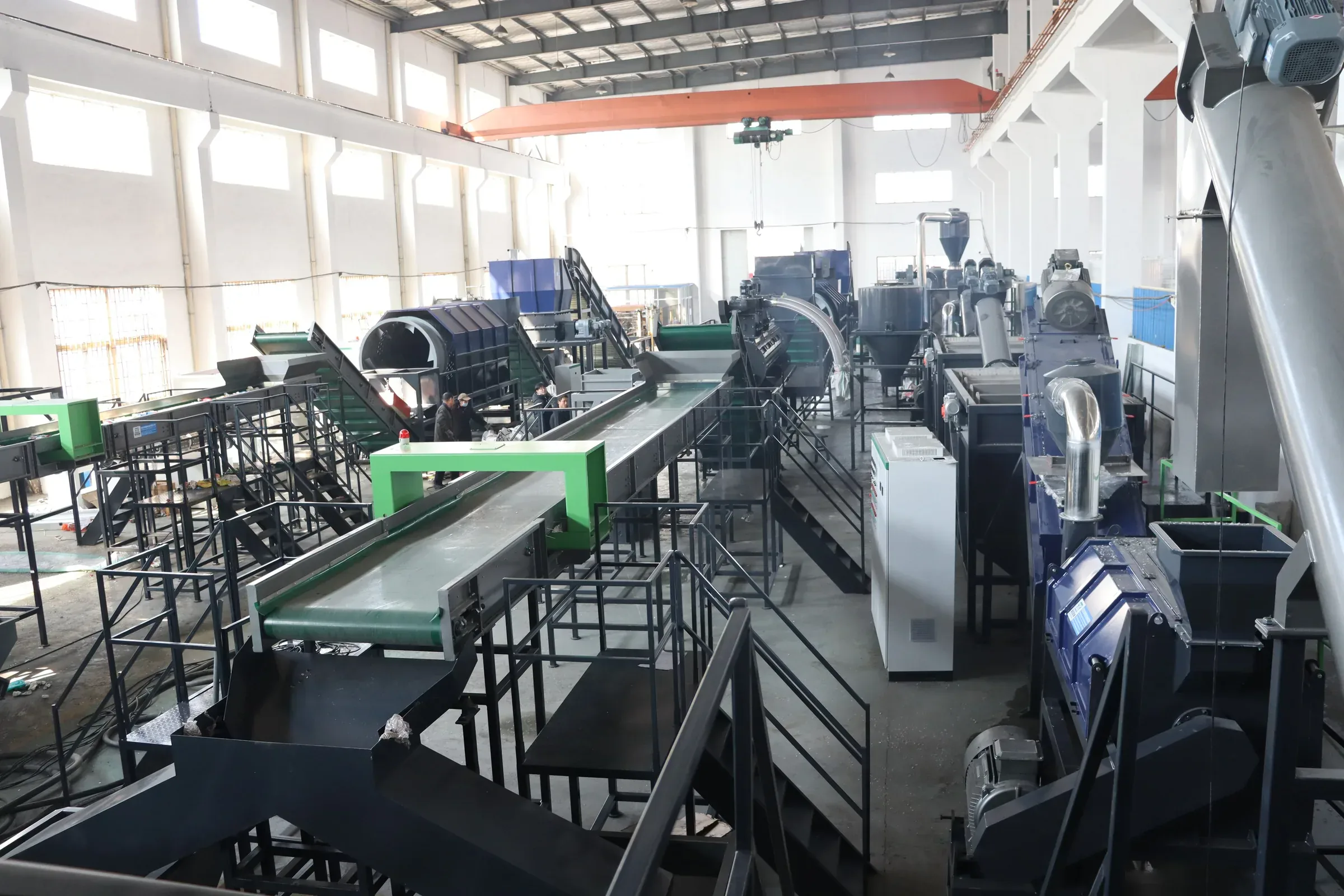



Large blue barrels, commonly made from high-density polyethylene (HDPE), are widely used for storing and transporting chemicals, food ingredients, and industrial liquids. Due to their durability and large capacity, these barrels are essential in industries such as agriculture, pharmaceuticals, and manufacturing. However, once they reach the end of their lifecycle, recycling them through shredding, washing, and drying processes can turn waste into valuable raw materials.
Step-by-Step Recycling Process of HDPE Barrels
The recycling process begins with shredding the barrels into small plastic flakes using industrial shredders or granulators. The shredded fragments are then thoroughly washed to remove contaminants like residual chemicals, labels, and adhesives. Specialized cleaning systems use hot water and detergents to ensure purity. After washing, the flakes are dried using centrifugal dryers or heated air to eliminate moisture.

Applications of Recycled HDPE Flakes
The cleaned HDPE flakes can be reprocessed into new products, such as plastic lumber, drainage pipes, or even new barrels. They may also be melted and pelletized for injection molding applications. This closed-loop recycling reduces plastic waste and conserves resources.
Environmental Benefits of Recycling Large Blue Barrels
Recycling large blue barrels (typically made of HDPE plastic) offers significant environmental advantages by reducing waste, conserving resources, and minimizing pollution. Below are the key benefits:
- Reduces Landfill Waste
Discarded barrels take up substantial space in landfills and degrade slowly, persisting for hundreds of years. By shredding and recycling them, we decrease landfill burden and prevent long-term environmental contamination.
- Lowers Carbon Footprint
Producing new plastic from recycled HDPE requires less energy than manufacturing virgin plastic. Recycling barrels reduces greenhouse gas emissions by cutting down on fossil fuel extraction and refining processes.
- Conserves Natural Resources
Recycling HDPE reduces the need for crude oil, the primary raw material for plastic production. Reusing barrel flakes in manufacturing helps preserve finite resources and supports a circular economy.
- Prevents Pollution
Improperly disposed barrels can leach chemicals into soil and water. Recycling ensures proper cleaning and processing, preventing hazardous substances from harming ecosystems.
- Promotes Sustainable Manufacturing
Recycled HDPE flakes are used to make new products like plastic lumber, pipes, and containers, reducing reliance on virgin plastic and encouraging sustainable industrial practices.

Conclusion: Supporting a Circular Economy through Barrel Recycling
Recycling large blue barrels through shredding, washing, and drying not only supports environmental sustainability but also creates economic value. By transforming used barrels into reusable materials, industries can contribute to a circular economy while minimizing landfill waste. Recycling large blue barrels is an effective way to protect the environment by minimizing waste, cutting emissions, and conserving resources. Supporting such recycling initiatives contributes to a cleaner, more sustainable future.
هذه المقالة منقولة من أرشيف Retech التقني وتحتفظ برابطها الأصلي.
حول هذا التحديث
نُشر بواسطة فريق ريتيك للتسويق والاتصالات
ينشر فريق ريتيك للتسويق والاتصالات أخبار الشركة الرسمية، ومعلومات المعارض، وتحديثات المصنع، وإنجازات المشاريع، وإعلانات المنتجات.
للأسئلة الفنية حول أنظمة إعادة تدوير البلاستيك، يرجى التواصل مع فريق الهندسة لدينا.

